Below is the latest edition of The Signal ™ — our biweekly newsletter delivering freight rail news, insights, and interesting facts. Enjoying it? Subscribe to get the email sent straight to your inbox every other week. You can also check out past editions here.
Although freight rail keeps America’s economy and supply chain moving, much of its impact goes unseen. In this episode of Coffee Break, GoRail President Betsy Cantwell talks grassroots advocacy, infrastructure grants, and how GoRail is helping communities understand the benefits of a strong, modern freight rail network.
Help Us Improve The Signal
This is our 200th edition after launching The Signal in 2018. 🎉
These days, it can be hard to know what (or who) is real. But one thing hasn’t changed: there are real people behind this newsletter who genuinely care about making it useful, not just another email in your inbox. So we’d love to hear from you. Take our short survey and tell us what’s working, what could be better, and what you want to see next. Here’s to the next 200!
The Signal Editors
DYK? Holiday gifts are moving while it’s still summer.
Nope, the subject line of this email wasn’t a mistake.
Surprisingly, now is the time that freight rail is already moving toys, electronics, clothing, and more across the country to get shelves stocked for the holiday rush. Through intermodal shipping, containers move seamlessly between ships, trains, and trucks. In fact, a single train can carry the equivalent of hundreds of truckloads. A typical timeline for shipping holiday goods through the transportation network might look like this:
- Fall 2025: Retailers forecast demand, decide what to sell, and start designing the merchandise.
- Winter/Spring 2026: Buyers finalize orders and factories prepare production.
- Spring/Summer 2026: Merchandise is manufactured and packaged.
- Summer/Early Fall 2026: Containers move by ship, rail, and truck through U.S. distribution networks.
- Fall/Holiday 2026: Merchandise reaches stores and fulfillment centers.
The peak months for intermodal are typically August, September, and October, largely because so much holiday-related freight is already on the move then.
Get the full story.or check out Harley’s newest video 👆
TRACK IT DOWN 🔍
We have hundreds of pieces of content, from webpages to fact sheets and videos. To make it easier to find these individual resources, we created the Resource Finder. Check it out next time you’re looking for freight rail information from AAR.
Open-source digital twin helps make rail-world investment decisions.
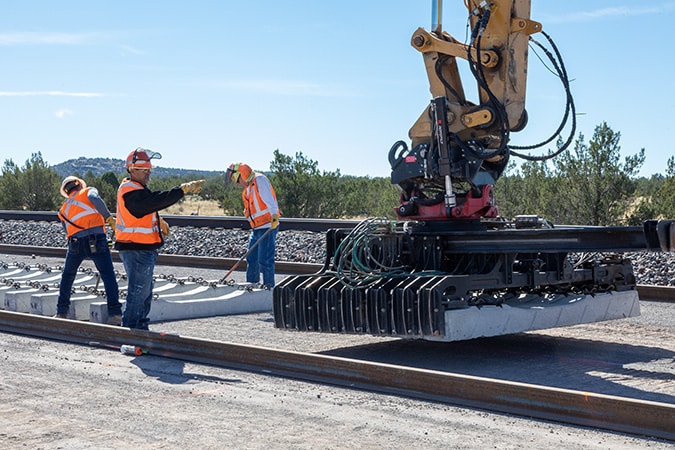
👆 New track construction at BNSF.
BNSF is helping railroads test tomorrow’s technology before making major investments. The railroad helped develop ALTRIOS, the world’s first validated, open-source digital twin for freight rail, which can simulate trains, fleets, networks, energy use, and costs over decades. The tool allows planners to evaluate and understand the possible impact of technologies like hybrid, electric, biofuel, and hydrogen locomotives.
Expert Input: Let data guide decisions and safety outcomes
In a recent Eno Center for Transportation column, AAR President and CEO Ian Jefferies highlights technologies improving safety, efficiency, and service. He also warns that outdated policies could slow that progress.
“Some railroads rely on AI-powered imaging portals that scan railcars at track speed and flag defects in near real time, while others use machine vision and AI to analyze large data sets, detect patterns, and predict maintenance needs months in advance—allowing more targeted, preventive action,” Jefferies says.
He continues: “If we want continued safety improvements, affordability, and supply chain resilience, policy must enable investment and support development and deployment of new technologies—not discourage them.”
Upcoming Event: See Tracks? Think Train Week 📅
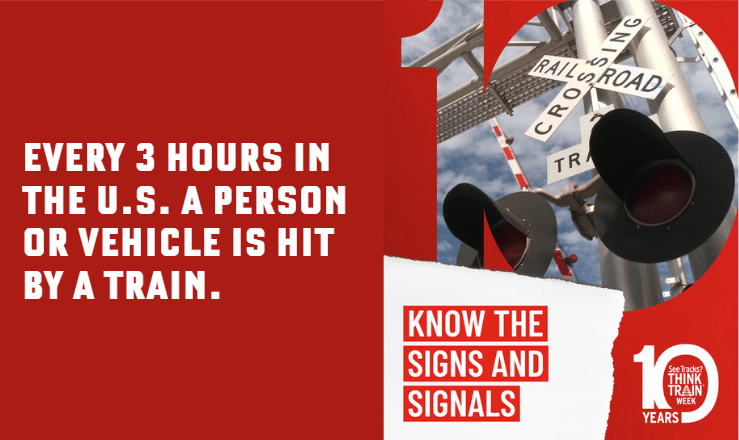
See Tracks? Think Train® Week returns Sept. 21–27, marking 10 years of focused rail safety education. Led by Operation Lifesaver, the annual campaign encourages drivers and pedestrians to make safe choices around railroad tracks and trains, with events and resources aimed at preventing crossing and trespass incidents across North America.
See how you can get involved >
First Responder Training at SERTC
As we wrap up our Summer of Safety spotlights, we’re sharing real reviews from participants at the Security and Emergency Response Training Center (SERTC) at MxV Rail in Pueblo, CO. SERTC provides hands-on training with realistic rail and transportation equipment, helping emergency responders build the skills, confidence, and coordination needed to respond to hazardous materials and rail emergencies.
- Jason L., Billings Fire Department / Montana Regional Hazmat Teams: “SERTC’s Tank Car Specialist training helped our teams build a common operating picture and train in a realistic environment on actual tank cars. The training improved statewide preparedness, strengthened coordination among Montana’s Regional Hazmat Teams, and created valuable partnerships with railroad industry representatives.”
- William H., Indiana Department of Homeland Security: “The courses prepare responders for real-world situations and give them confidence to achieve positive outcomes. The hands-on training, realistic scenarios, and networking opportunities provide skills and experience that cannot be replicated at other facilities. SERTC remains the premier training resource I recommend throughout Indiana.”
- Russell F., Indiana Department of Homeland Security: “SERTC is recommended by the Indiana Department of Homeland Security HazMat Division to teams across the state because of its hands-on training and some of the best instructors in the industry.”
- Blaise R., Raleigh Fire Department / NC-RRT4: “This training was vital to our railroad response capabilities. In addition to technical knowledge, it created valuable connections with industry professionals that increase response speed, trust, and confidence during incidents.”
Industry Reads
- WORLD GRAIN: Railroads Ready for US Grain Harvest
- AMERICAN JOURNAL OF TRANSPORTATION: August 2026 U.S. Transportation Sector Unemployment (4.7%)
- FREIGHTWAVES: Police recover trailers after $155K Guinness heist, but 880 barrels remain missing
- TRAINS: FRA publishes new rules as part of deregulatory effort
- WALL STREET JOURNAL: U.S. Imports Carry On Through Extended Peak Season