Key Facts
- Freight rail pioneered many systems we now take for granted.
- Railroads helped create America’s first connected national economy.
- Innovation has kept freight rail evolving for nearly 200 years.
America has come a long way in 250 years. It’s easy to think our modern speed and connectivity were born in the digital age. But railroads cracked that code nearly two centuries before Silicon Valley. Long before apps, alerts, or overnight-anything, rail figured out how to move goods fast, coordinate across a continent, and keep a sprawling national network running like clockwork. Rail didn’t just connect cities—it helped America learn how to work as a country.
Fast forward to today: freight rail is safely and efficiently moving what our country needs to be competitive— from food and construction materials to cars and energy.
Looking ahead, rail’s poised for the next 250 years with the same strengths that built its legacy: resilience, innovation, and a design built for the long haul. The tools evolve, the network expands, and rail keeps adapting—ready for whatever America needs next. Here are five ways freight railroads led the charge before the rest of the world knew what was coming.
1. The First Influencers (1850s–1910s)
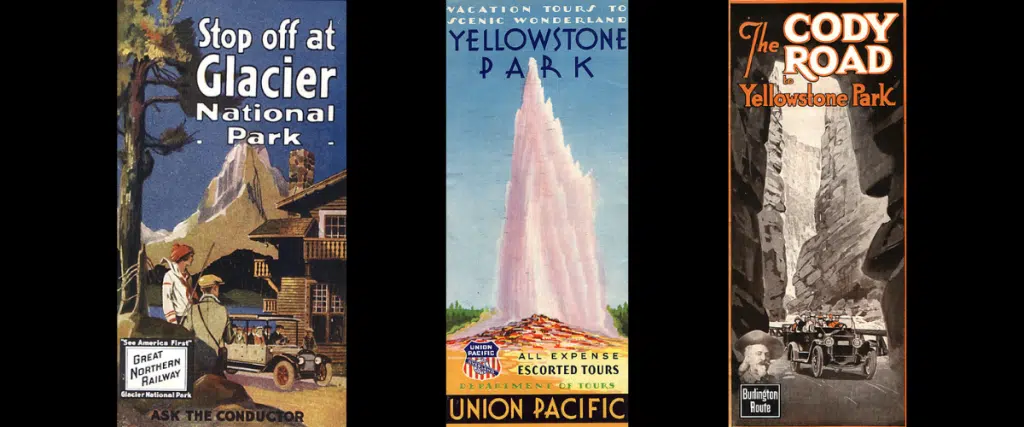
Examples of freight rail ads for national parks. Check out this article for a deeper dive.
Railroads didn’t need likes or followers to shape behavior. They controlled access. If your town had a rail connection, you had choices—new products, newspapers, fashions, and ideas. If it didn’t, you weren’t even aware progress was passing you by.
Railroads also knew how to sell a story. In the late 1800s, they promoted cities, farmland, resorts, and national parks with eye-catching posters and guidebooks. Want more people to visit, move, or invest? Put it on the rail map and tell them about it. Before algorithms decided what was trending, railroads decided what mattered.
2. The First Amazon Prime (1860s–1920s)
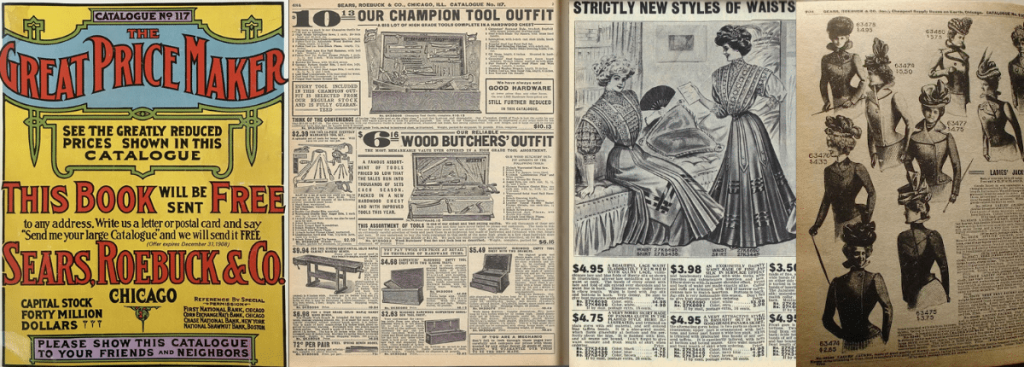
1900s catalog ad from Sears.
Before widespread rail service in the early–mid 1800s, goods moved by horse, wagon, riverboat, or coastal ship. Speed depended on the weather, roads, and seasons. Local or regional delivery could be one to two weeks, while long-distance inland shipments often took a month or more. And ordering something wasn’t about when it would arrive—just if it would.
Trains turned delivery from a waiting game into a promise. What once took weeks by wagon showed up in days—and sometimes overnight. Mail-order catalogs only worked because railroads made fast delivery normal. Order a plow, a dress, or an entire house kit, and trust that the train would bring it. Today, freight rail still plays a major role in ensuring your ecommerce arrives on time through the advent of intermodal transportation.
3. The First Always-On Network (1840s–1940s)

Telegraph Operator, 1916. Courtesy of San Diego Historical Society.
Long before the internet, railroads built one of America’s first real-time networks. Telegraph wires running beside the tracks carried constant updates on train locations, delays, and cargo, while dispatchers used Morse code to coordinate traffic across thousands of miles—because a missed message wasn’t an inconvenience, it was a safety risk.
By the late 1800s, that communication web evolved into a full-blown data operation. Railroads tracked everything—arrivals, loads, fuel, maintenance, labor, revenue—and kept the whole system synchronized through telegraph updates and meticulous station logs. By the 1910s, federal standards and detailed engineering maps turned this data into one of the country’s earliest large-scale data ecosystems. Long before computers, railroads had already built a nationwide, real-time information network.
4. The First Computer Users (1890s)

Hollerith Tabulator/Sorter, 1890.
Speaking of computers, freight railroads were among the very first businesses to adopt them—not because it was trendy, but because it was necessary. In the late 1890s, railroads had already been early adopters of punched card tabulating machines and other proto‑computer technologies.
By the mid-20th century, one of the earliest large-scale commercial computer applications in the U.S. was built for freight rail—designed to track railcars and manage operations across the continent. Rail logistics demanded real-time data, coordination, and reliability, leading companies like IBM to partner directly with railroads on early mainframe systems. In doing so, freight rail helped prove that computers weren’t just scientific tools, but engines for large-scale business and national operations.
5. The First Connected Economy (1850s–Present)
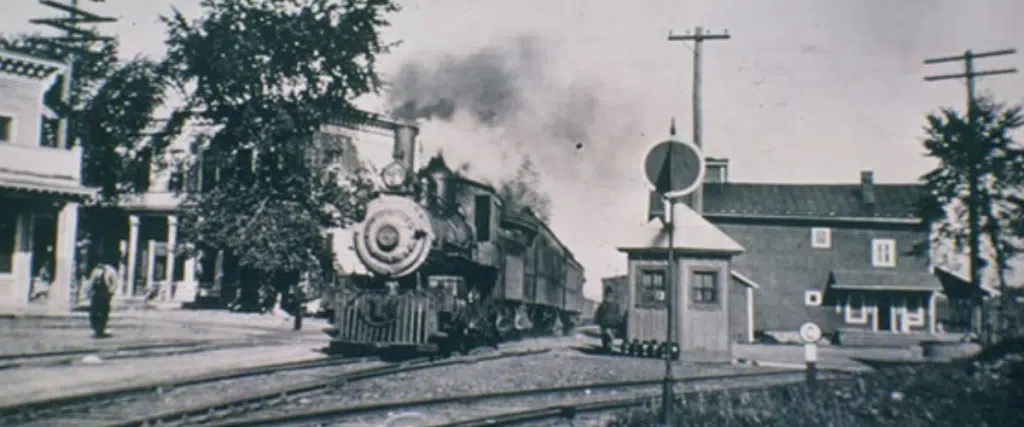
A Peanut Line train arrives in Holcomb from the west in the early 1900s. Postcard photo from the collection of Preston E. Pierce.
Rail didn’t just move the economy—it structured it. In the 1850s, a rail line acted like an economic magnet: farmers planted what rail could ship, factories set up shop near sidings, and towns grew around depots and junctions. Where the tracks went, opportunity followed. Railroads created one of America’s first national markets, linking producers, consumers, and industries across vast distances. Steel from Pittsburgh, grain from the Midwest, lumber from the Northwest—rail made it all circulate, turning isolated regions into a connected economic system.
Rail offered a shared infrastructure that businesses depended on—banks, warehouses, stockyards, ports, and entire supply chains grew in sync with the network. Once rail was in place, industries didn’t just use it; they scaled because of it. And that economic growth continues today with both large and small businesses breaking ground on rail-served lines.
The Bottom Line
Freight rail wasn’t just part of America’s growth—it pioneered many of the ideas that shaped the modern world. From nationwide communications and logistics to today’s advanced technologies, railroads have spent nearly 200 years innovating to keep America connected and moving forward.