KEY FACTS
- Wayside detectors use sensors, lasers, acoustics, and machine vision to inspect trains in real time as they move.
- These systems help identify potential equipment defects early, before they become safety risks.
- Continuous monitoring improves rail safety, reliability, and maintenance planning across the network.
Freight rail safety depends on a combination of skilled railroad employees and advanced technology working together. While people inspect, maintain, and operate equipment across the network, automated detection systems provide continuous, real-time monitoring as trains move.
Many of these systems are called wayside detectors or wayside sensors. In simple terms, wayside refers to equipment installed alongside or within the track—rather than on the train itself. As trains pass these locations, the detectors automatically inspect key components in real time, without slowing or stopping the train.
Using technologies such as thermal sensors, lasers, acoustics, force measurement, and machine vision, these systems monitor wheels, bearings, brakes, railcars, and track conditions. By identifying potential issues early, they help railroads take timely action to maintain safe and reliable operations. Below are just a few examples of the different types of wayside detectors freight railroads use.
Wheel Monitoring Systems and Bearing Detection Technologies
Modern freight railroads use a sophisticated portfolio of mechanical condition monitoring and defect detection technology to help advance safety goals and the health of the railcar fleet. These technologies are placed in and adjacent to the tracks and consistently and reliably perform their inspections on important components as trains pass at operating speeds.
Wheel Temperature Detection Systems

Photo Courtesy Canadian National.
Hot Bearing Detectors (HBD) and Wheel Temperature Detectors (WTD) all use precision heat sensors (pyrometers) to measure thermal radiation from key components of a moving train. These sensors are installed either adjacent to the rails or alongside the track with sensors positioned to monitor bearings and wheel surfaces as a train passes.
HBD systems are spaced at regular intervals along mainline routes and they monitor the temperature of axle-mounted roller bearings, which support the weight of the railcar and allow wheels to rotate smoothly. Since bearings operate under heavy loads and constant motion, excessive heat can indicate problems such as lubrication failure or internal damage.
WTDs analyze temperature consistency across all wheels. If a wheel is cooler than expected during braking, it may indicate insufficient brake contact, while uneven temperatures across wheels can point to developing mechanical issues.
These systems compare temperature patterns across the entire train to identify abnormalities. If a potential issue is detected, an automated radio message alerts the train crew, enabling them to take corrective action—such as reducing speed or stopping the train for inspection.
Wheel Impact Load Detectors (WILD)
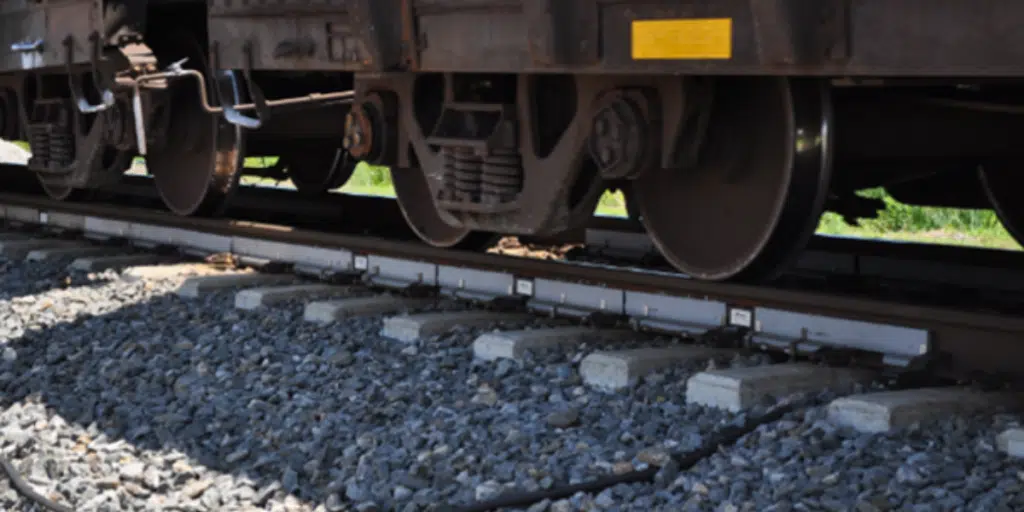
Photo Courtesy Canadian National.
Wheel Impact Load Detectors (often called WILD systems) are sensors built directly into the track. Special sensors are installed on sections of rail to measure the forces being exerted by the wheels of a railcar. These sensors measure how hard each wheel hits the rail as a train passes over. Normally, wheels roll smoothly and apply steady pressure.
But if a wheel has a flat spot (a worn-down, flattened area on the surface of a train wheel that is supposed to be perfectly round), is slightly out of round, or has surface damage, it can strike the rail with more downward vertical force than it should. Information from WILD systems can be combined with temperature indications from HBDs to identify problem bearings.
Wheel Profile Detectors

Photo Courtesy Canadian National.
Installed along the side of the track at wheel height, sometimes inside inspection frames or portals that trains pass through, Wheel Profile Detectors have laser sensors positioned close to the path of the wheels. They use fast laser scanners and cameras to measure the exact shape of each wheel as the train rolls by. They also check things like how thick the wheel flange is (the inner lip that helps keep the train on the track), how worn the rolling surface is, and whether the wheel has become uneven in shape.
If a wheel becomes too worn or changes shape too much, it can increase the risk of derailment. These systems help railroads spot wear early, so wheels can be repaired or replaced before they become a safety issue.
Acoustic Bearing Detectors (ABD)
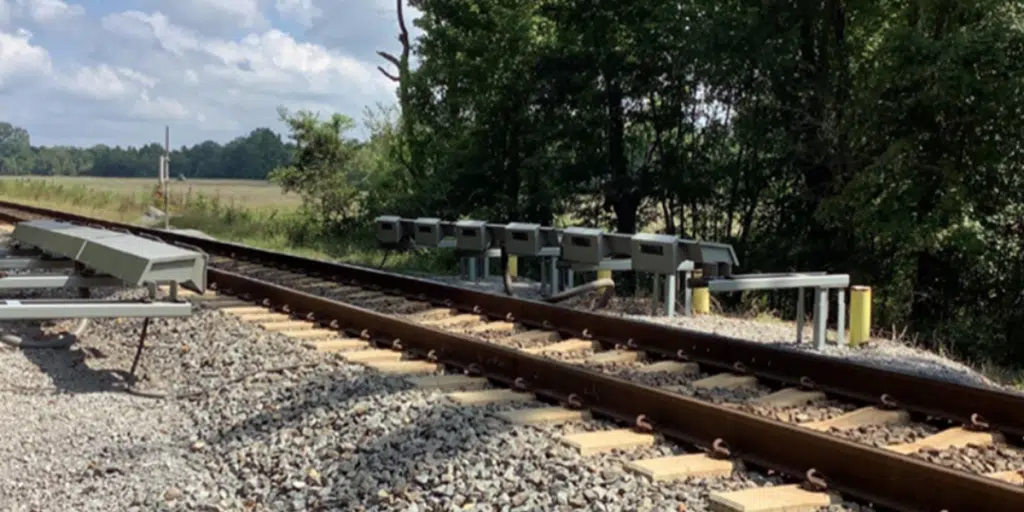
Photo Courtesy Canadian National.
Acoustic Bearing Detectors are installed along the side of the track near rail level, with sensitive microphones positioned close to where the wheels and axles pass by. The microphones listen to the sounds coming from wheel bearings as a train moves past.
Bearings normally make a consistent, predictable sound when they’re in good condition. But if there are early signs of internal component damage, they can produce subtle high-frequency noises that humans usually can’t hear. The system analyzes these sound patterns using software to spot early warning signs of bearing problems — often well before the bearing gets hot enough to trigger a temperature alarm. This allows maintenance teams to fix issues sooner and avoid more serious failures.
Railcar Inspection and Mechanical Performance Detection Systems
These systems are typically installed in wayside inspection portals or along the track to evaluate the structural and mechanical integrity of passing railcars.
Dragging Equipment Detectors (DED)

Photo Courtesy Canadian National
Installed either between the rails or along the side of the track, Dragging Equipment Detectors generally have self-restoring impact panels and are designed to detect anything hanging down underneath a train. This could include broken brake parts, loose chains, or other low or dragging components. Most systems use a mechanical paddle that would be hit by a low-hanging object.
By detecting these problems early, the system helps prevent the loose part from hitting switches, crossings, or other track equipment — which could cause serious damage or even a derailment.
Truck Hunting Detectors (THD)
Using a mix of sensors built into the track and placed along the side of the track, Truck Hunting Detectors monitor how the railcar’s truck (aka bogie) — the frame that holds the wheels, axles, and suspension — behaves as the train moves. The THD measure abnormal outward (lateral) strain against each rail that gets produced if the railcars’ wheels begin moving in a repetitive side to side action as they roll forward called “hunting.”
Severe hunting can cause premature wear issues for the wheels, cause issues for the products it is carrying, and reduce the fuel efficiency of the train. The THD system detects these unusually strong dynamics and alerts operators so the car can be inspected and repaired.
Load Measurement Systems
Load Measurement Systems are usually built directly into the track in special sections that can weigh trains as they move (called weigh-in-motion systems). These systems weigh each railcar as it passes over the instrumented track and measure the weight and how it is distributed. If a car is overloaded or the weight is unevenly distributed, it can put extra stress on components. These systems detect those problems in real time, helping railroads prevent track and equipment damage, and keep operations safe.
Machine Vision Systems (MVS)

Example of a Train Inspection Portal. Photo courtesy Norfolk Southern.
Machine vision systems are a form of railcar health and condition monitoring that use precisely aimed, high frame rate cameras to capture thousands of images of the sides, bottoms, tops, and focused angles of railcars as they pass by at track speed. Experience has shown that inspections performed when components are in use can yield better results because signs of fatigue or failure are more visible than when the equipment is standing still.
Camera systems can also reliably, safely, and predictably perform inspections in adverse weather conditions and on components that aren’t easily visible to an inspector standing beside a railcar. Once the train has passed by the MVS detection site (occasionally called a digital train inspection portal), the images are then processed against a portfolio of sophisticated algorithms developed to identify emerging or active mechanical or safety issues.
Once this step is done, railroads will assign an action plan for the issues found by the detection system ranging from simple monitoring of items of low impact to setting the car out, so mechanical crews can address major issues.
Clearance Detectors
These sensors are installed above or beside the track, such as on overhead frames, bridges, or tall trackside poles. The sensors project laser or light beams across the space that trains pass through. Clearance Detectors help protect infrastructure like tunnels and overhead bridges from being struck by a railcar whose height exceeds the allowable height or width limits for a given route or where a load has inadvertently shifted outside the permitted width clearances.
These systems use laser or infrared beams, or a physical cable placed in such a way that if the beam is broken or the cable is broken, an alert is generated that there is a clearance condition that may pose a risk to structures further down the track. By detecting these problems early, the system helps prevent the loose part from hitting switches, crossings, or other track equipment — which could cause serious damage or even a derailment.
Broken Rail Detectors
Installed directly in or along the rail, some Broken Rail Detection systems use sensors while others use a low voltage current that travels through the rails. These systems look for cracks or breaks in the rail. The most common method is to send a low voltage electrical current through a section of rail. If the rail should crack or break, the system will detect a broken electrical circuit and display a warning signal to trains.
Some systems can also use ultrasonic wave detection to find hidden internal cracks, or fiber optic systems capable of sensing unusual vibrations or strain. By spotting rail damage early, these systems help prevent derailments caused by a broken or weakened rail.