July 13-17, 2026
As America celebrates its 250th year, freight rail is approaching a milestone of its own: next year, the industry turns 200. And far from coasting on that legacy, freight railroads are leading the way in transportation technology. AI-assisted inspections, machine vision, predictive analytics, advanced sensors, and real-time data are reshaping how the industry monitors infrastructure, maintains equipment, and protects the people who work on and around the network.
The results are measurable. According to the Federal Railroad Administration, 2025 was a record breaking year for safety, with historic lows in derailments, equipment- and track-related accidents, and employee injuries.
That progress reflects sustained private investment — roughly $25 billion annually — and a workforce that pairs deep operational expertise with increasingly sophisticated tools. The technologies being deployed today don’t replace railroaders; they give them better information to make better decisions, faster.
But technology alone isn’t enough. Many regulations governing railroad operations were developed before today’s digital technologies, advanced inspection systems, and automated safety tools existed. For innovation to continue delivering safety gains, policy needs to keep pace — embracing measurable outcomes over legacy frameworks, and enabling the deployment of new technologies rather than locking in old ones. Here are some examples of what’s possible when investment, innovation, and expertise work together across the freight rail network.
Norfolk Southern’s AI-powered wheel integrity system helps detect cracks before they become failures.
Norfolk Southern’s wheel integrity system uses six synchronized cameras to capture approximately 55 high-resolution images per wheel at speeds up to 70 mph. Algorithms developed entirely in-house by NS’s Data Science and AI team analyze those images to identify surface cracks and defects that would be difficult to catch consistently through visual inspection alone. The first system went live at Burns Harbor, Indiana, a strategic location near Chicago where cars enter and exit the NS network.
The results have been immediate. The system identified a critical casting flaw on a wheel set, which — combined with NS’s root-cause investigation — triggered an industry-wide recall and confirmed seven defects across North America. It has also detected a cracked wheel that field teams confirmed and removed from service before a larger problem developed. The technology works alongside NS’s existing Digital Train Inspection portals, which have identified and removed more than 50 wheels with issues since January 2025.
CSX’s drone program puts safety technology in the hands of employees across the network.
CSX operates more than 250 drones and has trained more than 350 FAA Part 107-certified pilots — a workforce investment that now supports more than eight departments across the railroad. Bridge inspectors use drones to safely assess infrastructure that would otherwise be difficult or dangerous to access. GIS teams deploy them for aerial surveys, mapping, and rapid damage assessment after natural disasters affect the network.
The program’s core purpose is risk reduction: any time technology can help employees make safer decisions or avoid entering hazardous environments. What began as a proof of concept nearly a decade ago has become an enterprise-wide capability, with real-time aerial data enabling teams to assess conditions faster and act on better information.
Union Pacific’s Physics Train Builder uses advanced simulation to build safer, more efficient trains before they leave the yard.
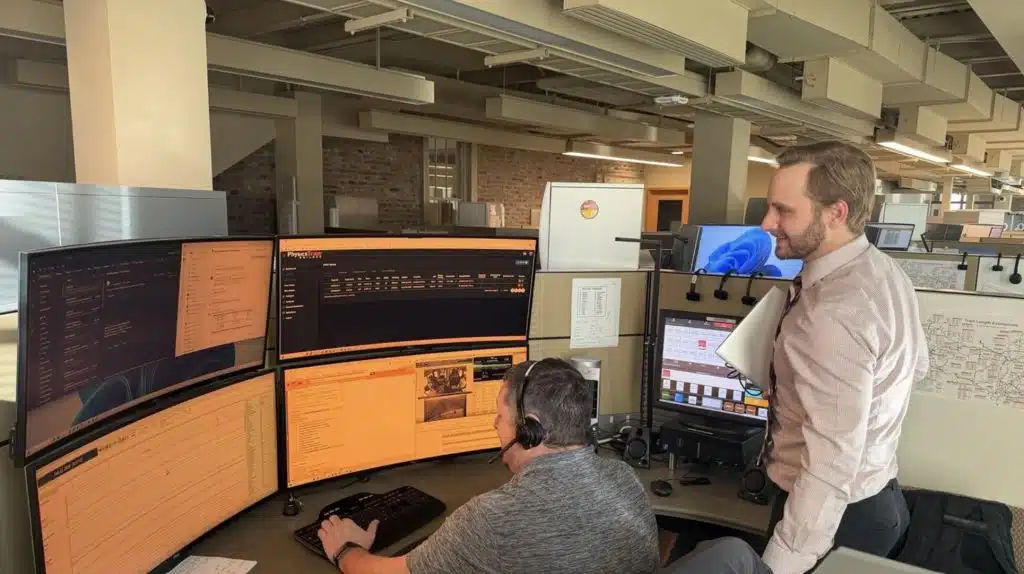
Union Pacific’s Physics Train Builder (PTB) uses advanced physics modeling to simulate thousands of trains traveling across hundreds of miles of track every day, recommending the safest and most efficient configuration before freight ever moves. By optimizing weight distribution, car placement, grade management, and locomotive positioning, PTB helps crews build trains that are better prepared for steep mountain grades and complex routes — reducing mechanical risk and fuel consumption from the start.
PTB also functions as a real-time safety monitoring system while trains are in motion, issuing alerts to Operating experts who can radio engineers with guidance on speed or handling adjustments. Root-cause analysis that previously required weeks and outside vendors now takes about five minutes in-house. Every trip feeds data back into the system, improving its precision over time and giving Union Pacific a faster, more detailed picture of risk across the network.
CN’s hybrid electric locomotive pilot helps reduce fuel consumption and emissions in yard and branch-line operations.

CN has launched a hybrid electric locomotive pilot designed to reduce fuel consumption and emissions in yard and branch-line operations. Developed with Knoxville Locomotive Works, the medium‑horsepower unit is built on the chassis of existing yard locomotives and pairs a 2.4 MWh battery with a Tier 4 diesel engine, delivering up to 60% more horsepower than the conventional units it replaces. The system targets up to a 50% reduction in fuel consumption, alongside roughly 50% cuts in greenhouse gas and criteria air contaminant emissions, while also reducing maintenance events by about 25%.
The locomotives will be deployed in phases across CN operations in Tennessee, Mississippi, and Louisiana, with additional cold‑weather testing planned in Western Canada to validate performance across the network. The pilot is part of CN’s broader locomotive modernization and decarbonization roadmap, which includes repowering legacy GP38 units, expanding hybrid conversions, and advancing yard electrification studies, all supporting the company’s long‑term goal of achieving net‑zero emissions while driving immediate operational efficiency gains.
BNSF’s ODIN and THOR systems give railroaders a more complete, continuous picture of track health across 32,500 miles of network.
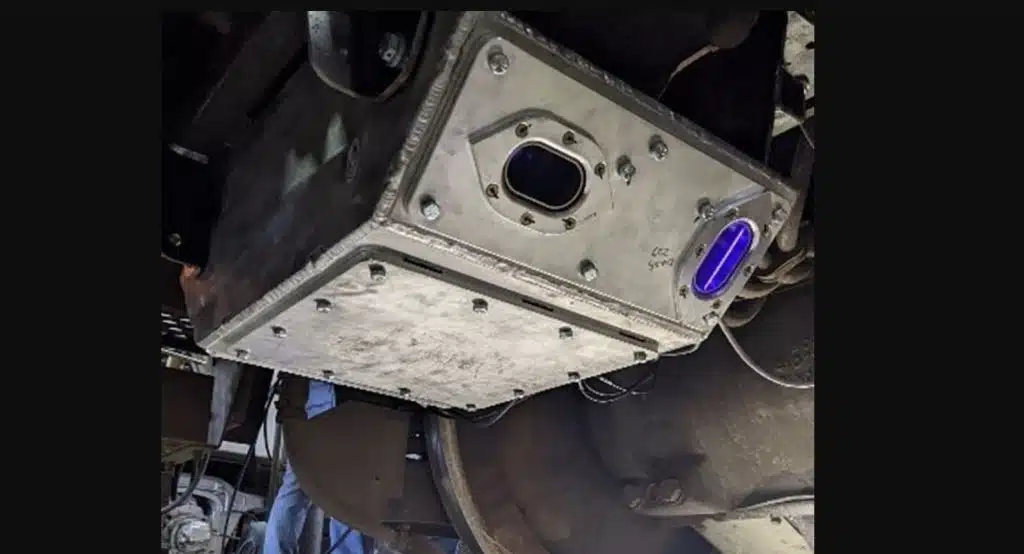
ODIN — Onboard Defect Identification and Notification — is mounted beneath BNSF locomotives and captures track geometry measurements every foot as the train moves, monitoring gauge, cross-level, alignment, and surface profile in real time. When a serious defect is detected, the system flags it immediately so field crews can be dispatched before it affects safety or service. In 2025, ODIN measured more than 150,000 miles of track; by 2026, with more than 60 units deployed across the network, it will cover over one million miles annually. THOR — Track Health Optical Recognition — complements ODIN by using high-speed cameras mounted under geometry cars to image rails from multiple angles at speeds up to 70 mph, detecting surface conditions that geometry measurements alone would miss.
Together, these systems support the skilled railroaders who act on the data they generate. When ODIN or THOR flag a condition, expert teams validate and prioritize it, and field crews are dispatched to assess and repair the issue. In 2025, THOR imaged 165,000 miles of track and identified 1,900 defects — all addressed before becoming serious problems. That combination of automated monitoring and human expertise contributed to BNSF’s safest year on record and a 33% reduction in track-caused rail equipment incidents.
CPKC’s century of innovation reflects rail’s enduring role in powering the American economy.
CPKC’s earliest locomotives — wood-framed steam engines capable of pulling a handful of cars — were the cutting edge of their era. What followed was more than a century of continuous reinvention: superheated steam, articulated designs built for mountain grades, dieselization, and AC traction motors that became the North American standard in the 1990s. Each transition applied the best available technology to the realities of running freight across a continent.
That same logic drives CPKC’s hydrogen locomotive program today. The conversion swaps out the diesel engine and alternator for a fuel cell system powering the same traction motors already on the locomotive — reusing proven components, keeping the cab and frame intact, and emitting only water vapor. Alongside that, CPKC’s Track Evaluation Train inspects more than 300,000 miles of track annually using geometry systems, optical tools, and AI-analyzed ultrasonic testing, which helps catch potential rail flaws before they become failures.
Rail moves the raw materials, manufactured goods, and agricultural products that underpin the American economy. A faster, more reliable, lower-emissions network is a competitiveness advantage for every industry freight touches.
MxV Rail’s Impact Track and Wall give the industry a full-scale facility to test safety innovations before they reach the network.
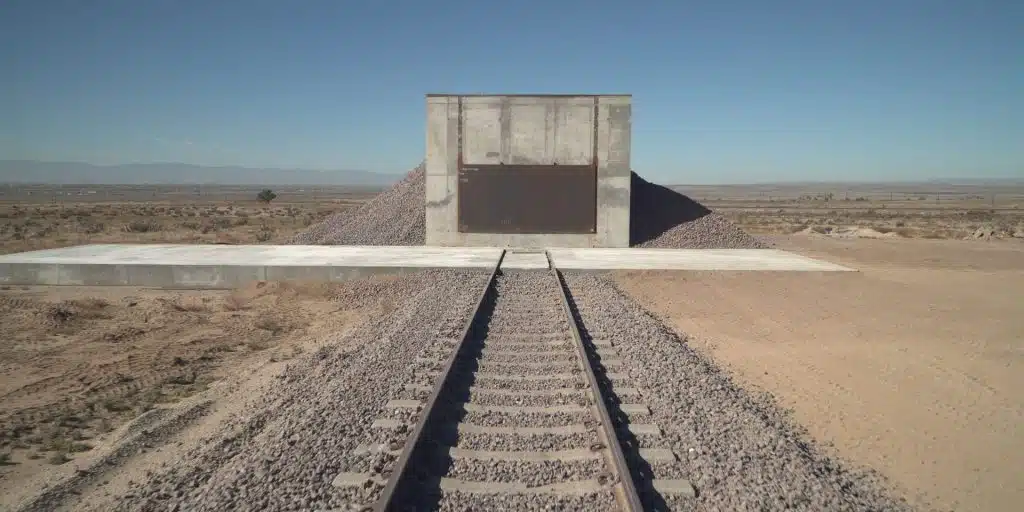
MxV Rail’s Impact Track and Wall represent a significant investment in the research infrastructure behind rail safety. The half-mile track runs at a 1.5% downhill grade and allows testing at speeds up to 30 mph (a 10 mph improvement over previous capabilities) while the reinforced wall, built with 108 tons of rebar and more than 700 cubic yards of concrete, captures precise data on the forces generated during impact. Together, they give researchers the ability to test real components under real conditions at a scale the industry hasn’t had before.
The facility is the first of its kind completed by the MxV Rail team and is designed to serve the industry’s needs for decades to come. By subjecting freight and passenger rail components to controlled, full-scale impact testing, MxV Rail can identify failure points, validate design improvements, and generate the data that drives better safety standards — before any of that technology ever reaches the operating network. It’s the kind of behind-the-scenes research that makes the visible safety gains across the industry possible.