Key Facts
- For nearly 200 years, freight rail has helped build America—from the automobile boom to the AI revolution.
- Freight rail moves the raw materials, products, and equipment that keep America’s economy and supply chains running.
🎧 Listen to this page • 11 min 6 sec
Voiced by a real person. Read the full narration at the bottom of this page.
America’s defining moments didn’t happen by accident. From the automobile boom and the first supermarkets to suburban neighborhoods, the Moon landing, globalization, e-commerce, and artificial intelligence, each era depended on the ability to move enormous quantities of materials, products, and equipment across the country.
For nearly 200 years, freight rail has been a critical part of that story—helping build industries, strengthen supply chains, and keep America moving through periods of growth, innovation, and national challenge. The examples below show how freight rail shaped some of the country’s most iconic cultural moments and continues to support America’s future today.
1920s: The Automobile Changes America
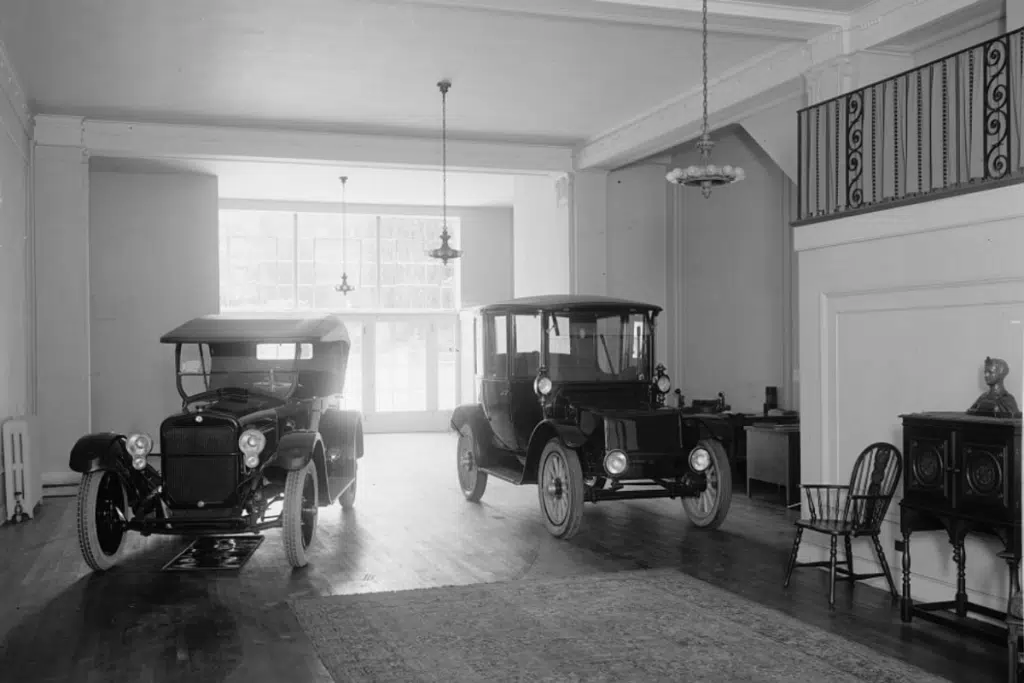
An automobile showroom from the 1920s (LOC)
By 1929, there were more than 23 million registered vehicles on American roads—up from fewer than eight million just a decade earlier. American innovation and mass production transformed the automobile from a luxury into an everyday necessity, creating one of the nation’s most powerful economic engines.
The industry generated millions of jobs, fueled demand for steel, rubber, glass, petroleum, and machinery, and reshaped where Americans lived, worked, and traveled.
Freight rail helped power that transformation—and still does today. Railroads remain the backbone of the automotive supply chain, moving nearly 75% of all new cars and light trucks sold in the United States while carrying the raw materials, components, and finished vehicles that support American auto manufacturing.
1930s: The Supermarket Revolution
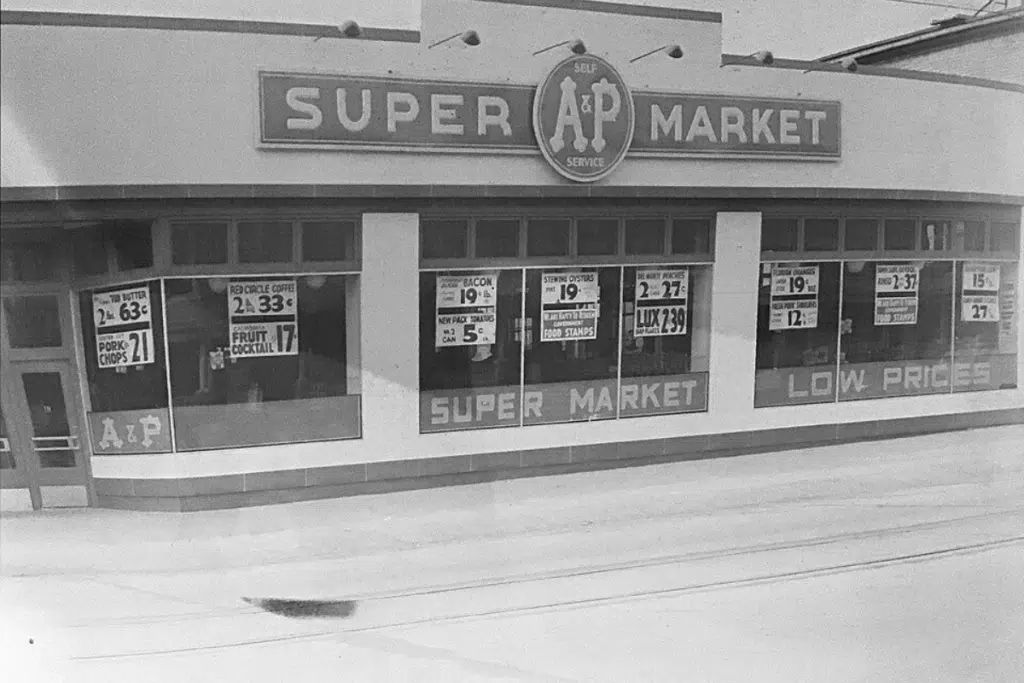
1938 Allentown, PA Supermarket (Wikimedia)

The stock market crash of 1929 plunged the United States into the Great Depression, leaving millions of Americans unemployed and forcing families to stretch every dollar. Consumers needed groceries they could afford, and supermarkets answered the moment by offering lower prices, greater variety, and a more efficient way to shop than ever before.
Freight rail helped make that model possible by creating a national food network. Refrigerated railcars connected farms and food producers across the country, bringing year-round produce, meat, dairy, and packaged goods to a single store while helping supermarkets expand rapidly throughout the decade.
Today, freight railroads continue to supply America’s supermarkets, moving approximately 1.6 million carloads of grain and 1.7 million carloads of food products every year. By moving large volumes efficiently over long distances, freight rail also helps keep transportation costs low—making modern life more affordable for American families.
1940s: World War II
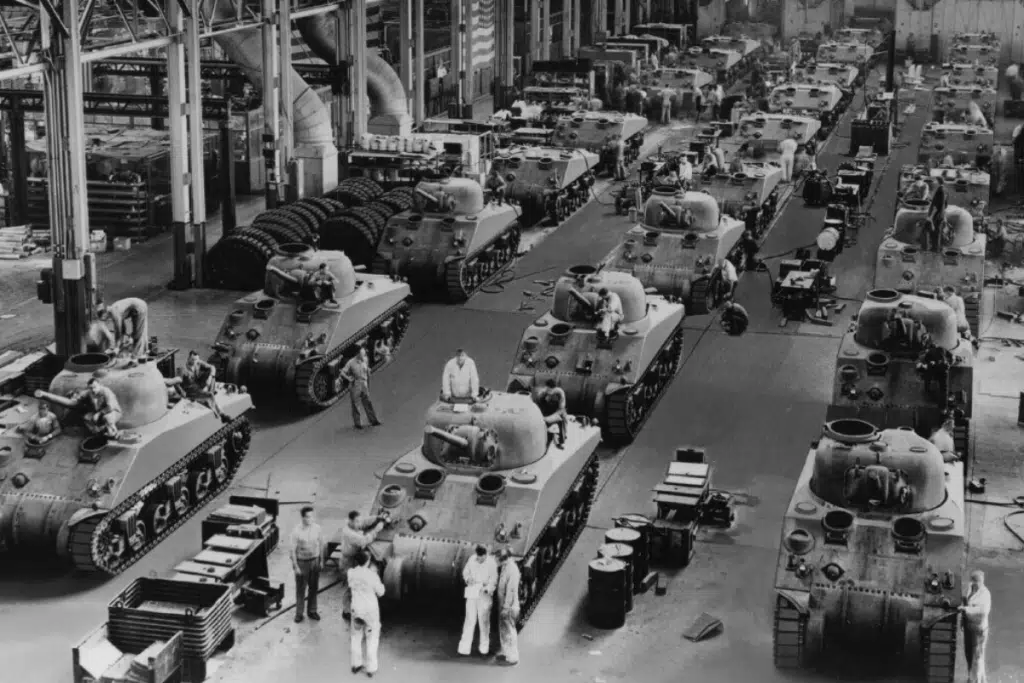
1940s Tank plant in Detroit, MI. (Wikimedia)

World War II cemented the United States’ position as the world’s leading industrial powerhouse. At the peak of the war, railroads carried nearly 70% of intercity freight and more than 70% of passenger traffic, moving troops, raw materials, and finished equipment across the country.
Millions of soldiers and vast quantities of coal, steel, and fuel moved by rail to support factories and front lines alike. Today, freight railroads still move thousands of carloads of military equipment every year.
1950s: Moving to Suburbia
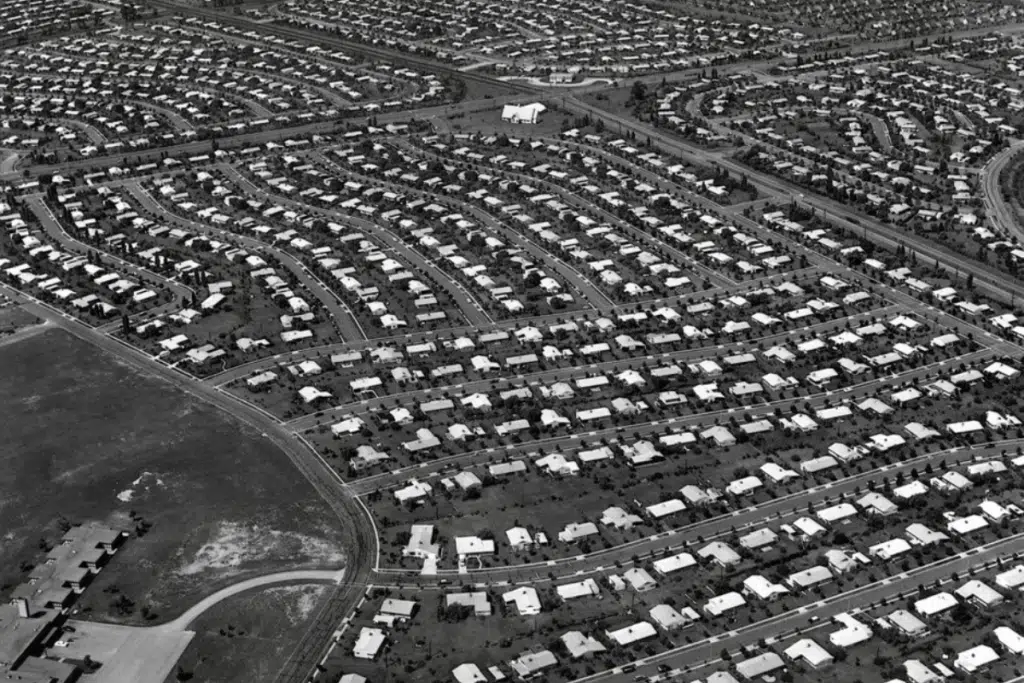
Levittown, PA, a planned suburban community constructed in the 1950s (Wikimedia)

After World War II, the American Dream moved to the suburbs. Low-cost mortgages, rising incomes, and the Baby Boom fueled a homebuilding surge unlike anything the country had ever seen. Millions of new homes were constructed as families traded city living for backyards, automobiles, and homeownership.
Freight rail helped turn open land into entire communities, delivering the lumber, cement, steel, stone, and other building materials needed to construct America’s suburbs.
Today, freight rail remains essential to homebuilding, moving more than two million carloads of construction materials each year. In fact, rail lumber shipments closely track housing starts, making freight rail an important indicator of the nation’s homebuilding activity.
1960s: Reaching the Moon
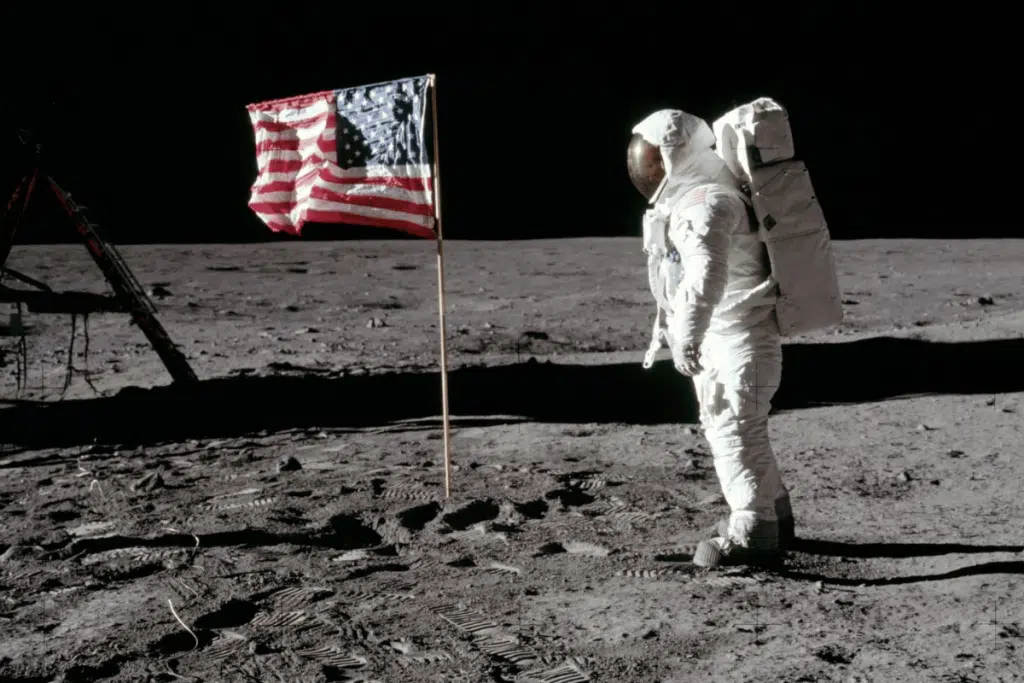
Astronaut Buzz Aldrin walking on the moon during the Apollo 11 mission on July 20, 1969. (NASA)
Putting a man on the moon required one of the largest industrial efforts in history. More than 400,000 people worked on the Apollo program, with thousands of companies supplying the materials, machinery, and equipment needed to make the mission possible.
At Kennedy Space Center, NASA’s railroad delivered tens of thousands of tons of specialized stone used to build the crawlerway connecting the Vehicle Assembly Building to the launch pads. More than half a century later, freight rail continues to support America’s space program, moving oversized rocket and spaceflight components that are too large or heavy for conventional highway transport.
1970s: The Energy Crisis Changes America

Gas station attendants peer over their “Out of Gas” sign in Portland right before the state’s requested Saturday closure of gas stations in 1973 (David Falconer, U.S. National Archives)
In the 1970s, global conflicts disrupted oil supplies to the United States, triggering fuel shortages, soaring gasoline prices, and long lines at gas stations. Practically overnight, energy conservation became part of everyday life.
Americans lowered their thermostats, insulated their homes, drove smaller cars, and accepted a new national speed limit of 55 mph to save fuel. Conserving energy wasn’t just economical—it became a patriotic responsibility.
The crisis also sparked a lasting shift in how Americans thought about energy and the environment. It raised awareness of fuel efficiency, strengthened support for conservation, and highlighted the value freight railroads—the nation’s most fuel-efficient way to move freight over land. Today, one train can move one ton nearly 500 miles on one gallon of fuel.
1980s: The Mall Becomes America’s Town Square

Food court of an indoor mall in 1980 (Carol M. Highsmith, LOC)
By the 1980s, the shopping mall had become a fixture of American life. Anchored by department stores and filled with specialty retailers, food courts, and arcades, malls drew millions of visitors each year and became a defining feature of suburban America.
Behind the scenes, freight rail was evolving, too. The rapid growth of intermodal transportation—moving shipping containers seamlessly between ships, trains, and trucks—helped retailers stock stores faster and more efficiently, laying the foundation for the nationwide supply chains that continue to serve American consumers today.
1990s: A More Connected World
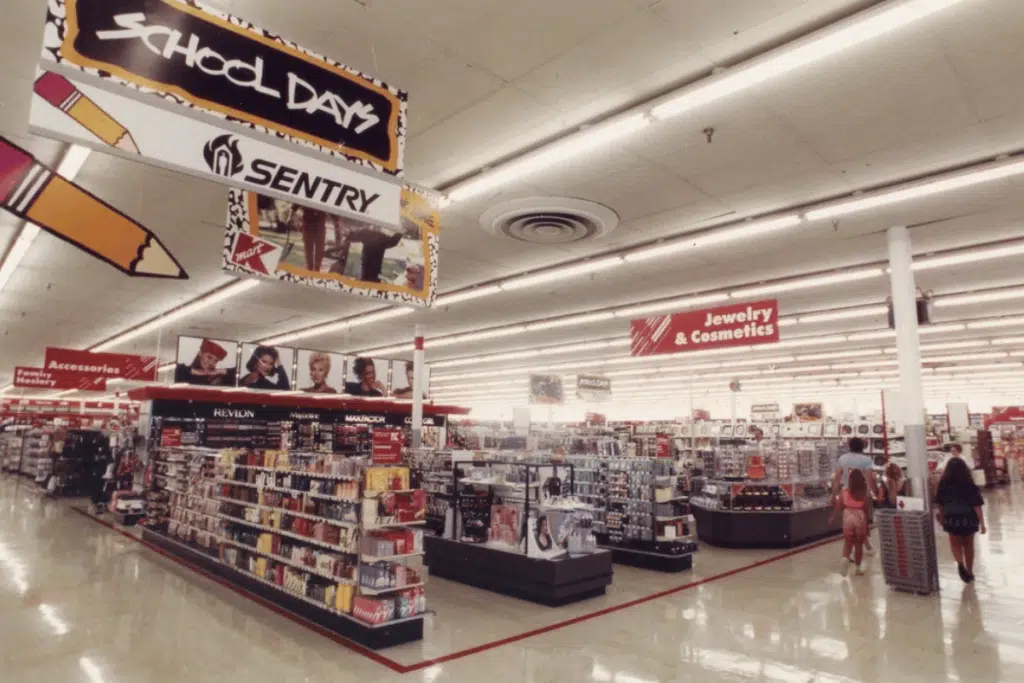
Inside of a Kmart in 1991 (Kmart Corporation)
The 1990s marked the rise of globalization as a defining force in America. Trade expanded rapidly, imported goods became everyday purchases, and consumers gained access to an unprecedented variety of products from around the world. Big-box retailers grew, supply chains stretched across continents, and “Made Around the World” became the new normal.
Freight rail helped connect America’s ports to inland distribution centers and manufacturing hubs through a rapidly expanding intermodal network.
Containers arriving from around the world could move seamlessly by ship, rail, and truck, laying the foundation for the global supply chains that continue to power the modern U.S. economy. Today, nearly 40% of freight rail traffic is tied to international trade, moving key goods like grain and autos.
2000s: Shopping Goes Online
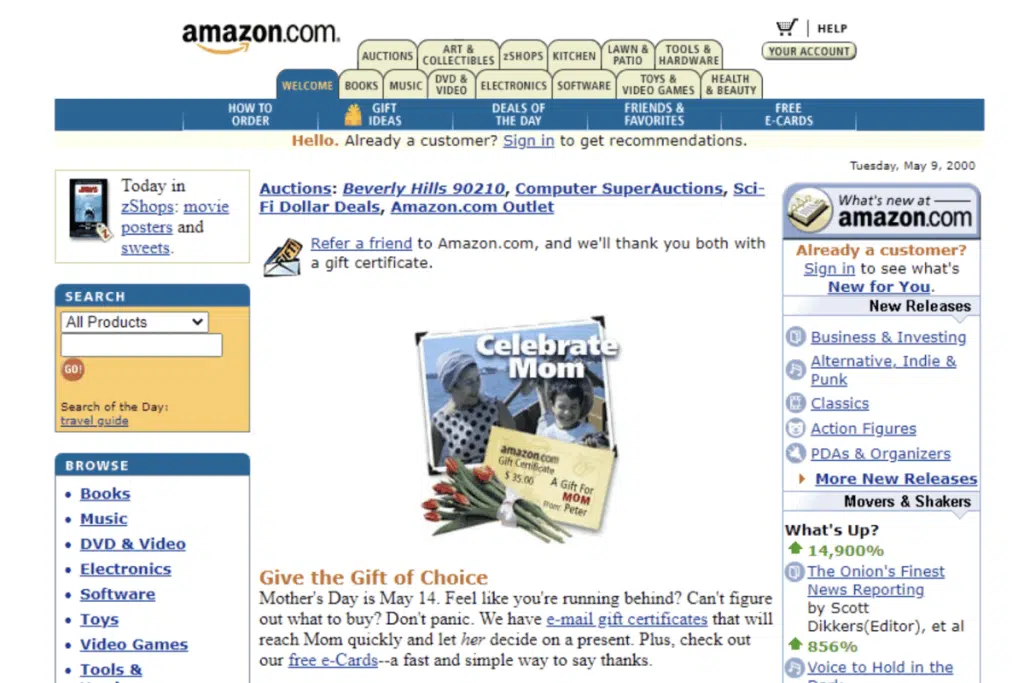
Amazon homepage in 2000.
The 2000s changed how Americans shopped. As companies like eBay and Amazon transformed online retail, consumers grew accustomed to ordering vast amounts of products with a few clicks and having purchases delivered directly to their doors. E-commerce turned convenience into an expectation and permanently changed the retail landscape.
Behind every online order was a vast logistics network. Freight rail’s intermodal system connected ports, warehouses, and distribution centers across the country, helping move shipping containers filled with consumer goods quickly and efficiently.
The same supply chain that powered the rise of e-commerce continues to deliver millions of online purchases every day.
2020s: The AI Revolution
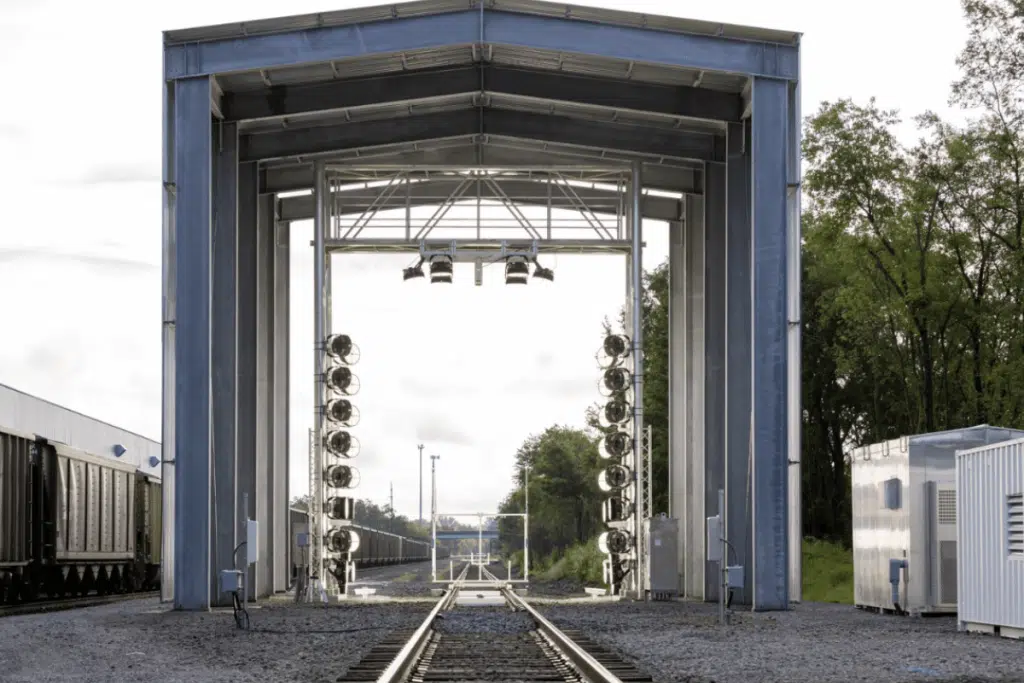
Example of a Digital Train Inspection Portal
Artificial intelligence is rapidly transforming how Americans work, learn, create, and communicate. What once seemed like science fiction is now part of everyday life, helping people quickly write, design, code, research, and solve problems. Few technologies have spread as quickly or promise to reshape as many industries.
Freight rail is evolving alongside it. Railroads are using AI to inspect infrastructure, identify potential equipment issues before they become problems, optimize network operations, and improve the efficiency and reliability of the nation’s supply chain.
Read the AAR Audio Narration
How Freight Railroads Shaped the Eras That Defined America
Every generation can point to moments that changed America.
The automobile. The first supermarkets. The suburbs. The Moon landing. Global trade. Online shopping. And now, artificial intelligence.
Each of those moments tells its own story. But they also share something in common.
None of them happened in isolation. Behind every major transformation was the ability to move enormous quantities of raw materials, products, and equipment across the country.
For nearly 200 years, freight rail has quietly made that possible.
As industries evolved and new technologies emerged, freight rail connected the factories, farms, ports, businesses, and communities that turned ideas into reality.
This is the story of how freight rail helped shape some of America’s defining eras—and how it continues to support the nation’s future today.
It began in the early twentieth century, when the automobile transformed American life.
By 1929, more than 23 million automobiles were registered on American roads. Just a decade earlier, there had been fewer than eight million.
American innovation and mass production turned the automobile from a luxury into an everyday necessity. In the process, it became one of the nation’s most powerful economic engines.
The industry created millions of jobs. It drove demand for steel, rubber, glass, petroleum, and machinery. And it reshaped where Americans lived, worked, and traveled.
Freight rail helped power that transformation—and it still does today.
Railroads remain the backbone of the automotive supply chain, moving nearly 75% of all new cars and light trucks sold in the United States while carrying the raw materials, components, and finished vehicles that support American auto manufacturing.
One of the next big moments for America was the Great Depression.
The stock market crash of 1929 left millions of Americans unemployed and forced families to stretch every dollar.
Affordable groceries suddenly mattered more than ever.
Supermarkets answered that moment by offering lower prices, greater variety, and a more efficient way to shop than Americans had ever experienced before.
Freight rail helped make that model possible.
Refrigerated railcars connected farms and food producers across the country, bringing year-round produce, meat, dairy, and packaged goods together under one roof while helping supermarkets expand rapidly throughout the decade.
That connection continues today.
Freight railroads move approximately 1.6 million carloads of grain and 1.7 million carloads of food products every year.
By moving large volumes efficiently over long distances, freight rail also helps keep transportation costs low, making modern life more affordable for American families.
Only a few years after that era, the nation faced an even greater challenge.
World War II demanded an industrial effort unlike anything America had experienced before.
At the peak of the war, railroads carried nearly 70% of intercity freight and more than 70% of passenger traffic, moving troops, raw materials, and finished equipment across the country.
Millions of soldiers traveled by rail. So did enormous quantities of coal, steel, fuel, and military equipment needed to supply factories and support the war effort.
The war cemented the United States’ position as the world’s leading industrial powerhouse.
Today, freight railroads continue that role by moving thousands of carloads of military equipment every year.
When the war ended, another transformation reshaped everyday American life.
The American Dream moved to the suburbs.
Low-cost mortgages, rising incomes, and the Baby Boom fueled a homebuilding surge unlike anything the country had ever seen.
Millions of families traded city living for backyards, automobiles, and homeownership.
Freight rail helped turn open land into entire communities by delivering the lumber, cement, steel, stone, and other building materials needed to build America’s suburbs.
That role hasn’t changed.
Today, freight rail moves more than two million carloads of construction materials each year.
In fact, rail lumber shipments closely track housing starts, making freight rail an important indicator of the nation’s homebuilding activity.
As the country looked toward the future, it set its sights even higher.
Putting a man on the moon required one of the largest industrial efforts in history.
More than 400,000 people worked on the Apollo program, with thousands of companies supplying the materials, machinery, and equipment needed to make the mission possible.
At Kennedy Space Center, NASA’s railroad delivered tens of thousands of tons of specialized stone used to build the crawlerway connecting the Vehicle Assembly Building to the launch pads.
More than half a century later, freight rail continues to support America’s space program by moving oversized rocket and spaceflight components that are too large or heavy for conventional highway transportation.
Not every defining moment came from technological achievement.
In the 1970s, global conflicts disrupted oil supplies to the United States, triggering fuel shortages, soaring gasoline prices, and long lines at gas stations.
Practically overnight, energy conservation became part of everyday life.
Americans lowered their thermostats, insulated their homes, drove smaller cars, and accepted a new national speed limit of 55 miles per hour to save fuel.
Conserving energy wasn’t just economical. It became a patriotic responsibility. Listen to this 1973 video ad from the then-U.S. Office of Energy Conservation.
The crisis also changed how Americans thought about energy and the environment. It raised awareness of fuel efficiency, strengthened support for conservation, and highlighted the value of freight railroads—the nation’s most fuel-efficient way to move freight over land.
Today, one train can move one ton of freight nearly 500 miles on a single gallon of fuel.
As the economy recovered, another American institution reached its peak.
By the 1980s, the shopping mall had become a fixture of everyday life.
Behind the scenes, freight rail was changing too.
The rapid growth of intermodal transportation—moving shipping containers seamlessly between ships, trains, and trucks—helped retailers stock stores faster and more efficiently, laying the foundation for the nationwide supply chains that continue to serve American consumers today.
By the 1990s, those supply chains stretched far beyond America’s borders.
Trade expanded rapidly. Imported goods became everyday purchases. Consumers gained access to an unprecedented variety of products from around the world.
Big-box retailers grew, supply chains stretched across continents, and “Made Around the World” became the new normal.
Freight rail helped connect America’s ports to inland distribution centers and manufacturing hubs through a rapidly expanding intermodal network, laying the foundation for our modern American economy.
Today, nearly 40 percent of freight rail traffic is tied to international trade, moving key goods like grain and automobiles.
As the new century began in 2000 (and we realized Y2K wasn’t the end of times), another revolution changed how Americans shopped.
Companies like eBay and Amazon transformed online retail, and consumers grew accustomed to ordering products with just a few clicks and having purchases delivered directly to their doors.
E-commerce turned convenience into an expectation and permanently changed the retail landscape.
Behind every online order was a vast logistics network.
Freight rail’s intermodal system connected ports, warehouses, and distribution centers across the country, helping move shipping containers filled with consumer goods quickly and efficiently.
That same supply chain continues to deliver millions of online purchases every day.
Today, another era is underway.
Few technologies have spread as rapidly as artificial intelligence.
Freight rail is—as always—evolving alongside it.
Railroads are using AI to inspect infrastructure, identify potential equipment issues before they become problems, optimize network operations, and improve the efficiency and reliability of the nation’s supply chain.
Freight rail has been there as America has grown, adapted, and reinvented itself.
From the automobile to artificial intelligence, our country has changed.
But one thing has remained remarkably consistent: moving America has always required moving the materials, products, and equipment that make progress possible.
And for nearly 200 years, freight rail has helped do exactly that.
THE BOTTOM LINE
Every era that transformed America—from westward expansion to the digital age—was powered in part by freight rail. As the country evolved, railroads evolved with it, helping build the economy, connect communities, and move the nation forward.