Below is the latest edition of The Signal ™ — our biweekly newsletter delivering freight rail news, insights, and interesting facts. Enjoying it? Subscribe to get the email sent straight to your inbox every other week. You can also check out past editions here.
Taking a Coffee Break with STB Chairman Patrick Fuchs
It’s Ted’s turn as Coffee Break host! In this episode, he sits down with STB Chairman Patrick Fuchs for a candid conversation on the future of rail regulation — covering everything from permitting reform and data modernization to balancing oversight with economic growth.🎙️Find Coffee Break on Spotify, Apple Podcast, or YouTube.
AAR Research Review Wrap Up
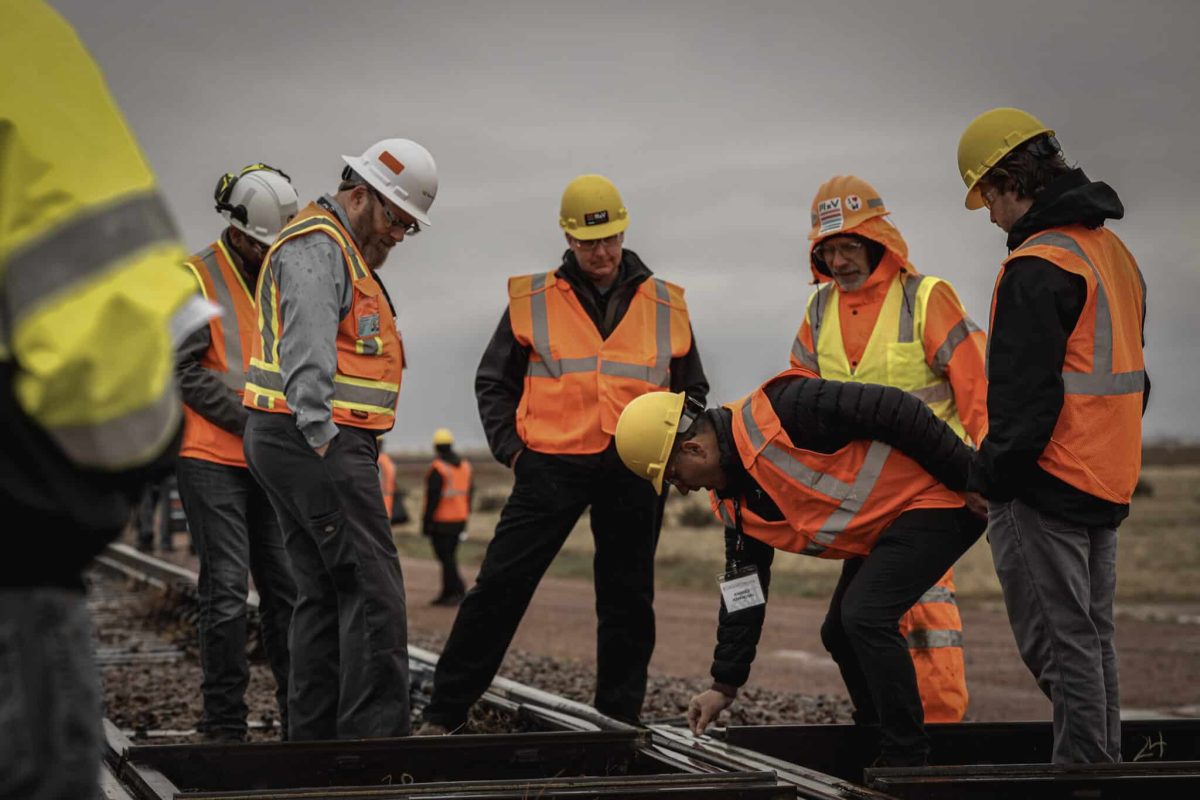
Nearly 300 rail industry professionals, including 39 Class I representatives, students, and global rail leaders, gathered in Pueblo, Colorado for the 31st Annual AAR Research Review hosted by MxV Rail this past April. The event highlighted collaboration, technical innovation, and the future of railroad engineering.
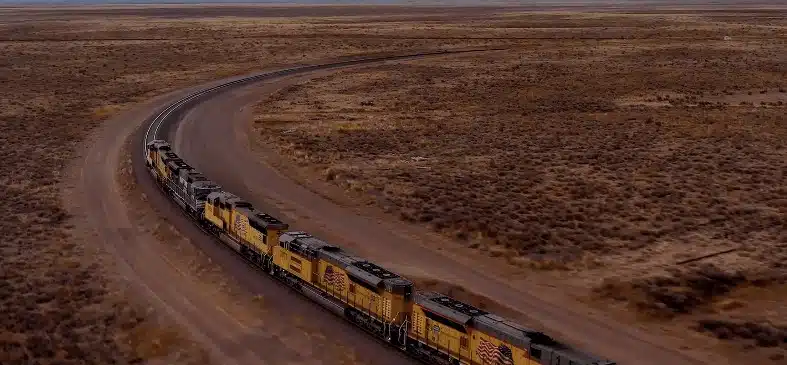
Celebrating 50 Years of FAST® Innovation
A major highlight was the 50th anniversary of FAST® — the Facility for Accelerated Service Testing — one of the rail industry’s most important research and testing programs. FAST® is a real-world laboratory where railroads, suppliers, and researchers can evaluate infrastructure, equipment, and emerging technologies under heavy-haul operating conditions. The program has played a critical role in advancing rail safety, reliability, maintenance practices, and engineering standards across North America. Attendees also participated in the popular FAST® Track Walk, getting an up-close look at the full-scale testing and engineering work that continues to drive railroad innovation.
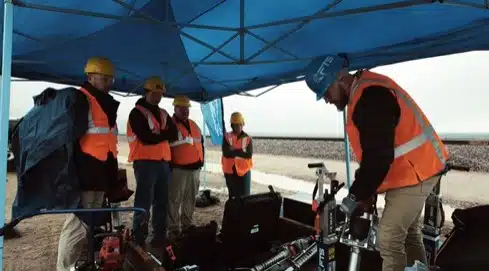
Investing in the Next Generation
This year also marked the launch of a new travel grant program from AAR and MxV Rail, designed to help develop future railroad engineers, scientists, and industry leaders. The initiative covered out-of-pocket travel expenses for 15 university students, giving them the opportunity to participate in technical sessions, network with industry professionals, and gain firsthand exposure to railroad research and innovation.
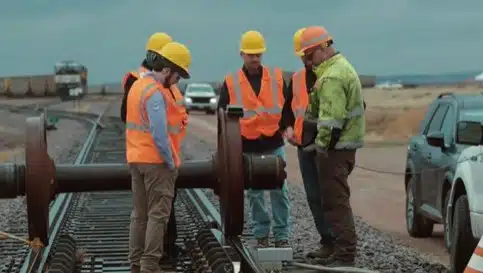
Strategic Research Initiatives (SRI) Presentations
Attendees received exclusive updates on AAR’s Strategic Research Initiatives (SRI) program through a series of in-person technical and strategic presentations. The sessions showcased the latest research findings, emerging technologies, and industry challenges currently shaping freight rail. SRI presentations are known for connecting researchers, railroads, suppliers, and academia around practical solutions that can improve safety, efficiency, sustainability, and operational performance across the rail network.
BONUS 👀: Harley Explains MxV Rail
Freight Rail After Markup: Breaking Down the BUILD America 250 Act
WEBINAR: Wednesday, June 3rd at 1pm ET
The House Transportation and Infrastructure Committee recently advanced the Build America 250 Act. What could the legislation mean for freight rail and the broader supply chain? Join GoRail and AAR Assistant Vice President for Government Affairs Melissa Connelly for a 30-minute virtual briefing on key markup outcomes, potential impacts on freight rail, and what comes next as the bill moves through Congress.
Ready for the Storm

Although hurricane season officially began yesterday, railroads across the country continue year-round preparedness efforts to protect infrastructure, support communities, and keep freight moving safely during severe weather. One example is Norfolk Southern, which maintains a comprehensive storm readiness strategy across its 22-state network.
The railroad’s Atlanta-based Network Operations Center operates 24/7 to monitor weather, train movements, and network performance, coordinating closely with field teams during storms. Preparedness efforts include inspecting vulnerable infrastructure, positioning personnel and equipment ahead of storms, maintaining drainage systems, and investing in specialized recovery equipment to strengthen network resilience and speed restoration efforts.
Norfolk Southern also supports communities impacted by severe weather through partnerships and relief programs, including its annual $250,000 commitment to the American Red Cross and the Community Disaster Relief Grant Program, which provides rapid assistance to affected nonprofit organizations and communities.
EXPERT INPUT: Pressure Builds for Stronger Federal Rail Preemption
The Washington Legal Foundation (WLF) is urging the Surface Transportation Board to issue a robust policy statement reaffirming federal preemption of state and local rail regulation under the ICC Termination Act (ICCTA). In a new blog post, WLF argues that a growing number of state and local governments are attempting to regulate rail operations in ways that could fragment the national freight network and undermine the uniform regulatory framework established by Congress.
For freight rail, the piece highlights growing momentum among legal, policy and industry stakeholders for a stronger federal preemption framework as challenges emerge across crew size mandates, emissions regulation, crossing-blockage laws, hazardous materials fees, and infrastructure permitting.
Then & Now: Early Computer Users
👆 An amazing lady named Bubbles explains the punch. Anyone else a little freaked out by the idea of someone in the future explaining how laptops and cell phones use to work? 😐
Did you know freight railroads were among the first industries to embrace computer technology? Long before modern computers existed, railroads relied on advanced data systems to manage the enormous complexity of moving freight across the country. In the late 1800s, railroads were already using punched-card tabulating machines — an early form of data processing that helped track shipments, schedules, payroll, and equipment.
By the 1950s and 1960s, freight railroads became pioneers in large-scale commercial computing. One of the earliest nationwide business computer systems was developed specifically for railroads to track railcars in near real time across North America. At a time when most businesses still relied heavily on paper records, railroads needed instant operational visibility to coordinate thousands of railcars moving between railroads, yards, and customers.
👆 A partial restoration of a 1960 film announcing IBM’s 7070 mainframe, IBM’s first fully transistorized stored program computer. What does that mean? We looked it up: It’s an early type of computer that replaced vacuum tubes with transistors and stored its instructions electronically in memory rather than relying on fixed wiring or external media.
The industry’s demands pushed technology companies like IBM to develop powerful mainframe systems capable of processing massive amounts of operational data. In many ways, freight railroads helped demonstrate that computers could do far more than scientific calculations — they could manage complex national business networks and supply chains at scale.
Today’s freight railroads continue to run on cutting-edge technology. AI, real-time analytics, onboard sensors, automated inspections, and GPS-based safety systems help railroads monitor trains, predict maintenance issues, optimize operations, and keep freight moving safely and efficiently across North America.
INDUSTRY READS
- POLITICO: No solace: Inflation rises and the economy slows as the Iran war drags on
- FREIGHT WAVES: Freight market pushes another wave of trucking firms into bankruptcy
- NATIONAL REVIEW (EDITORIAL): Don’t Revive the Railway Safety Act
- AMERICAN JOURNAL OF TRANSPORTATION: Houston ship channel tonnage up 12% in first quarter
- NEW YORK TIMES: 61% of Americans Said They Had to Cut Back on Groceries