Below is the latest edition of The Signal ™ — our biweekly newsletter delivering freight rail news, insights, and interesting facts. Enjoying it? Subscribe to get the email sent straight to your inbox every other week. You can also check out past editions here.
Although freight rail keeps America’s economy and supply chain moving, much of its impact goes unseen. In this episode of Coffee Break, GoRail President Betsy Cantwell talks grassroots advocacy, infrastructure grants, and how GoRail is helping communities understand the benefits of a strong, modern freight rail network.
Rising Diesel Prices Highlight Freight Rail’s Value
Diesel prices are climbing, and the impact goes well beyond what drivers see at the pump. According to the U.S. Energy Information Administration, at $6.53 per gallon on September 21st, the highest nominal price for diesel ever.
EIA points to a combination of high crude oil prices, tight global supplies of diesel and other distillates, and low U.S. inventories driving that jump.
All of this impacts the freight economy. Diesel is a major input for moving goods, and EIA notes that high prices can translate into higher freight costs. When it costs more to move a load, those added expenses can make their way through supply chains and ultimately contribute to higher prices for businesses and consumers.
It’s also a reminder of the role freight rail can play in keeping transportation costs in check. Railroads can move a ton of freight nearly 500 miles on a gallon of fuel, making rail roughly three to four times more fuel-efficient than trucking on average.
Additionally, inflation-adjusted rail rates were 46% lower in 2025 than in 1981 and have remained essentially flat over the past five years.
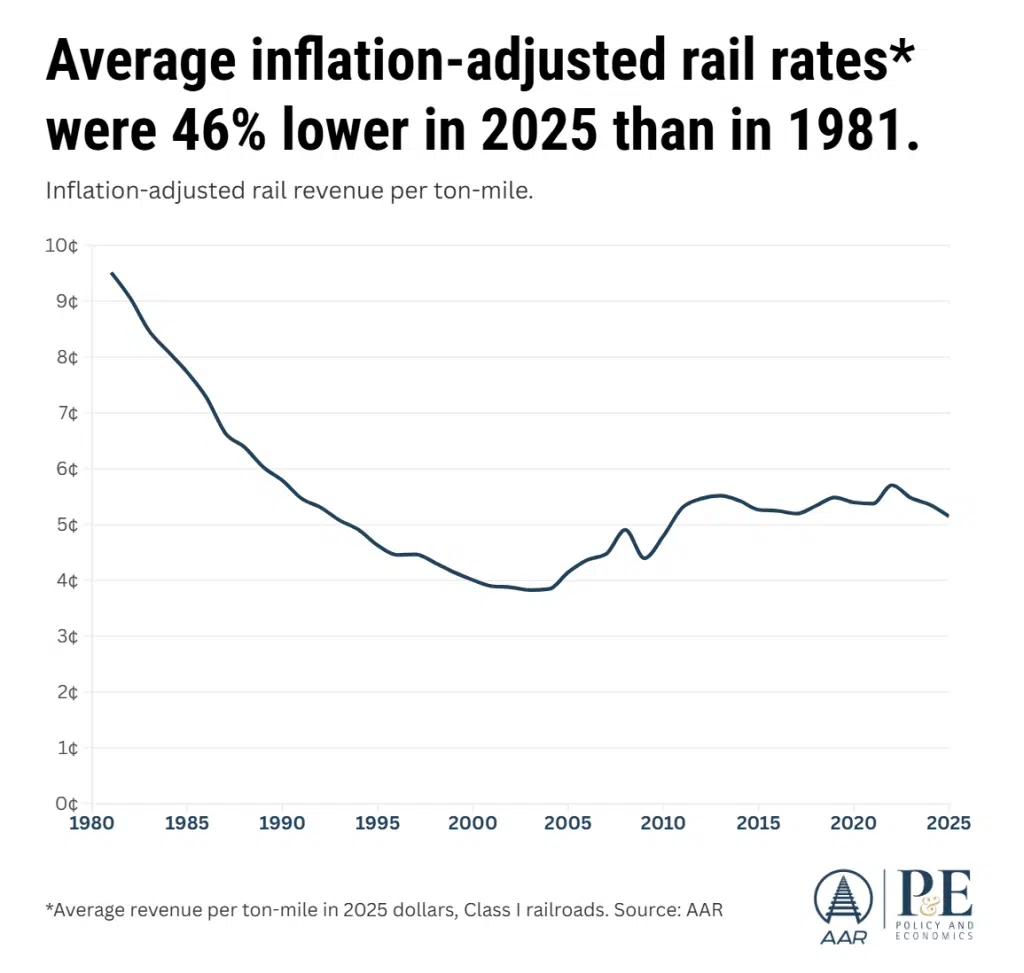
Transportation is baked into the price of nearly everything we buy. As diesel prices put new pressure on the cost of moving goods, freight rail’s ability to move large volumes efficiently and at relatively stable shipping costs can help ease some of that pressure, which helps keep everyday goods more affordable.
BONUS READ: How Rising Diesel Prices Will Show Up in Your Grocery Bill (Marketplace)
Staying Safe in Rail Yards
Meet Trent, a yard conductor whose shift starts with a crew safety briefing and equipment checks. Follow him through the yard to see how clear communication, careful inspections, and quick hazard reporting help keep everyone safe. Watch the video. 👆
Rail Industry Overview for August
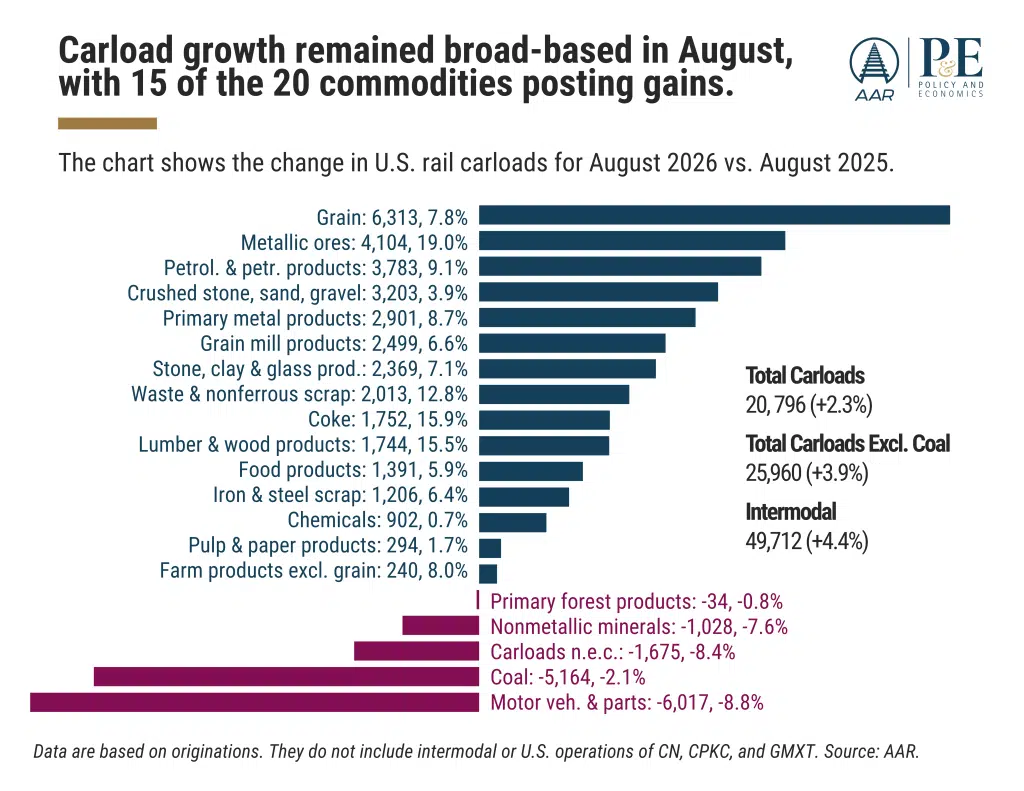
ICYMI, our Policy & Economics team recently released the Rail Industry Overview for August. Below are the key takeaways and you can read the full report here.
- Intermodal keeps setting records. August volume reached a new monthly record, while year-to-date volume through August was also the highest ever.
- Carload gains are unusually broad. Fifteen of 20 major carload categories saw year-over-year gains in August, helping push total monthly carloads to their highest level in nearly seven years.
- Manufacturing is providing another tailwind. Broad-based factory expansion is supporting gains in chemicals, metals, construction materials, and other rail-served commodities.
- The near-term signal remains positive. Risks remain, but rail traffic and other economic indicators currently point more toward continued growth than a meaningful slowdown.
Expert Input: Rail Safety Requires Innovation
AAR Assistant Vice President for Safety and Operations Joseph St. Peter recently weighed in on two-crew member mandates, arguing that “safety requirements should be based on demonstrated performance and risk—not on permanently preserving a particular staffing configuration regardless of how technology and railroad operations evolve.”
He continues: “A staffing mandate is not itself a safety standard. Meaningful safety standards should establish the outcomes that must be achieved and the risks that must be controlled, while allowing railroads and employees to determine the most effective way to meet them.”
Railroad 101: Automated Track Inspections
Did you know that many freight railroads use special rail cars with sensors that scan tracks at the train makes its regular trips? This helps crews spot problems early and decide where repairs are needed. 👆 See how it works at CSX.
Railroader Spotlight
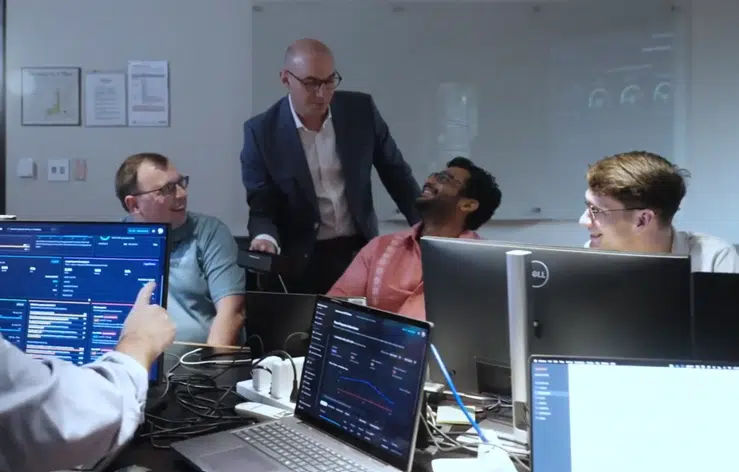
As AI changes both the speed and sophistication of cyber threats, Alex Levy, CISO at BNSF Railway, is embracing that same technology to stay ahead.
“As technology evolves, so does the creativity of the attackers,” Levy says. “So now with AI that creativity has become commoditized.” His approach is to use AI to anticipate and counter emerging threats, reduce friction for the business, and build an organization that can adapt and recover when the unexpected happens.
Wake Up! It’s National Coffee Day
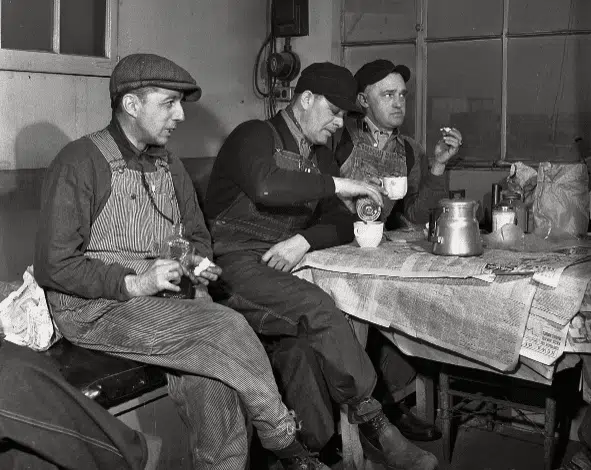
👆 Railroad switchmen taking a lunch break near a rail yard in Cook County, Illinois in 1943.
In a typical year, railroads carry 130,000 to 140,000 tons of coffee beans and roasted coffee. That’s roughly the equivalent of 11–14 billion cups of coffee. Speaking of coffee, consider checking out our Coffee Break podcast series where we speak with those that know freight railroading the best.☕
Industry Reads
- Why more companies are choosing trains over trucks for shipping (Marketplace)
- NTSB recommends end to crew members riding railcars during shoving moves (Trains)
- Strong commodity exports drive record cargo volumes at Port of Vancouver (American Journal of Transportation)
- 16 trucking companies hit bankruptcy court in less than a month (FreightWaves)
- Much More Than Words: The High Cost of Regulations (Realclear Markets Commentary)