Key Facts
- Freight trains can run in snow, ice, and extreme cold, but railroads adjust operations as conditions change.
- Extreme cold can stress steel rails, locomotives, and air brake systems, while snow and ice can affect switches, signals, and crossings.
- Railroads prepare year-round with inspections, forecasting, snow-removal equipment, switch heaters, and trained crews to keep essential goods moving safely.
🎧 Listen to this page • 6 min 59 sec
Adapted for listening and narrated by a real person. Read the full narration at the bottom of this page.
Freight trains can and do operate in snow, ice, and extreme cold. But operating a train in winter isn’t the same as driving a car in snow. A freight train can stretch more than a mile, weigh over 15,000 tons, and travel hundreds of miles from one part of the network that is sunny to another that is dealing with a blizzard. Some railroads also operate through mountain passes that receive more than 30 feet of snow each winter. Because of this, freight railroads prepare year-round and have detailed plans for how to keep employees and trains safely moving when winter weather arrives.
How does winter weather affect freight railroads?
Winter weather creates several different challenges for freight railroads. Extreme cold can stress steel rails and train equipment, while snow and ice can interfere with switches, signals, crossings, and inspections.
- Extreme cold stresses steel rail. As temperatures drop, steel contracts, increasing stress in the rail and making existing defects more likely to become broken rails.
- Ice can interfere with moving parts. Ice around switches, signals, crossings, and other equipment can be more disruptive than snow because trains rely on those systems to operate safely.
- Heavy snow can block visibility and access. Drifting snow can cover track, slow inspections, and make it harder for crews to reach switches, crossings, and signals.
- Cold can affect air brakes. In very low temperatures, long trains can have a harder time keeping compressed air moving consistently through the brake line. This means braking systems can take a longer time to charge.
👉 Freight Rail in Action: CN uses specialized “air cars” with onboard compressors to add air pressure from within the train, helping keep brake lines charged in extreme cold.
How do freight railroads prepare for winter?
Railroads prepare for winter months before temperatures drop. Engineering teams inspect bridges, track, signals, and communications equipment. Maintenance crews service snow-removal equipment and stock replacement parts, fuel, and deicing materials. Skilled rail employees also use inspection tools and wayside detectors to spot potential issues with track and equipment before severe weather puts added stress on the network.
By the time forecasts call for snow or extreme cold, railroads already have people, equipment, fuel, parts, and plans in place. Operations centers monitor conditions across thousands of miles of railroad, often using specialized weather services that track weather along individual rail corridors. Digital dispatching systems also help railroads adjust operations as weather changes across different parts of the network. As winter storms approach, railroads activate their winter operating plans. These plans often include:
- Repositioning locomotives and crews
- Preparing switch heaters and snow-removal equipment
- Moving engineering teams closer to areas expecting the heaviest snow
- Adjusting train speeds or train lengths
- Rerouting traffic
- Deploying additional crews
- Temporarily suspending operations if conditions become unsafe
👉 Freight Rail in Action: Ahead of winter, CSX analyzes historical performance data to identify cold-weather conditions that can sideline locomotives or equipment, helping keep trains in service during winter storms.
Do freight railroads set train tracks on fire in the winter?
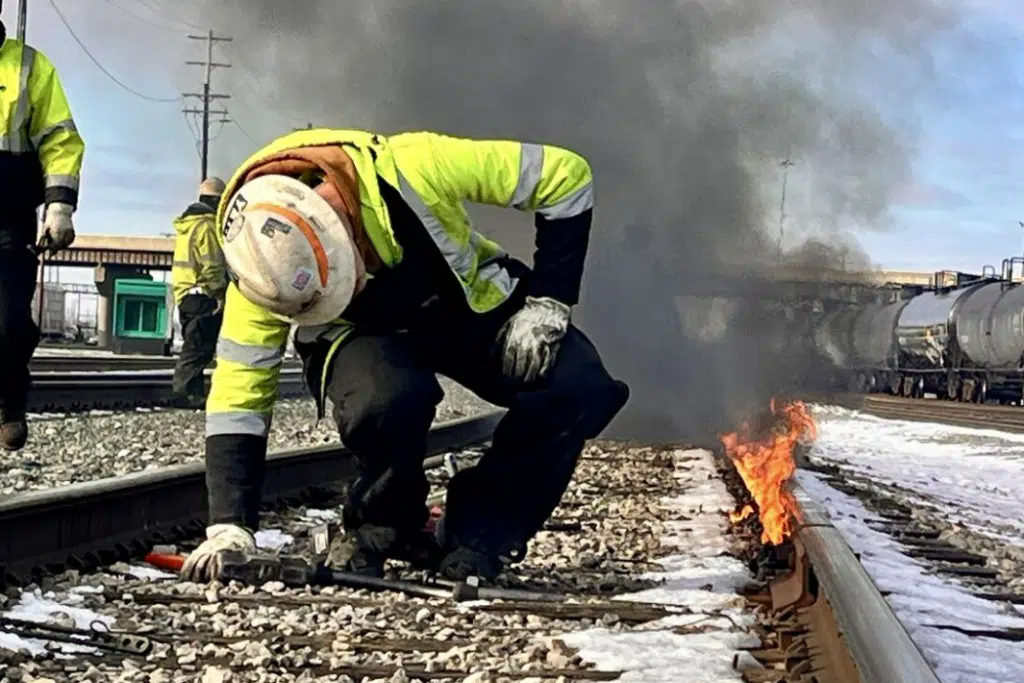
Example of a fire snake.
Freight railroads don’t set tracks on fire in the winter. What people usually see are switch heaters or maintenance tools used to keep rail infrastructure operating safely. A railroad switch is the movable section of track that allows trains to move from one track to another. Snow, slush, and ice can prevent those moving parts from locking properly, so railroads use switch heaters to keep them clear.
Depending on the location, switch heaters could be powered by electricity or propane. Propane systems direct heat beneath the rails. While flames are sometimes visible, they are contained and designed specifically to keep switches operating.
Maintenance crews might also use fire snakes—ropes soaked in kerosene that are placed alongside the rail to gently heat steel during repairs or thaw frozen switches. Fire snakes are commonly used to repair “pull-aparts,” where rails separate during extreme cold.
👉 Freight Rail in Action: Norfolk Southern’s field teams conduct “cold patrols” to identify and repair broken rails, using wraparound joint bars or heated fire snakes to keep trains safely moving.
How do freight railroads remove snow?
While freight railroads use technology to monitor weather and coordinate operations, clearing snow is still often hands-on work. Employees frequently remove snow and ice by hand around switches, crossings, and signals where they need to be more delicate and precise. Larger equipment handles deeper snow and keeps main lines open. Railroads use several specialized machines, including:
- Wedge plows, which push snow off the track
- Rotary snowplows, whose massive spinning blades cut through deep mountain snow
- Jordan Spreaders, which move snow away from the track while shaping ballast and drainage
- Jet or high-powered air blowers, which clear snow and ice from switches, yards, and terminals
👉 Freight Rail in Action: In California’s Sierra Nevada, Union Pacific’s Sierra Snow Fighters use specialized snow-removal equipment to keep Donner Pass open, where average annual snowfall is about 38 feet.
Can trains slip on icy tracks?
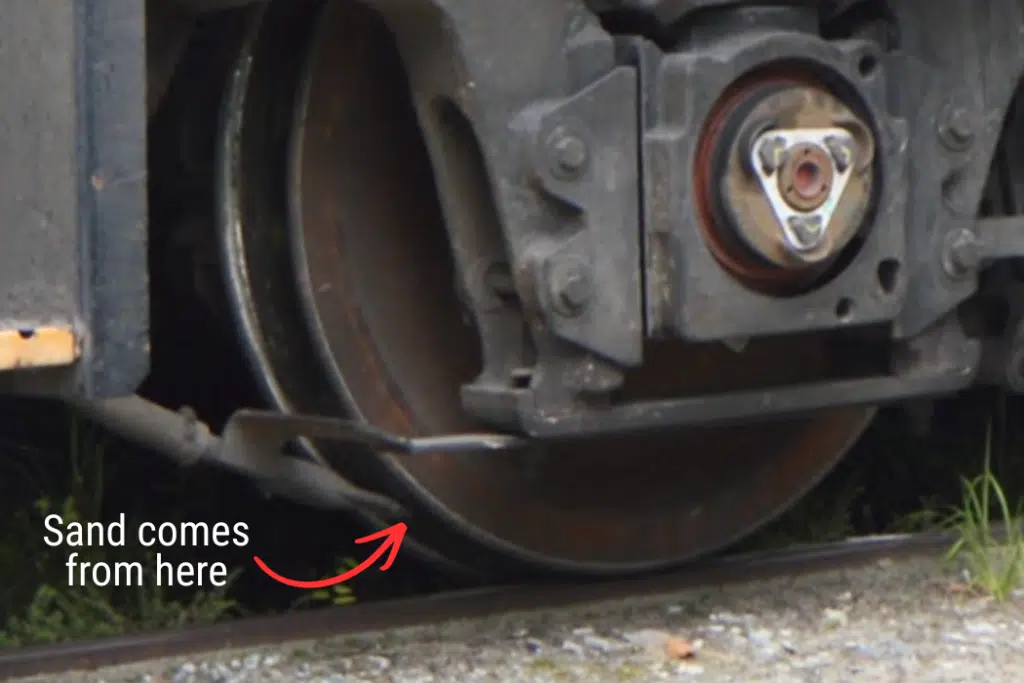
Just like a car tire can slip on ice, moisture between a steel wheel and steel rail can reduce traction. To improve grip, locomotives use sanders, which blow small amounts of dry sand directly in front of the wheels. The sand increases friction, helping locomotives start heavy trains, climb grades, and move through wet or icy conditions while reducing wheel slip.
What do freight railroads do about avalanches?
Some freight railroads operate through mountain territory where avalanches are a real winter hazard. Specialized avalanche teams monitor snowpack, weather, terrain, and known slide paths before trains move through these areas. When conditions become dangerous, railroads may temporarily close a route, trigger controlled avalanches, or inspect the track before reopening.
👉 Freight Rail in Action: Along BNSF’s route near Glacier National Park, avalanche forecasters monitor an area known as “Avalanche Alley” and trigger controlled slides when needed. CPKC protects mountain routes with nearly 50 snowslide and rockslide fences that automatically activate railroad signals if snow or rocks cross the tracks, while snowsheds allow avalanche debris to pass safely over the railroad.
How do rail employees stay safe during winter?
Nothing is more important to freight railroads than keeping their employees safe. Railroads provide cold-weather protective clothing, warming shelters, and procedures designed to reduce exposure during severe weather. Employees receive training to recognize frostbite, hypothermia, and other cold-related hazards, while work schedules and staffing may be adjusted as conditions change. During major storms, some railroads also use specially equipped winter-response vehicles, sometimes called “blizzard buses,” to transport employees safely and reach remote work locations.
Read the AAR Audio Narration
This is AAR Audio, and you’re listening to How Do Freight Trains Run in the Winter?
A freight train can travel hundreds of miles in a single trip.
It might leave under clear skies…
Cross freezing rain…
Climb through a mountain snowstorm…
And arrive where the weather is…sunny again.
Keeping a train moving safely through changing winter conditions takes much more than a good forecast.
It takes year-round preparation, ongoing monitoring, and skilled railroad employees.
Winter challenges railroads in different ways.
Extreme cold affects steel.
Snow can bury track and equipment.
Ice can stop moving parts from working properly.
And all of it can make inspecting and maintaining the railroad more difficult.
Every challenge requires a different solution.
Let’s start with the track.
As temperatures fall, steel contracts.
That increases the stress within the rail and makes existing defects more likely to become broken rails.
At the same time, locomotives and air brake systems have to work harder in extreme cold.
Freight trains use compressed air to apply their brakes.
On trains that can stretch for more than a mile, keeping that air moving consistently becomes more difficult as temperatures drop.
Braking systems can take longer to fully charge.
Ice often creates an even bigger challenge than snow.
Railroads depend on thousands of switches to guide trains from one track to another.
Those switches have moving parts that must lock into position every time.
Snow can usually be cleared away.
But ice? That can freeze those parts in place.
Without a properly functioning switch, trains can’t safely change tracks.
Heavy snow creates a different set of problems.
Drifting snow can cover the track.
Reduce visibility.
Slow inspections.
And make it harder for employees to reach switches, crossings, and signals.
Keeping the railroad open means staying ahead of all of those challenges at once.
That’s why winter preparation begins months before temperatures drop.
Engineering teams inspect bridges, track, signals, and communications equipment.
Maintenance crews service snow-removal equipment and stock replacement parts, fuel, and deicing materials.
Rail employees also use inspection technology and wayside detectors to identify potential issues before severe weather places additional stress on the network.
By the time winter arrives, the people, equipment, materials, and plans are already in place.
Railroads also monitor weather around the clock.
Operations centers track conditions across thousands of miles of railroad, often using specialized weather services that forecast conditions along individual rail corridors.
Digital dispatching systems help coordinate train movements as weather changes across different parts of the network.
As storms approach, railroads activate their winter operating plans.
That could mean repositioning crews and locomotives.
Preparing switch heaters and snow-removal equipment.
Moving engineering teams closer to areas expecting the heaviest snow.
Adjusting train speeds or train lengths.
Rerouting traffic.
Adding more crews.
Or, if conditions become unsafe, temporarily suspending operations.
One of the most common questions people ask is…
Do railroads set tracks on fire in the winter?
The answer is no.
What people usually see are switch heaters.
A railroad switch is the movable section of track that allows trains to move from one track to another.
Snow, slush, and ice can prevent those moving parts from locking properly.
So railroads use heaters to keep them clear.
Some are powered by electricity.
Others use propane.
If you see flames beneath a switch, they’re contained and carefully controlled.
Their only purpose is to keep the switch operating safely.
Maintenance crews also use tools called fire snakes to gently heat steel during certain repairs or thaw frozen switches during periods of extreme cold.
Although railroad employees use a ton of technology in daily operations, clearing snow is still a fairly hands-on job.
Employees often remove snow and ice by hand around switches, crossings, and signals where precision matters.
For deeper snow, railroads use specialized equipment, which is often big and very powerful.
Wedge plows push snow away from the rails.
Rotary snowplows use massive spinning blades to cut through deep drifts.
Jordan Spreaders move snow farther away from the track.
And powerful air blowers clear snow and ice from rail yards and terminals.
Some often wonder if trains slip on icy rails.
Just like a car tire can lose traction on ice, a steel wheel can lose grip on a steel rail.
To improve traction, locomotives use sanders.
This equipment is built into the train and blows small amounts of dry sand directly in front of the wheels.
That thin layer of sand increases friction, helping locomotives start heavy trains, climb steep grades, and move safely through wet or icy conditions.
Some railroads face another winter hazard.
Avalanches.
In mountain territory, specialized teams monitor snowpack, weather, terrain, and known avalanche paths throughout the season.
If conditions become dangerous, railroads may temporarily close a route, trigger controlled avalanches, or inspect the track before trains begin moving again.
Winter weather also creates risks for the people who keep the railroad running. The safety of these employees is the most important thing to freight railroads.
Railroads provide cold-weather protective clothing.
Warming shelters.
And procedures designed to reduce exposure during severe weather.
Employees receive training to recognize frostbite, hypothermia, and other cold-related hazards.
Work schedules may be adjusted as conditions change to help keep crews safe.
Because protecting employees is essential to operating the railroad safely.
Winter has always been part of railroading.
Snow.
Ice.
Extreme cold.
They’re all challenges freight railroads have managed for generations.
Through planning.
Technology.
Specialized equipment.
And experienced employees.
Freight railroads will always work to continue moving the essential goods America depends on—even when winter is at its worst.
The Bottom Line
Freight trains can continue operating through snow, ice, and extreme cold when it’s safe to do so. This is because freight railroads prepare year-round, adjust operations as conditions change, and rely on specialized equipment, technology, and trained employees.