Below is the latest edition of The Signal ™ — our biweekly newsletter delivering freight rail news, insights, and interesting facts. Enjoying it? Subscribe to get the email sent straight to your inbox every other week. You can also check out past editions here.
Taking a Coffee Break with Brenda
It’s here! We’re so excited to share the first episode of our new Coffee Break video podcast. Kathy sits down with AAR’s VP of Safety Policy and Analysis Brenda Moscoso to unpack the latest rail safety data—record-low accident rates, what’s driving the improvements, and how tech and human expertise are shaping a safer network.
BONUS: Take a deeper dive into the safety data numbers.
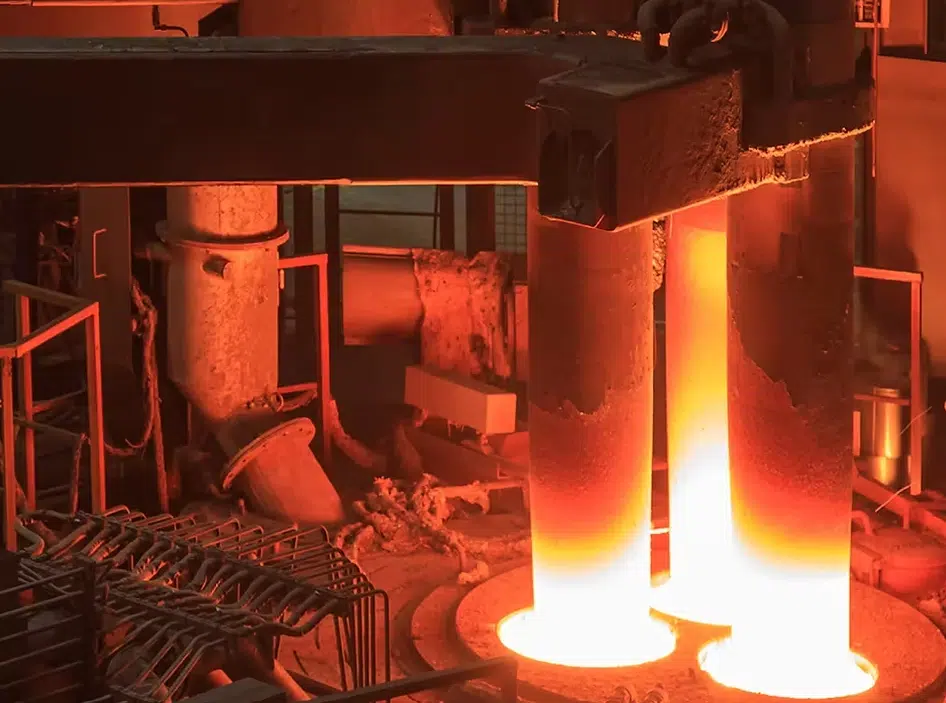
A Legacy Forged in Steel
Union Pacific Railroad recently signed a new seven-year agreement with Rocky Mountain Steel Mills—a partnership that stretches back more than a century. The deal supports the last remaining dedicated rail production facility in the U.S. and one of North America’s largest steel producers. A new $1 billion rail mill will produce 100-meter (328-foot) rails—reducing welds by roughly 80% and improving safety and reliability across the network. Powered by a 1,800-acre solar farm, it will also be the world’s largest solar-powered steel mill.
More than a supply agreement, this is a continued investment in the people and industry that helped build—and still power—America.
Harley Explains Cargo Theft
Hey—it’s Harley.
I wanted to share one of my latest videos with you, which is an important watch. In 2025, major U.S. railroads reported more than 75,000 thefts totaling over $200 million in losses. And those losses are a jump of more than 50% year-over-year. That’s exactly why efforts like the Combating Organized Retail Crime Act of 2025 (CORCA) matter. CORCA brings everyone to the table—railroads, shippers, law enforcement, policymakers—because this isn’t a problem any one group can solve alone. We need better coordination. Better information sharing. And stronger consequences for the people behind this.
EXPERT INPUT: Affordable Energy & Efficient Rail Go Hand-in-Hand
A coalition of 24 organizations, led by the American Energy Alliance, recently sent a letter to President Trump and Congress on the need for an evidence-based approach to rail regulation:
“Reliable, affordable American energy relies not only on what we produce, but on how effectively and efficiently we move it. Rail transportation is critical for the movement of coal and crude, and linking production operations to manufacturers and export terminals. Policies that increase the cost and complexity of moving our resources, like the proposed Rail Safety Act, will inevitably affect our supply chains. The end result is higher energy prices for families and businesses across the country.
This administration and this Congress have worked relentlessly to strengthen domestic supply chains and bolster energy security. Imposing sweeping new operational mandates on the way we transport that energy risks undermining those very goals. Burdensome new regulations will only hinder the long-term investments needed to maintain safe, efficient, and resilient energy transportation systems.”

Blast from the Past!
Ok, this is pretty cool.
A woman named Terri reached out asking if we wanted a stack of black-and-white railroad photos she’d found tucked away among her grandmother’s belongings. Naturally, we said yes — because you never know what kind of railroad history might show up in the mail.
What arrived was even better than we expected. Alongside the photographs was a fragile, disintegrating envelope addressed to Terri’s grandmother from guess who? Us! The AAR in 1955.
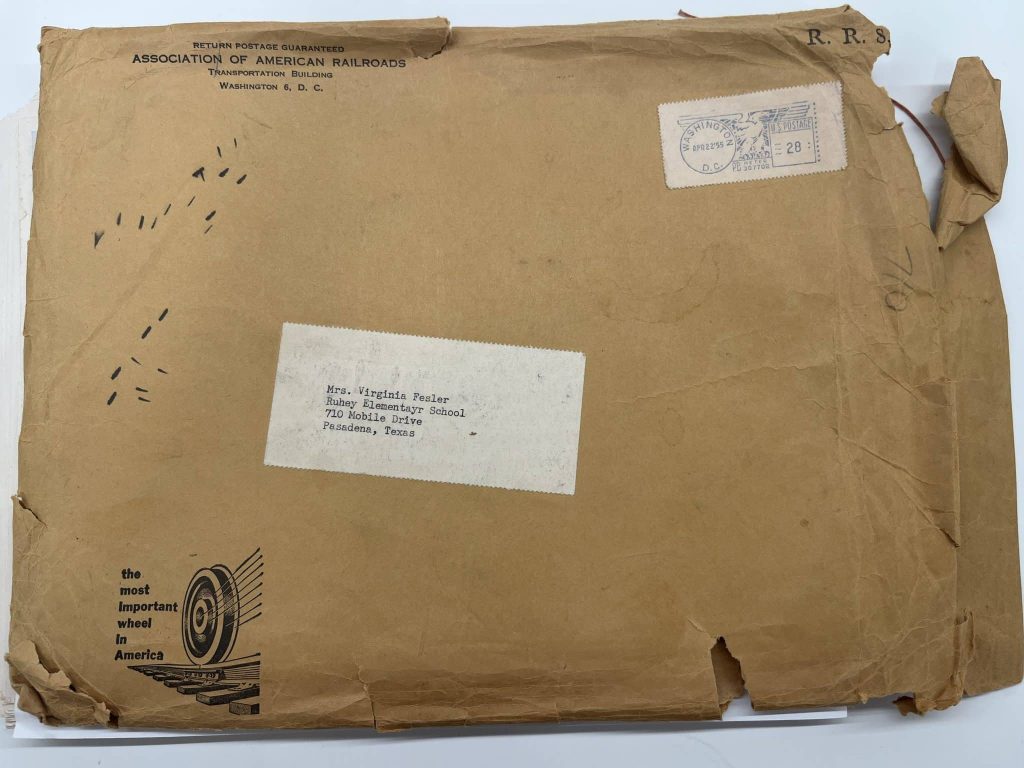
The photos were actually part of an original Association of American Railroads Railroad Transportation Teacher’s Kit from the 1950s — a nationwide educational program designed to introduce students to the role railroads played in American industry, commerce, and everyday life.
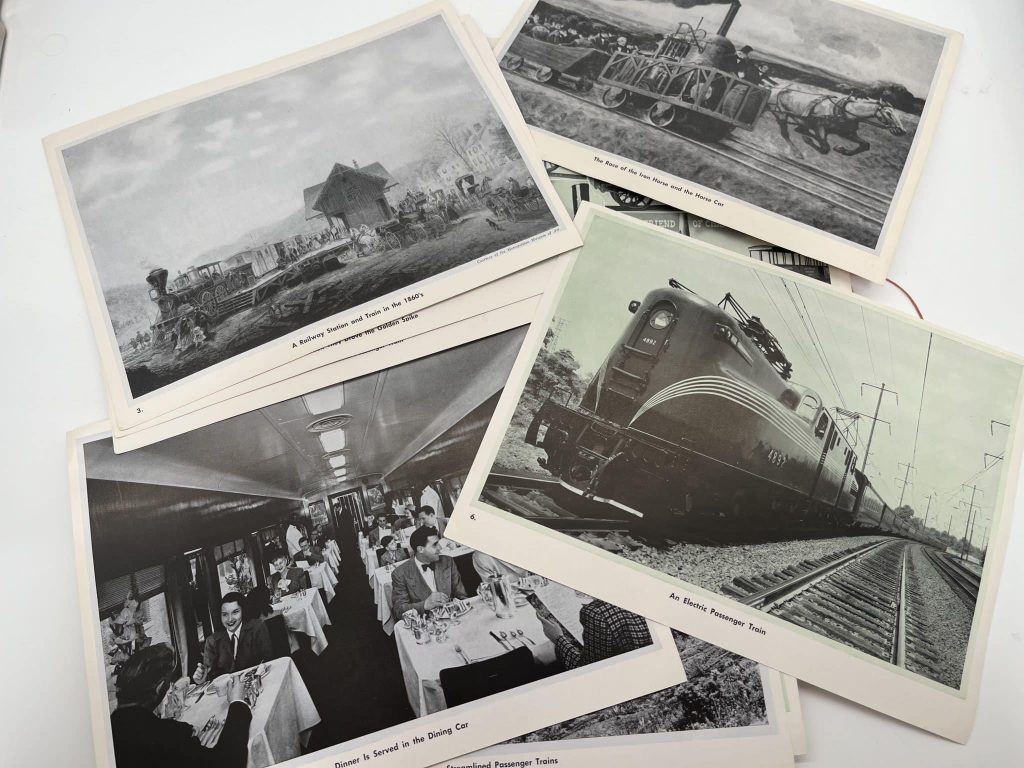
Distributed to schools across the country, the kit gave teachers ready-to-use classroom materials filled with photographs, maps, lesson plans, and visual aids explaining how railroads connected farms, factories, cities, and ports — powering economic growth and keeping America moving.
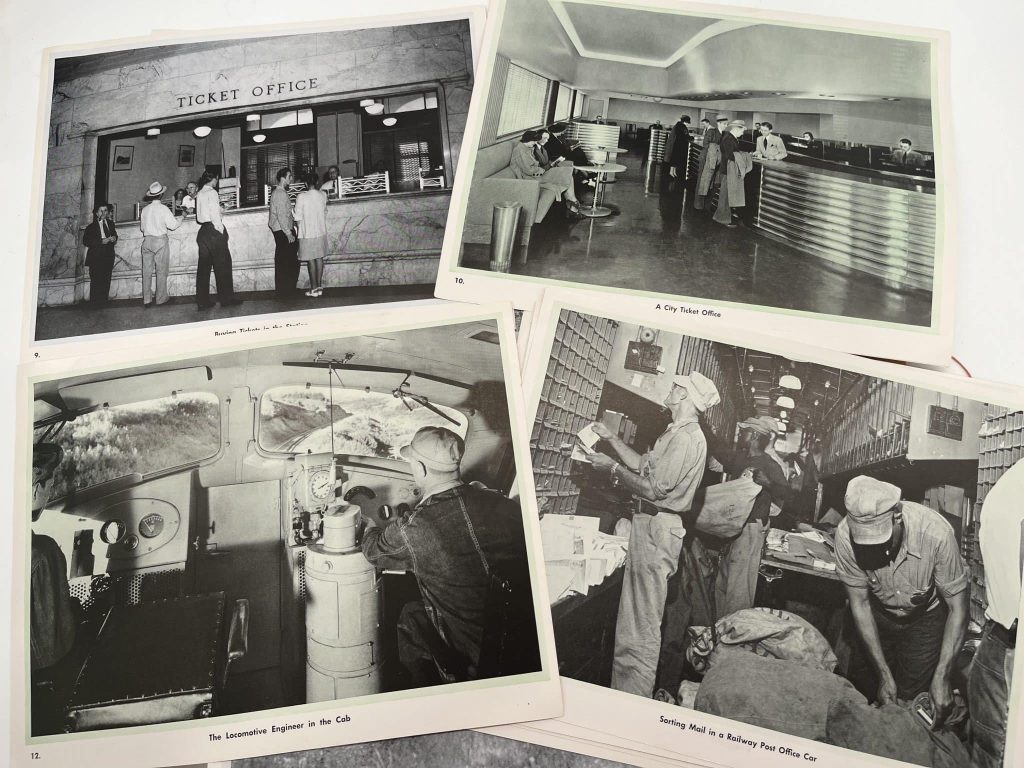
At a time when railroads symbolized both progress and mobility, the Teacher’s Kit brought the industry directly into classrooms, helping students understand the people, technology, and infrastructure behind the nation’s freight rail network while documenting an important era in railroad history.
Check out all the photos on our Celebrating America at 250 page. We think the best titled one is Puffing Billies.
(You know the printer-smashing scene from the movie Office Space? That was us after trying to scan all these photos 😂)
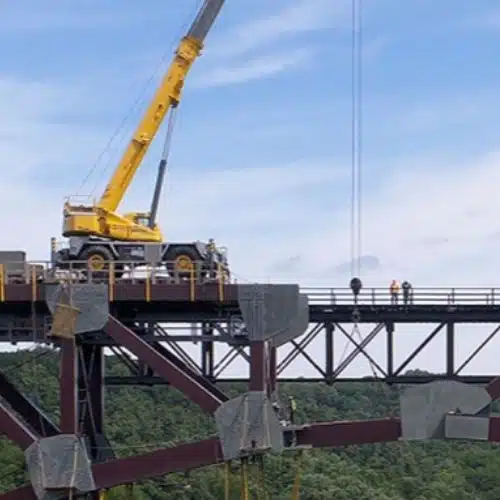
Then & Now: From Timber Spans to Engineered Giants
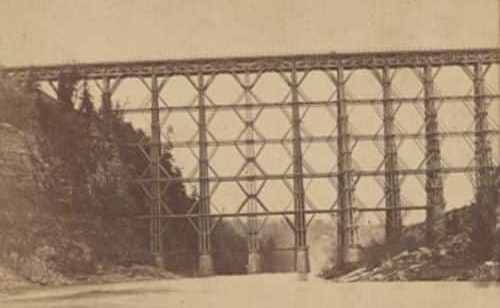
👆 Erie Railroad’s Wooden bridge over Genesee River north of Portageville, NY. 1875. Library of Congress.
Early freight railroads relied heavily on wooden bridges and trestles to cross rivers, valleys, and uneven terrain. These structures were effective for their time, but they were vulnerable to weather, rot, fire, and increasing train weights, often lasting only years or a few decades before requiring significant repair or replacement. Today, freight railroads build the majority of their infrastructure with steel and concrete, engineered to support heavier loads and withstand constant use for 50 to 100 years or more.
👇 A bridge under construction in New York.
INDUSTRY READS
- Washington Post: Economy picked up in early 2026, but inflation jumped, too
- Wall Street Journal: Amazon Built a Massive Supply Chain for Itself. Now It’s for Hire.
- American Journal of Transportation: Port of Brunswick again nation’s busiest auto terminal
- Daily News: Congress can stop cargo theft in N.Y. (Opinion)
- Washington Times: Union bosses want to make railroads more expensive (Opinion)