Below is the latest edition of The Signal ™ — our biweekly newsletter delivering freight rail news, insights, and interesting facts. Enjoying it? Subscribe to get the email sent straight to your inbox every other week. You can also check out past editions here.
How Freight Rail Helps Keep American Life More Affordable
You’ve probably heard a lot about inflation over the past few years — from supply chain disruptions to rising fuel costs and interest rates. While freight railroads don’t set the prices consumers pay, they play a major role in helping keep those prices from climbing even higher. Because transportation costs are built into nearly everything we buy, rail’s ability to move large volumes of goods efficiently and reliably helps businesses avoid sudden spikes in shipping costs that can drive up prices for consumers.
- Freight rail moves about 40% of the nation’s long-distance freight, including many of the raw materials and industrial goods that power the supply chain.
- One train can move a ton of freight nearly 500 miles on a single gallon of fuel, making rail the most fuel-efficient ways to move goods over land.
- Adjusted for inflation, rail shipping rates were 44% lower in 2024 than in 1981 — and have remained largely flat over the past five years.
Backed by significant private investment in infrastructure, freight rail continues to work behind the scenes to keep goods moving, support businesses, and help make everyday life more affordable for Americans.
👆 Learn more from Harley or check out this webpage.
Call Congress: Keep Freight Rail Moving Forward
This Thursday, Congress will consider the next five-year transportation bill, and the decisions made during that debate will shape the future of freight rail. Help ensure lawmakers prioritize policies that support private investment, sensible regulation, and a stronger, more connected rail network.
📣 It takes less than a minute to contact Congress — and your voice can make a difference.
The deal supports the last remaining dedicated rail production facility in the U.S. and one of North America’s largest steel producers. A new $1 billion rail mill will produce 100-meter (328-foot) rails—reducing welds by roughly 80% and improving safety and reliability across the network. Powered by a 1,800-acre solar farm, it will also be the world’s largest solar-powered steel mill. More than a supply agreement, this is a continued investment in the people and industry that helped build—and still power—America.
Transformative Track Technology
The 2026 CPKC CEO Award winners — John Furlong, Terry Savage, and Mohamad El Bitar — are redefining railroad safety by combining the expertise of skilled rail employees with advanced track technology.
Their autonomous fleet continuously collects and analyzes real-time data across the network, giving field teams the insights they need to shift from reactive repairs to predictive maintenance. In 2025 alone, the fleet logged more than 325,000 miles, helping drive a steady decline in track-related derailments while improving safety, reliability, and efficiency across the railroad.
EXPERT INPUT: Policymaking should be grounded in facts and data.
Three major coal and energy organizations — America’s Power, the National Coal Transportation Association, and Power the Future — recently wrote to congressional leaders. They warned that renewed consideration of prescriptive freight rail mandates could undermine network reliability, raise energy costs, and disrupt critical supply chains.
“Freight rail remains indispensable to America’s energy supply chain and industrial base. This is especially true for coal, which depends on efficient, high-capacity, and reliable rail service to move large volumes to utilities, manufacturers, and export markets. Policies that reduce network flexibility, constrain capacity, or increase operating costs can have significant downstream consequences – including higher energy costs, supply disruptions, and added pressure on domestic producers and consumers alike…we urge lawmakers to ensure any action is carefully tailored, evidence-based, and mindful of the critical role freight rail plays in powering the American economy.”
The Original Amazon Prime
Long before the Buy Now button, freight railroads were the original high-speed delivery network with rail depots acting like today’s modern porch drop off. In fact, historians often call the early 20th-century catalog system the “Victorian Amazon.”
Way back in the day, you’d get a massive Sears or Montgomery Ward catalog in the mail. At its peak, these catalogs (also referred to as the Consumers’ Bible) had more than 500 pages of goods you could order, from heavy cast-iron stoves and the earliest refrigerators to toys and bulk groceries.
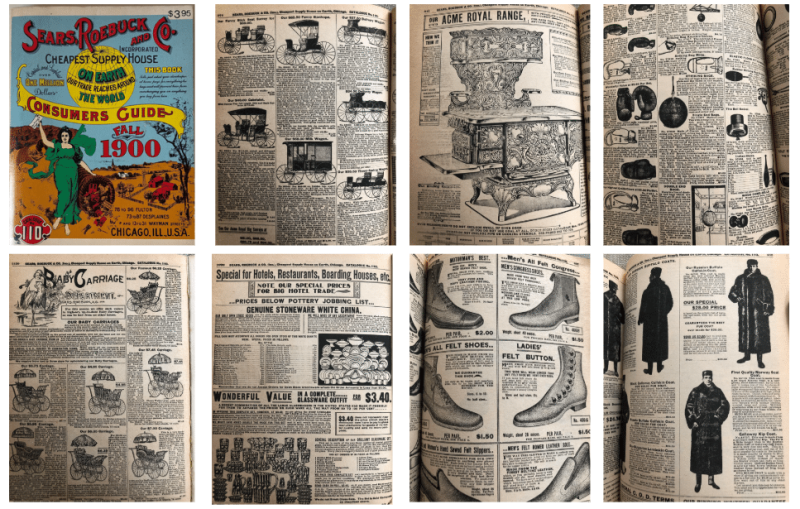
👆 Example pages from the Sears Roebuck and Co. Consumers Guide from fall 1900.
For many rural families, receiving this book in the mail was the highlight of the year, as it was often their only connection to the wider world of modern goods and fashion since rural general stores simply couldn’t stock a lot of these items. This was a “spend four hours as a family pouring over the catalog in the living room” kind of deal. Some of the wildest options included:
- Automobiles
- Ready-made grave markers and coffins
- Windmills and barns
- Pipe organs and player pianos
- Prefabricated schools and churches
After choosing the items you wanted, you’d mail a paper order form and payment to a hub like Chicago. Your goods would then be loaded on a freight car. Weeks later, the local station agent would notify you of its arrival. For massive orders like kit homes, the railroad parked your boxcar on a “team track” siding, giving you a window of time to unload all the pieces by wagon. It was the original “click and collect.”
For thousands of families, rail delivered the American Dream.
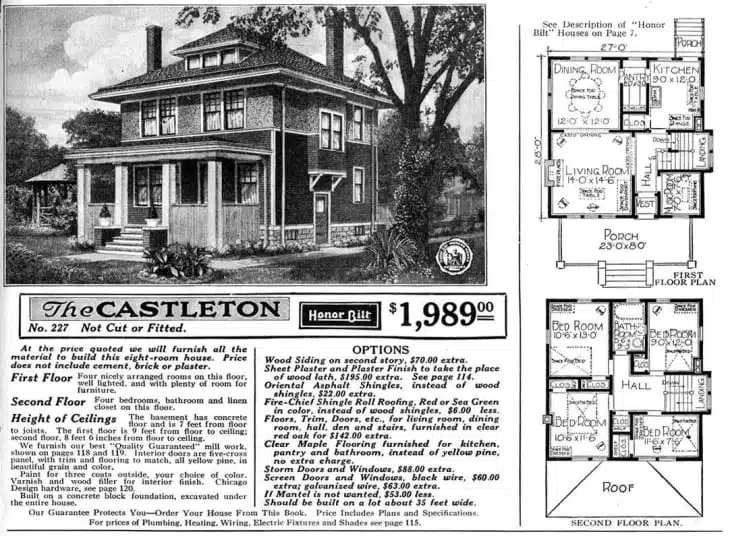
👆 A page from the Sears “Honor Bilt” Modern Homes catalog featuring “The Castleton” kit home — one of most popular houses shipped by rail across America in the early 1900s.
Between 1908 and 1942, Sears sold over 70,000 kit homes, turning homeownership into a shippable reality. Each kit was a massive logistics feat containing roughly 30,000 parts—from 750 pounds of nails and 27 gallons of paint to the kitchen sink. By pioneering “pre-cut” lumber stamped to match a 75-page manual, Sears enabled families to host neighborly “house-raisings” and save 30% on costs.
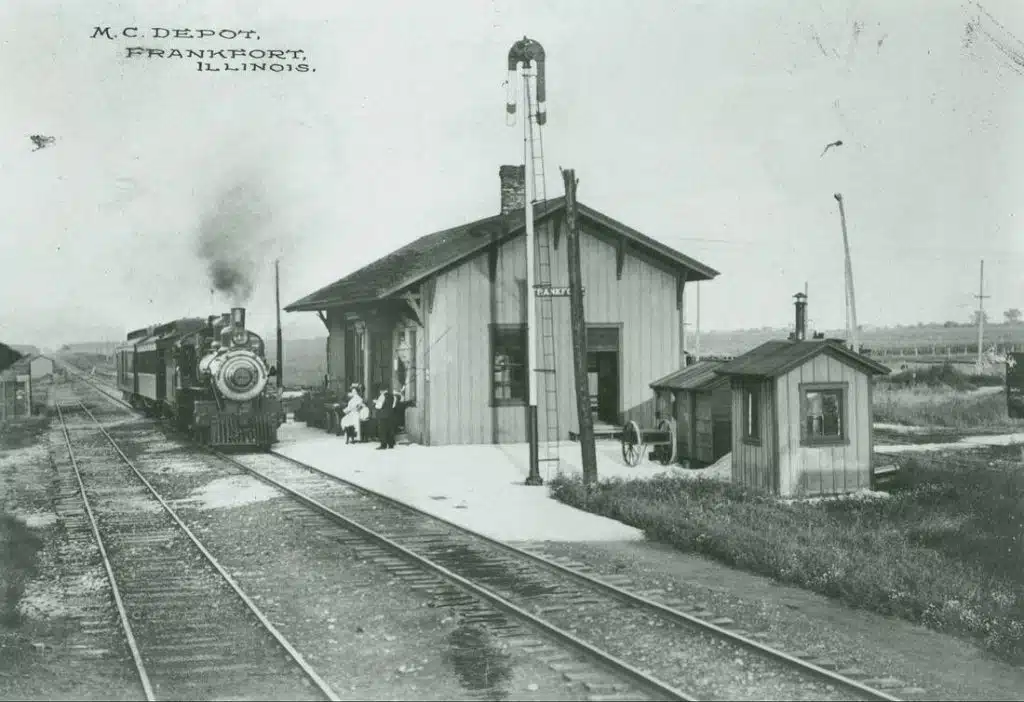
👆 Example of a train depot in Frankfort, IL circa 1910.
And while a few weeks for delivery sounds like an eternity today, for an early 20th-century farmer, it was a revolutionary upgrade. Before this “Victorian Amazon,” rural families were limited by the stock and inflated prices of local general stores. Waiting for a train to arrive with a state-of-the-art tractor, a cast-iron stove, or new wardrobe was a small price to pay for moving forward with America’s future.
Freight rail remains a critical link our modern e-commerce economy.
Behind nearly every online order and stocked store shelf is a freight rail network moving the raw materials and finished goods that power America’s economy. From steel and lumber to food, fuel, and consumer products, freight rail continues to connect Americans to the goods they rely on every day — while keeping businesses supplied and the economy moving.
INDUSTRY READS
- Reuters: Auto groups urge Trump to extend trade deal with Mexico, Canada
- Wall Street Journal: JD Vance’s Railroad Act
- Freight Waves: Railroads cheer crime bill passage, want DoJ to gear up supply chain theft fight
- American Journal of Transportation: US producer prices post biggest gain in four years as inflation rises broadly
- Trains: Proposed FAA rule could lead to restrictions on drone flights over rail facilities
- RealClear Markets: Congress Actively Considers a Way to Make Our Roads More Dangerous (Opinion)