
Below is the latest edition of The Signal ™ — our biweekly newsletter delivering freight rail news, insights, and interesting facts. Enjoying it? Subscribe to get the email sent straight to your inbox every other week. You can also check out past editions here.
March 31, 2026. Edition #190. WHO’S IN YOUR BRACKET?
🍺 From Grain to Game Day
The U.S. beer industry is huge—pouring over $471 billion into the economy and supporting 2.42 million jobs, according to the Beer Institute.
When March Madness tips off, so does a surge in beer consumption, with fans packing bars and watch parties nationwide. Behind every cold one is a full supply chain at work—agriculture growing the ingredients, the beer industry brewing the beer, and the freight rail industry moving both ingredients and finished products across the country at scale.
👆 Want to see how it all comes together? Hear it straight from Harley, a big beer fan.
Real-Time Protection for Yard Workers

For freight rail employees, safety isn’t just about following rules—it’s about continuously raising the bar. That mindset led Canadian National Operations teams to develop a new solution to better protect employees working in busy intermodal yards.
Their innovation, the Proximity LifeSaver Device, is a wearable system that delivers real-time alerts when car mechanics and cranes get too close—adding an extra layer of protection in dynamic, low-visibility environments.
After a successful pilot at Montreal’s Taschereau Yard in late 2025 and strong feedback from frontline teams, CN is now exploring expanding the technology to more yards in 2026.
Inside a Dual Rail Gang
Before sunrise in Attalla, Alabama, Norfolk Southern’s R3 Dual Rail Gang gets to work on something really impressive—replacing both rails at the same time in one coordinated operation. By tackling both rails in a single work window, teams can complete major track renewals faster and reduce downtime on busy mainlines.
This high-production effort is powered by more than 85 skilled railroaders—many with decades of experience—working in sync with a full lineup of specialized machines that travel across NS’s 22-state network. Their expertise, coordination, and precision are what make this complex operation possible.
The impact is significant: renewing critical routes, supporting safe train speeds, reducing defects, and strengthening the railway for the long term.
EXPERT INPUT: Regulation and the Cost of Moving Goods
A new paper from the Hoover Institution finds that decades of growing regulation have quietly slowed U.S. freight transportation. Across rail, trucking, air, and water, added rules act like a compounding tax—reducing productivity, raising costs, and discouraging investment over time.
The impact is measurable: a 5% increase in regulatory restrictions can raise freight costs by up to 2.3% and cut shipping volumes by as much as 4.1%. Rather than shifting freight between modes, these higher costs reduce overall goods movement—highlighting how cumulative regulation can ripple through supply chains and the broader economy.
Then & Now: From Printed Schedules to Real-time Networks
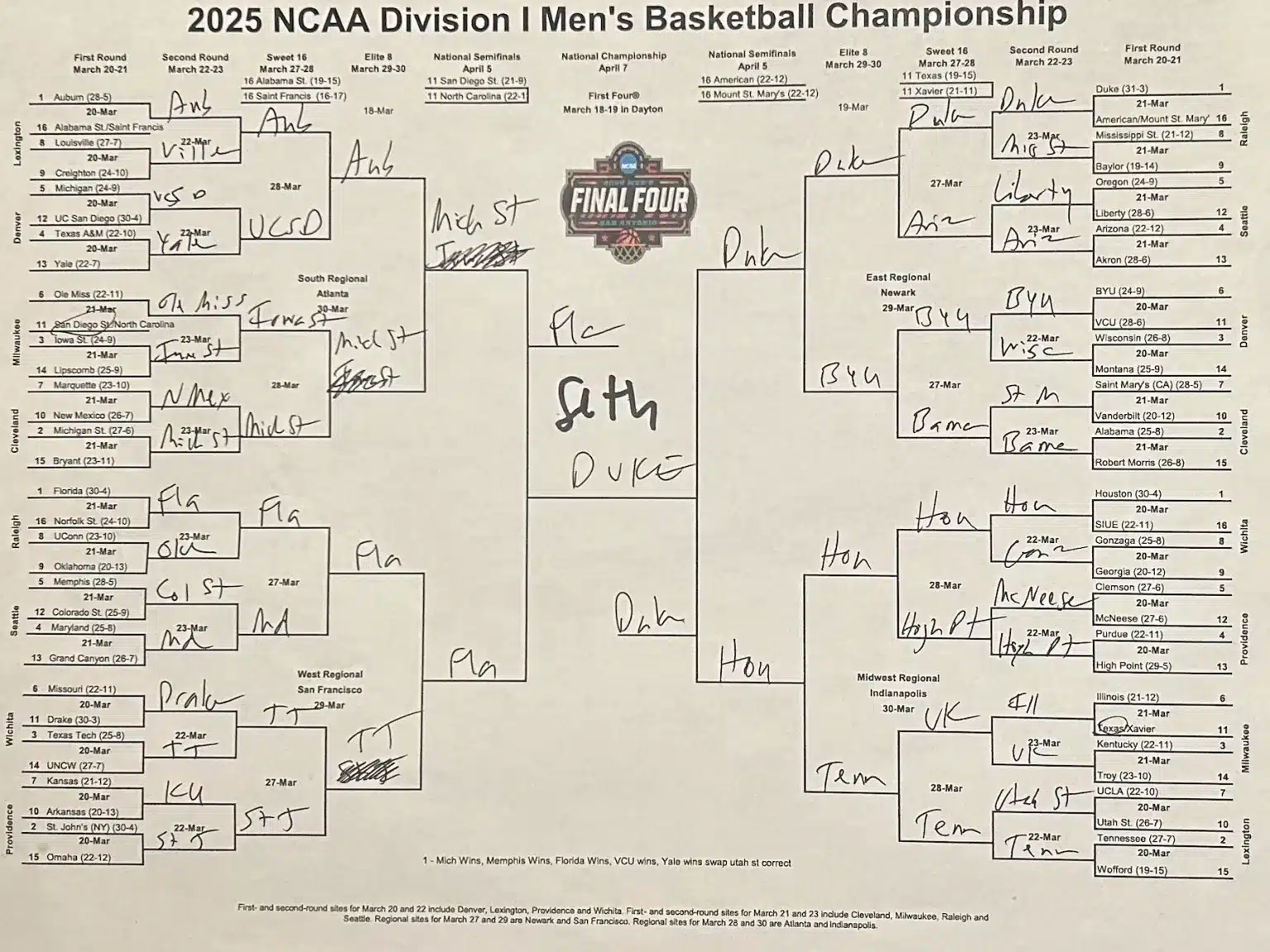
👆 An example of last year’s bracket from HoopsHQ.
Before everything went digital, March Madness meant paper brackets—printed sheets filled out by hand and debated in real time. And even today, in a world of apps, many still print them out—or use chalkboards—holding onto the tradition as a hands-on, social ritual where every mark, every upset, and every “who’s in your bracket?” still matters.
That little factoid made us think of this Signals’ Then & Now. 👇
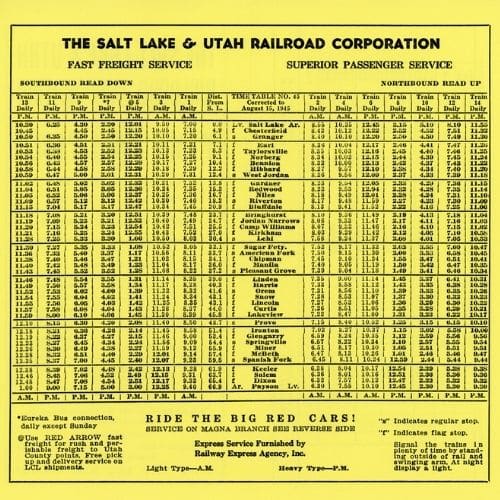
👆 Inside of the Salt Lake and Utah Railroad’s timetable number 45. Showing the timetable for the mainline. Published in 1945, one year before the railroad was closed.
In the 19th century, freight rail operations depended on printed timetables, pocket watches, and strict adherence to schedules. Trains shared single-track lines, and crews relied on timed separation — often waiting at sidings — to prevent conflicts. Accuracy mattered, and even small errors could have serious consequences.
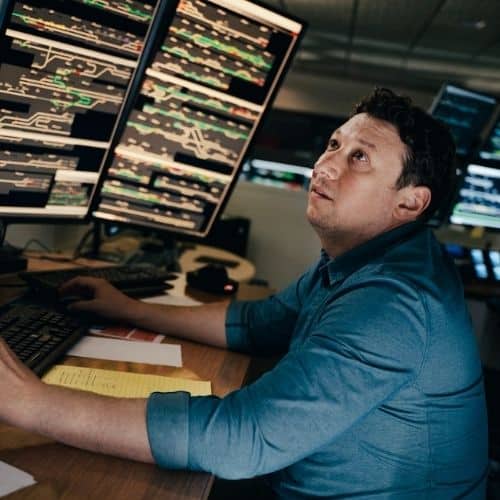
👆 A modern day dispatcher.
Freight railroads manage their networks through centralized traffic control and digital dispatching systems that monitor train locations in real time. Dispatchers can adjust movements dynamically, coordinate traffic across long distances, and respond quickly to changing conditions — improving both safety and reliability across a far more complex system.
Industry Reads
- Wall Street Journal: Powerful House Republican Joins Retirement Wave
- Associated Press: The war in Iran sparks a global fertilizer shortage and threatens food prices
- FreightWaves: Hapag-Lloyd profits tumbled in 2025 despite carrying more cargo
- Logistics Management: Truck tonnage sees February gains, reports American Trucking Associations
- Forbes: The Railway Safety Act: A Trojan Horse For Bigger Government (Opinion)