
Below is the latest edition of The Signal ™ — our biweekly newsletter delivering freight rail news, insights, and interesting facts. Enjoying it? Subscribe to get the email sent straight to your inbox every other week. You can also check out past editions here.
February 24, 2026. Edition #188. BEAMFORMING
Efficiency in Every Engine
Although rail accounts for a small share of transportation-related emissions, railroads are still cutting fuel use where they can. CSX is expanding Automatic Engine Start-Stop (AESS) technology to shut engines down when they’re not needed, lowering fuel use, costs, and emissions.
In 2024, CSX introduced AESS Assist, adding improved shutdown performance and battery support. They also partnered with Wabtec on software upgrades that keep locomotives off longer — boosting efficiency and environmental performance. Check out the video above. 👆
BONUS: Want to see freight rail keep using technologies like this? Tell Congress to support smart freight rail policies that allow for new safety and efficiency innovations.
🗓️ Upcoming Events
(Webinar) Thursday, February 26, 2:00 PM (EST): The Modern Railroad: Technology Driving the Future of Freight. GoRail will bring together industry leaders to discuss how new technologies are transforming freight rail — and what it means for the next transportation reauthorization.
(In-Person) Wednesday, March 4: Railroad Day on Capitol Hill. Join us in Washington, D.C. to help showcase the vital role railroads play in supporting our communities, economy, and national supply chain. Already planning to attend? Be sure to post on social! You can access our social toolkit here.

🤔 Ask an Expert
We asked Dan Keen, AAR’s AVP of Policy Analysis “do railroads make American life more affordable?”
“No one thinks groceries are cheap right now. But freight rail’s cost stability helps keep transportation costs from pushing prices even higher—especially after years of supply-chain disruption.
Over the past five years, global supply chains have been hit by everything from the pandemic to labor shortages and port congestion, driving up the cost of moving goods and adding to inflation. Yet through those shocks, rail transportation costs stayed more stable than other freight modes.
Why that matters: Research using more than 30 years of federal data shows that when trucking costs rise, consumer prices tend to rise quickly and sharply. Rail cost increases, by contrast, have a much smaller and slower impact—and fade faster. Because rail handles nearly 40% of long-distance freight movement, that stability helps absorb volatility in the system before it reaches store shelves.”
Rail Gang 9001 For the Win

👆CEO Jim Vena, right, speaks with Machine Operator Delbert Manygoats in Aztec, Arizona.
Union Pacific’s Engineering Rail Gang 9001 replaced eight miles of track near Aztec, Arizona, in just 16 days, using 24 pieces of heavy equipment and winter rail-heating techniques to stay on schedule while freight kept moving.
The project, part of the railroad’s multibillion-dollar infrastructure investment, was completed safely as the crew celebrated eight years injury-free. CEO Jim Vena visited the site to recognize the team and meet several multigenerational family members working side-by-side on the gang.
Safer Railroads Through Ultrasound
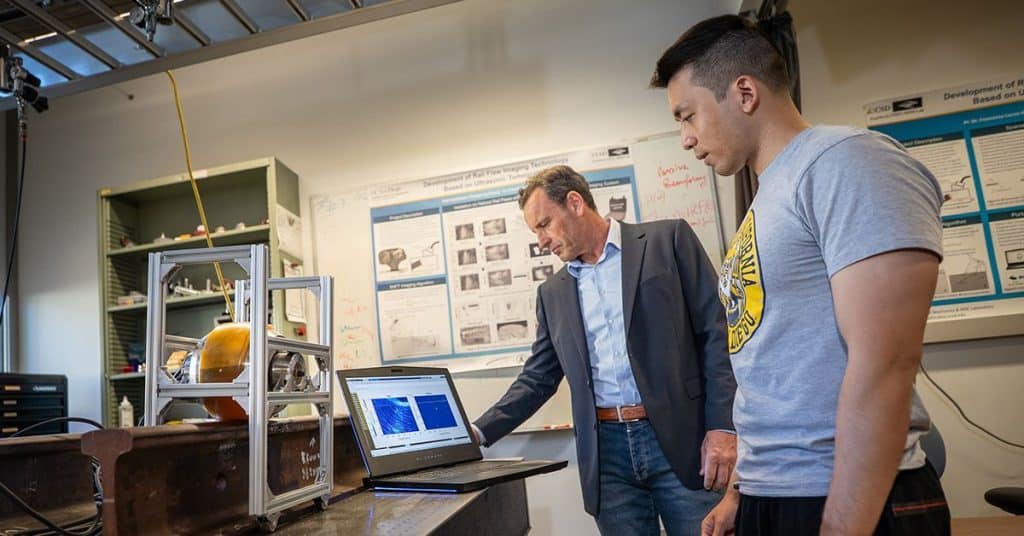
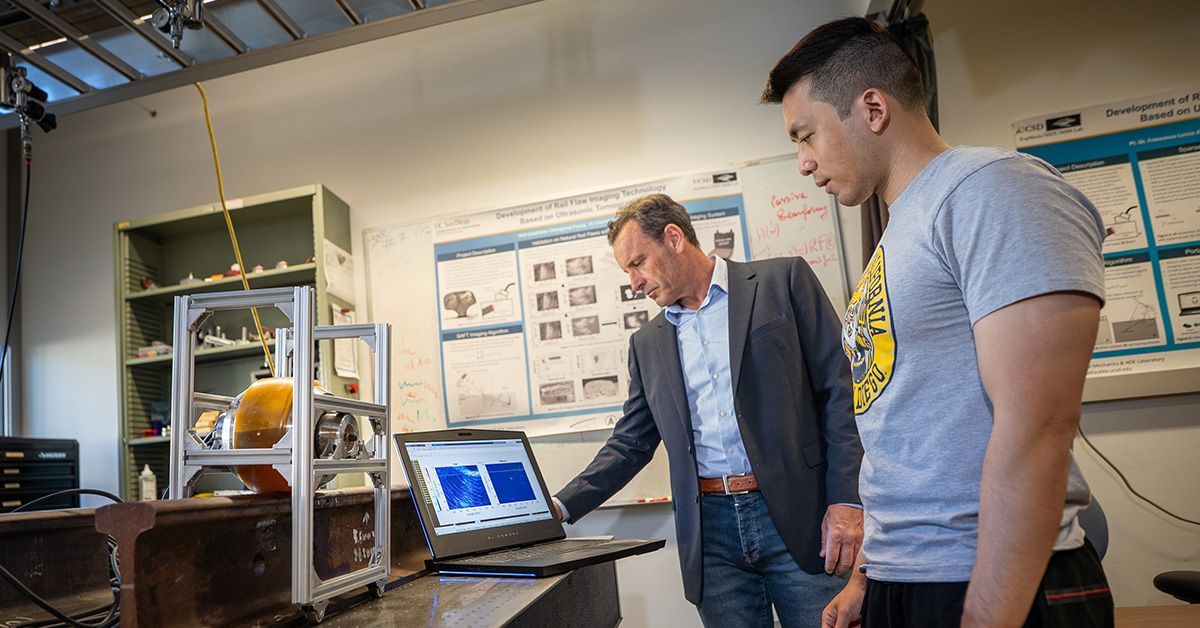
👆 Professor Francesco Lanza di Scalea (left) and postdoctoral scholar Chengyang Huang (right) developed an innovative ultrasound method that reveals internal rail defects, generating high-resolution images in real time as a wheel moves over the track.
UC San Diego engineers have developed a compact ultrasonic rail-inspection system that detects hidden cracks in real time as a wheel rolls over the track — and, unlike traditional systems that produce abstract waveforms, it generates clear, high-resolution images of internal defects.
The project is supported by industry partners including MxV Rail and the folks here at the AAR, helping connect the research to real-world freight rail testing and deployment.
Powered by advanced beamforming and imaging algorithms, the technology could help railroads find problems earlier, prevent derailments, and reduce inspection costs, with potential uses beyond rail in aviation and other infrastructure.
🧠 What’s Beamforming? Yeah, we had to look it up too. Beamforming is a technique that steers and focuses sensor signals to create clearer, more detailed images.
EXPERT INPUT: Framing the 2026 Surface Transportation Reauthorization
A new report from the Alliance for Innovation and Infrastructure frames the 2026 Surface Transportation Reauthorization as a choice between continuing fragmented, prescriptive policymaking and adopting a more disciplined, performance-based federal approach.
The paper argues that while infrastructure investment enjoys bipartisan support, federal programs have steadily expanded without clearly defined objectives, measurable outcomes, or consistent reassessment of purpose. It urges Congress to clarify what problems are truly national in scope, refocus the federal role on setting goals rather than dictating methods, and align incentives with real-world operational realities.
Then & Now: From Covered Wagon to Covered Hopper Car
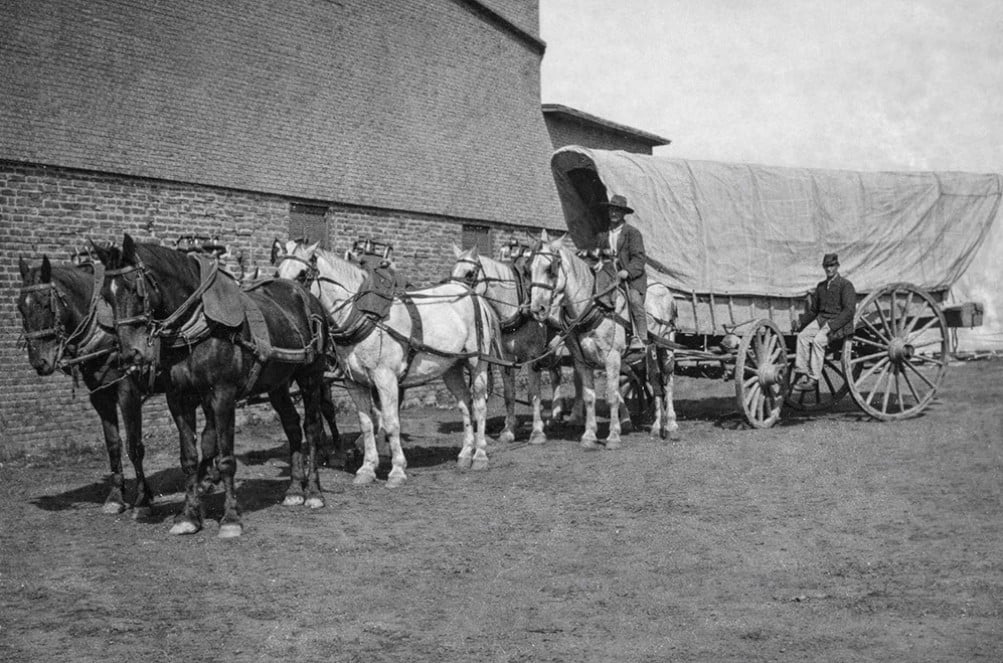
👆 Before railroads, grain moved by wagon — like the Conestoga — to mills or river ports, then downstream to market. The driver here sits on a “lazy board,” used for brief rests since these wagons had no front seat.
In America’s early years, getting grain to market was slow and uncertain, relying on wagons over rough roads or river routes limited by weather and distance. The rise of railroads transformed agriculture, allowing farmers to ship harvests farther and more reliably using hand-loaded boxcars and small local depots.
By the 19th century, rail connections were already reshaping grain markets, linking rural producers to growing cities and export terminals and laying the groundwork for a national agricultural economy.
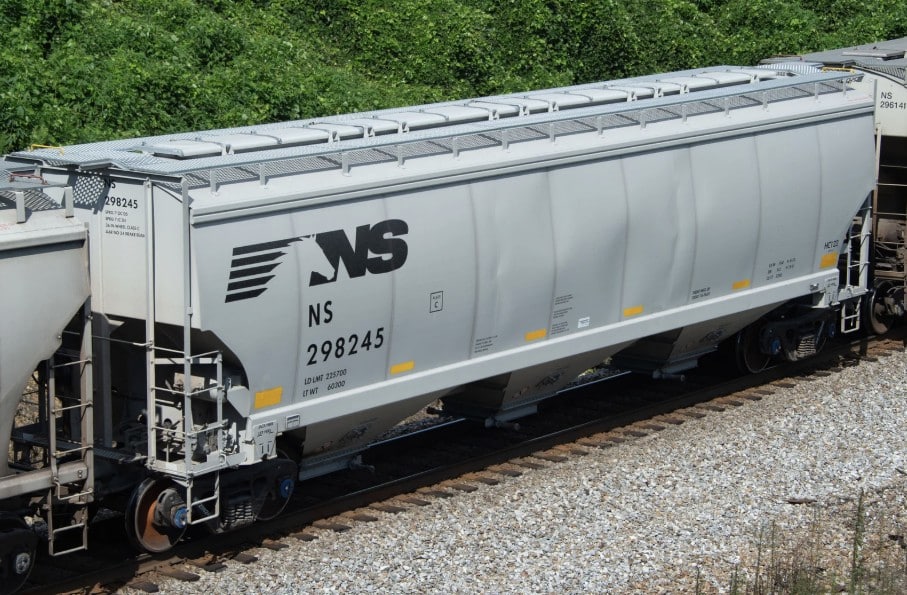
👆 Example of a modern covered hopper car from Norfolk Southern, capable of carrying 222,400 pounds, or about 19 African elephants!
Today, even in February’s seasonal lull, agriculture remains central to the rail network. Freight railroads deliver fertilizer, seed, and equipment to farming regions while moving stored grain from elevators to processors and export ports.
When export demand rises, grain shipments can surge enough to lift overall rail volumes, supported by modern high-capacity hopper cars built for faster loading, higher payloads, and efficient long-distance movement. These purpose-built fleets keep agricultural supply chains reliable year-round, ensuring America’s harvest continues moving to markets at home and around the world.
Industry Reads
- Reuters: Cooling January inflation keeps Fed easing in play
- WSJ: Durable-Goods Orders Slipped in December.
- JOC: Trucking executives buoyed by market signals as winter exit nears
- FreightWaves: Rail freight outlook waits for improved indicators
- National Review: Washington Already Tried This Rail Safety Playbook. It Failed. (Opinion)