THE STAGGERS ACT OF 1980 KEY FACTS
- The Staggers Rail Act partially deregulated the industry, saving it from ruin.
- Average rail rates (measured by inflation-adjusted revenue per ton-mile) were 44% lower in 2024 than in 1981.
- Freight railroads now invest $23 billion a year back into their networks.
👆 Check out an overview video from our new video series Harley Explains.
Imagine being a shipper in 1975. Your business depends on rail, but outdated pricing rules and chronic underinvestment make it increasingly unreliable. While trucking, pipelines, and waterways thrive, railroads—burdened by excessive regulation—struggle to compete. Tracks are in disrepair, derailments are common, and service is inconsistent. Major carriers like Penn Central have gone bankrupt, and shippers face rising costs and shrinking options.
By 1980, the industry is on the brink of collapse.
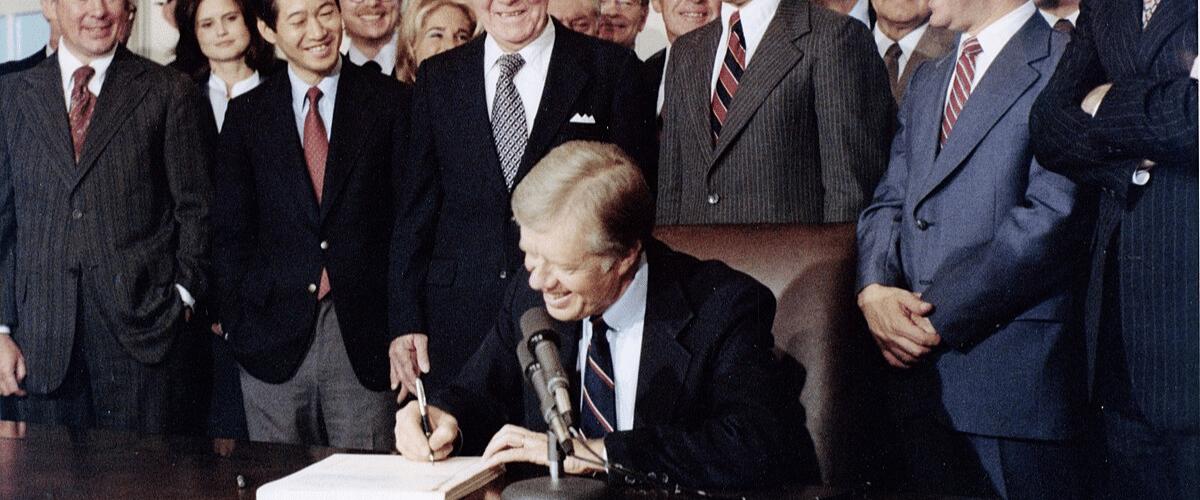
Then Congressman Harley Orrin Staggers championed The Staggers Rail Act, changing everything. This bipartisan legislation, passed on October 14, 1980, partially deregulated freight rail, allowing market-driven pricing, tailored contracts, and the ability to shed unprofitable routes. Railroads could finally reinvest in infrastructure, improve safety, and offer better service.
The Act also paved the way for short line railroads, boosting first- and last-mile connectivity, especially in rural areas. Soon after, railroads introduced intermodal transportation, integrating rail and trucking to offer shippers greater flexibility and cost efficiency.
The Staggers Act continues to benefit shippers and America today.
Thanks to the Staggers Act, shippers benefit from lower rates, more reliable service, and access to new markets—laying the foundation for a modern, resilient freight rail system that continues to evolve and invest today.
- Freight rail is safer than ever, with accident and injury rates at all-time lows.
- Average rail rates (measured by inflation-adjusted revenue per ton-mile) were 44% lower in 2024 than in 1981.
- From 1980 through 2024, U.S. freight railroads reinvested approximately $840 billion—close to $1.4 trillion in today’s dollars—of their own funds, not taxpayer funds, on capital expenditures and maintenance expenses related to locomotives, freight cars, tracks, bridges, tunnels and other infrastructure and equipment.
- Fuel efficiency has drastically improved, with rail moving one ton of freight nearly 500 miles on a single gallon of fuel.
The STB must help protect the future of America’s railroads.
Despite decades of success, some large shippers are pushing for a return to pre-Staggers regulation—overlooking the hard-earned lessons of history. Reinstating restrictive policies would stifle private investment, weaken service reliability, and ultimately hurt the very customers these rules aim to protect.
The Surface Transportation Board (STB), which oversees rail policy, plays a vital role in maintaining a balanced regulatory framework. With freight demand projected to continue growing, it’s essential that policymakers uphold the market-driven principles of the Staggers Act to ensure railroads can continue evolving to meet future economic and environmental challenges.
Congressman Harley Staggers envisioned a self-sustaining, competitive rail network that benefits both carriers and customers. His legislation delivered on that promise, creating an industry that is safer, more efficient, and better equipped to serve the nation. The lesson is clear: a strong freight rail system means a stronger economy, lower costs for shippers, and a more reliable transportation network. Staying the course will ensure railroads continue to thrive and support America’s supply chains for generations to come.