
AAR STRATEGIC RESEARCH INITIATIVES (SRI) PROGRAM KEY FACTS
- SRI drives safety and efficiency through industry-led research.
- MxV Rail tests tech like AI inspections and resilient materials.
- Results are shared via the Annual Review and e-Library.
For nearly 100 years, the freight rail industry has worked together on research and testing in partnership with AAR. What began with the Chicago Technical Center has grown into today’s Strategic Research Initiatives (SRI) Program. This program is funded by AAR member railroads and carried out by experts at MxV Rail. The Program transforms innovative ideas into practical solutions that enhance rail safety, reliability, and sustainability. These solutions benefit railroads, suppliers, regulators, and the broader transportation system. Specifically, the Program’s objectives are to:
- Develop a clear understanding of the root causes behind operational and safety challenges.
- Identify and evaluate promising technologies.
- Support the industry-wide implementation of validated solutions.
- Clearly communicate findings to all relevant stakeholders.
Experts lead and shape the direction of the SRI Program.
The AAR Research Committee, comprised of operations and engineering leaders from AAR Members and Associates, provides primary strategic guidance. The MxV Rail Research Advisory Board and several Technical Advisory Groups (TAGs) support the Research Committee. These groups contribute subject matter expertise to specific research areas. Together, more than 250 dedicated railroad experts, including 110 professional engineers and nine PH.Ds, ensure that every SRI project is relevant and technically sound. They align projects with the most pressing needs in the rail industry.
MxV Rail conducts SRI research.
MxV Rail is home to world-class labs, simulation tools, and the newly built FAST® (Facility for Accelerated Service Testing) Loop. This advanced testing environment lets evaluates technologies under real-world operating conditions. The SRI Program leverages a full range of research capabilities—from computer modeling and data analytics to lab testing and full-scale field validation. Cross-functional teams ensure seamless integration across every phase of a project. They deliver evidence-based results through a blend of tools, expertise, and testing methods tailored to each research objective.
The SRI Program generates measurable results.
The Program has enabled enhancements in operational safety, increased the resilience of infrastructure, and accelerated the adoption of advanced technologies. It has also provided the technical foundation for informed regulatory and policy decisions. Each research initiative contributes to a more efficient, innovative, and forward-looking rail industry. Here are just a few examples of real-world impacts:
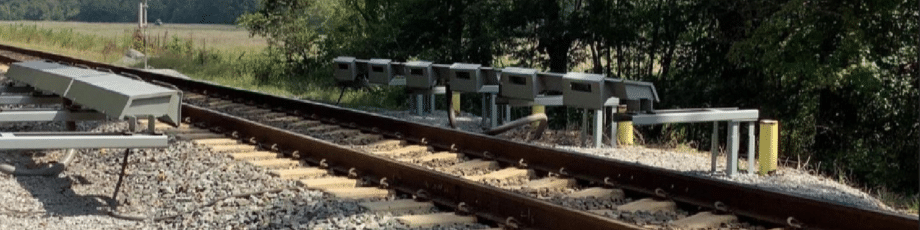
Widespread Use of Wayside Detection Technologies
SRI-funded research helped develop and validate wayside detection systems. These include wheel impact load detectors (WILD), acoustic bearing detectors, and truck performance detectors. These technologies monitor railcars in motion to identify defects or potential failures before they cause accidents. Based on this research, railroads now routinely deploy these detectors across their networks. This significantly improves preventive maintenance and fleet safety.

Track Performance Under Heavy Axle Loads
The Program’s long-term testing at the FAST® loop provided critical data. It showed how track components—such as ties, fasteners, ballast, and rail—perform under heavy axle loads (HAL). This research led to material standards and maintenance practices now widely adopted. Freight railroads use these to extend track life and optimize performance under heavier loads.
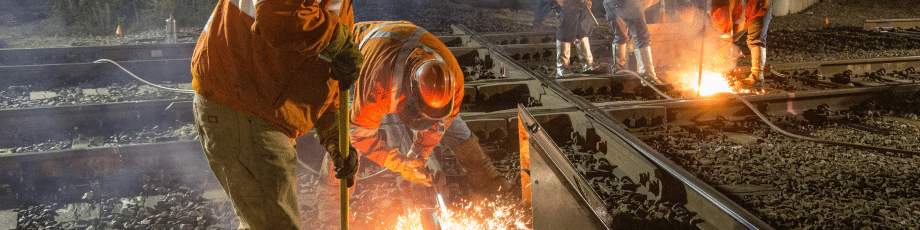
Implementation of Advanced Rail Materials
Program studies on rail steel metallurgy and welding techniques have driven the adoption of improved materials and joining methods. These advances increase rail life and reduce breakage. The findings support procurement decisions and maintenance strategies that directly impact cost savings and track reliability.

Geotechnical Risk Management Tools
Research on soil stability, embankment monitoring, and real-time geotechnical instrumentation has led to tools and guidelines. These help railroads identify and mitigate risks from landslides, washouts, and ground subsidence. This is especially critical in regions prone to extreme weather, supporting infrastructure resilience and safety.

Automated Inspection and Predictive Analytics
The Program has advanced machine vision, AI-powered inspection systems, and predictive maintenance algorithms. This enables railroads to transition from relying only on manual inspections to including data-driven, real-time monitoring. Railroads are rolling these tools out for brake systems, wheelsets, draft systems, and track geometry. They reduce costs and increase uptime.

Standardized Industry Practices and Regulations
AAR routinely uses Program findings to develop and update the Manual of Standards and Recommended Practices (MSRP). These standards guide nearly every technical aspect of freight railcars. They are essential for regulatory compliance, interoperability, and safe operations across railroads.
Knowledge Sharing
Together, the AAR Annual Research Review and e-Library ensure that valuable insights from the SRI Program are widely accessible. This helps railroads, suppliers, and researchers apply proven innovations and track the evolution of freight rail technology.
- AAR Annual Research Review: SRI Program’s premier knowledge-sharing event brings together technical experts, rail professionals, suppliers, and policymakers. They gather for an in-depth look at the latest research. Attendees gain first-hand insight through presentations, live demonstrations, facility tours, and an on-track walk at the FAST® Loop. The event also includes the Early Career Railroader (ECRR) Workshop, supporting the next generation of rail innovators.
- E-Library: To extend access beyond the event, MxV Rail publishes the weekly Technology Digest. It summarizes key research findings and technical developments. These digests are available to the public through the MxV Rail e-Library. It is a keyword-searchable archive of more than 30 years of SRI research. Topics include wheel-rail interaction and advanced materials to inspection systems and geotechnical studies. New entries are added 60 days after their initial release to AAR members.