
FREIGHT RAIL MILITARY SUPPORT & VETERAN HIRING KEY FACTS
- Freight rail has supported U.S. military operations for nearly 200 years.
- They used to move troops and still move equipment.
- Freight railroads are committed to veteran hiring; 1 in 6 rail employees is a veteran.
America’s freight railroads have a long tradition of military support and veteran hiring. Early West Point grads helped build the rail industry. Civil War veterans worked on the transcontinental railroad. Today, Class I railroads continue that commitment. The ESGR recognizes them for supporting and hiring guardsmen, women, and reservists.
Military skills—dedication, discipline, teamwork, and safety—also keep the nation’s economy running efficiently. Veterans fit railroad careers because they adapt and bring diverse skills. Railroads understand the technical demands of armed forces jobs. They partner with the military to help servicemen and women transition to private-sector railroad employment.
- About one in six rail employees are veterans.
- Railroads focus heavily on on-the-job training and don’t require a college degree for a lifelong, skilled career.
- The average Class I railroad employee’s annual pay and benefit package is valued from $135,000 to almost $190,000.
- Rail jobs range from engineering and dispatching to law enforcement, IT, industrial development and more.
10 Ways Freight Rail Supported During War Time
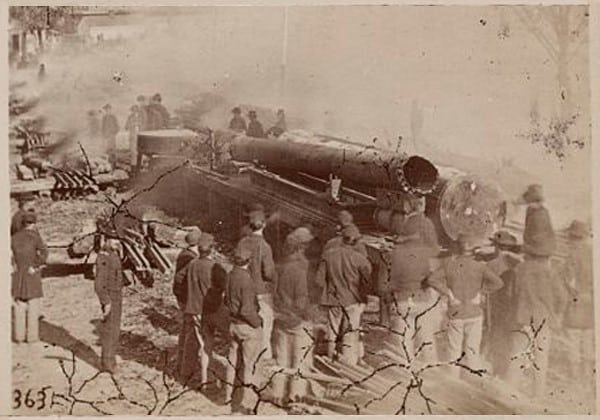
During the Civil War, railroads became vital for Union and Confederate forces. They moved unprecedented numbers of troops and supplies. Railroads introduced ironclad railcars carrying big guns and artillery, which later evolved into modern armored combat vehicles.
During World War II, railroads moved about two million troops monthly after Pearl Harbor. They hauled coal, iron ore, and steel for military supplies and finished products. Today, railroads support U.S. combat efforts with technologies that strengthen operations and help America’s brave achieve victory.
1. A Military Advantage
The Union held a major advantage with 20,000 miles of track, more than double the Confederacy’s 9,000. Railroads moved troops and supplies faster than man or horsepower, making them key military targets. The Union controlled 70% of track and 96% of equipment, enabling quick recovery from damage. This strength showed rail’s power to shape future military strategy.

2. The Civil War
In winter 1863, Lincoln ordered 25,000 troops and ten cannon batteries to Chattanooga. Freight rail moved them 600 miles in eleven days. Chattanooga was a key Confederate rail and industrial center, and its capture marked the beginning of the Civil War’s end.

3. Railroad Guns
Moving massive artillery to battlefields was challenging. On June 5, 1862, General Robert E. Lee proposed an iron-plated rail gun. Rail guns gave mobility and force that changed combat. The first railroad gun, The Dictator, appeared during the Siege of Petersburg, weighing over 17,000 pounds on a flatbed car.

4. The Precursor to Military Vehicles
Cannons mounted on railcars could fire while moving, and thick armor protected troops. These iron boxcars, with artillery openings, were precursors to tanks. Rifle cars protected rail repairmen and supply trains, serving as early infantry fighting vehicle models. Battleships later adopted similar mounted gun technology in World Wars I and II.
5. Boosting WWI Efforts
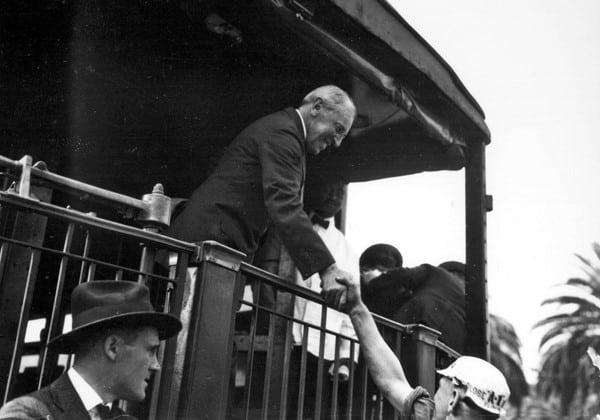
America’s entry into World War I pushed railroads to new operational levels. In March 1918, President Wilson nationalized railroads, promising their return within 21 months of peace. The government ordered 1,930 locomotives and bought 100,000 cars to transport munitions and artillery cargo for the Navy. Boxcar coal shipments and tank cars carrying petroleum, oils, and chemicals soared, while passenger train use was curtailed to conserve fuel.

6. Hospital Trains
The Civil War introduced trains for medical evacuation, using improvised hospital cars. By 1917, custom-built unit trains converted from Pullman cars cared for the wounded. Army hospital trains expanded during World War II, when air evacuation was still new. Two years before America entered the war, the Army built advanced hospital cars with side doors for loading and compact operating rooms.

7. Readying America for WWII
In 1940, railroads moved 70% of U.S. freight. Between 1942 and 1944, that number soared. Railroads carried over 90% of military freight and 98% of personnel. Troop movements filled passenger trains, and railroads worked overtime to meet demand. Ads showing packed trains urged Americans to avoid unnecessary travel.
8. Diesel Locomotion Improves Performance
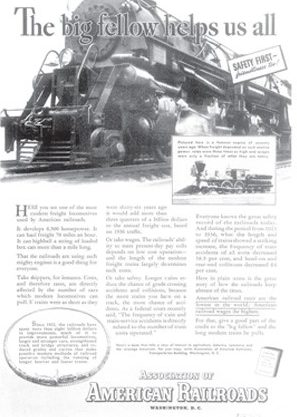
Diesel-electric locomotion debuted in World War I but became essential during World War II. Diesels traveled farther without servicing and could be mass-produced to meet wartime demand. By 1944, railroads built 608 diesel-electric locomotives compared to 491 steam engines. U.S. railroads once again led America and its allies to victory through innovative transportation technology.

9. Rail Delivers Tanks & Troops
From 1941 to June 1945, railroads carried nearly 44 million servicemen and women. In the war’s final years, the U.S. averaged 2,500 troop trains monthly. Railroads continued transporting troops during the Korean War, moving unit trains west for deployment to Japan and Korea. The Army bought flatcars for heavier M46 Patton tanks, while the Navy purchased DF boxcars with securement systems for ammunition.
10. Rail Delivers Tanks & Troops
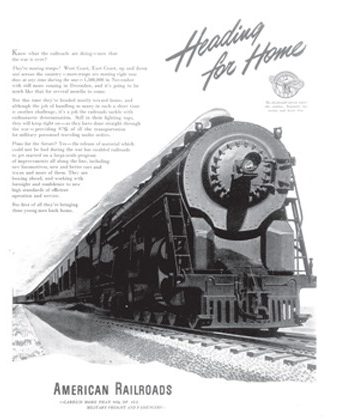
Early on, American railroads learned that technical innovations improved safety and efficiency — qualities the country came to rely on in times of war and peace. That dedication to advancing technology continues to enhance military rail transport operations today.