
KEY FACTS
- Recent law defines a long train as 7,500 feet; In 2023, the median length of a train on Class I railroads was 5,300 feet.
- Longer trains cut fuel use and emissions.
- Accident rates have dropped even as trains have grown longer.
There is no standard definition of a “long train.” Recent legislation defines a long train as 7,500 feet, and railroads have operated millions of trains exceeding that length without incident or notice for the past 80 years. The industry’s safety record has improved even though trains are longer today. Since 2005, based on FRA data, there has been a:
- The overall train accident rates are down by about 40%
- Derailments are down by about 46%
- Mainline accidents are down by about 37% industry-wide and 44% among Class I railroads
- Track-caused accidents are down 53%
- Human factors-related accidents are down 41%
- Class I employee casualty rates are down 54%, reaching a record low in 2025
- On-duty fatalities are down by about 67%
- Hazmat accident rates are down 75% since 2005, with recent years having the lowest rates on record.
Class I Railroad Train Lengths
“Long trains” have operated safely for decades, and the industry’s safety record has dramatically improved during that period. In 2023, the median length of a train on Class I railroads — meaning half were longer, half were shorter — was 5,300 feet. Just 10% of trains were longer than 9,600 feet and fewer than 1% of trains were longer than 14,000 feet.
The highly competitive freight transportation marketplace has increased pressures on railroads to become more efficient, and changes in the industry’s traffic mix have affected train length. For example, traffic mix plays a role in the length of trains in the network. A 100-car coal train is shorter than a 100-car intermodal train. In the past 10-plus years, coal traffic has declined by 50% while intermodal traffic has continued to increase.
Railroads are committed to safe operations, no matter the train length.
While processes differ slightly by company, railroads consider several factors when determining the safe train makeup (how rail cars and locomotives are arranged) and train length. These factors include but are not limited to commodity mix, terrain, track conditions, layout, congestion, crew training and more.
- Investments: Railroads have added new sidings and lengthened existing sidings on routes used for longer trains, which allow trains of various lengths to make way for other trains safely. The locomotive, car fleets, and track have been upgraded by freight rail’s capital expenditure programs, averaging well over $23 billion a year.
- Operations: Railroads review the characteristics of a route, incorporate lessons learned for the most effective operation of trains on that route, and confirm the safe operation by such measures as supervised pilot runs and modeling simulations that predict the performance of changes to a train’s makeup.
- Training: Railroads offer training, both simulator-based and on-the-job, for in-cab technologies like energy management systems, PTC and distributed power. This includes adapting to changes in train composition or a crew’s introduction to new territories. The FRA mandates that locomotive engineers demonstrate proficiency on assigned routes, with annual railroad evaluations.
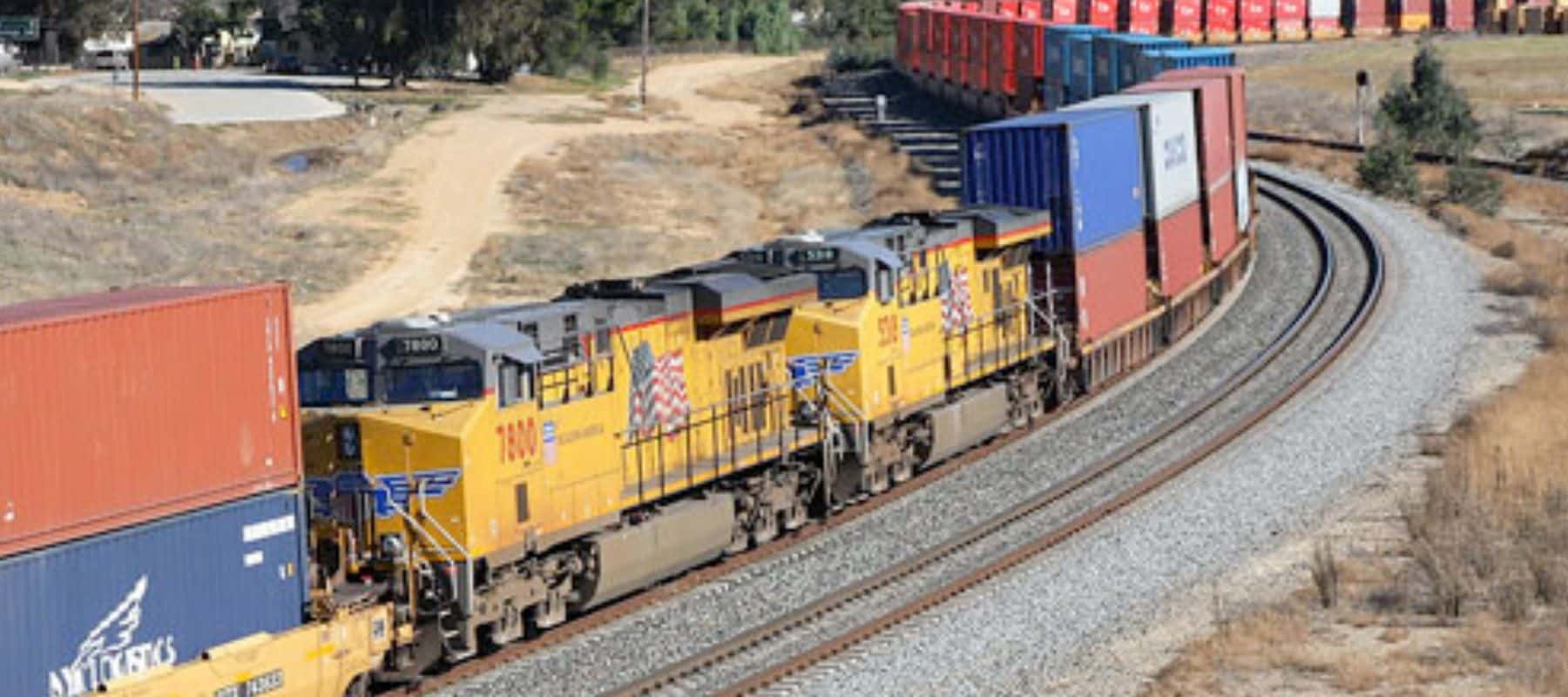
Certain technologies have allowed railroads to operate longer trains more safely.
Distributed power (DP) places locomotives throughout a train, not just at the front, all controlled by the lead engineer via a closed communication system. DP reduces in-train forces, improves handling on hilly or curved terrain, and allows faster, more even braking. Advanced algorithms also help optimize locomotive and car placement for better performance.

The extra fuel consumption of trains limited to 7,500 feet is the equivalent of 640 Olympic-size pools worth of wasted fuel.
That’s about the annual emissions of roughly 930,000 cars. Moving a given amount of freight in fewer trains requires less fuel. Because GHG emissions are directly related to fuel consumption, longer trains mean reduced GHG emissions. That’s why capping train length is not environmentally sound.
AAR analysis of federal data finds: If 25% of the truck traffic moving at least 750 miles went by rail instead, annual greenhouse gas emissions would fall by approximately 13.6 million tons. Emissions would rise further if a cap on train length and the subsequent reduction in rail efficiency caused freight to divert to trucks, which are significantly less fuel efficient than rail.