
July 14-20, 2025
Freight rail isn’t just about trains—it’s about the people behind them who find innovative solutions to make the network better every day. Railroads use leading edge technology tools, powered by AI to perform mechanical inspections, monitor track conditions, manage and optimize locomotive fuel consumption, and put digital emergency response tech in the hands of responders. This work makes trains safer, saves fuel and helps protect the environment.
At the heart of this #RailInnovation are dedicated railroaders—train crews, data specialists, dispatchers, track, signal, and mechanical experts, and professional engineers—who blend their expertise with new technologies. Backed by an average of $23 billion of annual private investments, railroads are teaming up with tech companies, researchers, and public safety groups to create strategic portfolios of useful data and applications that make a real difference on the ground.
Technology
Norfolk Southern: Automated Track Geometry Measurement Systems
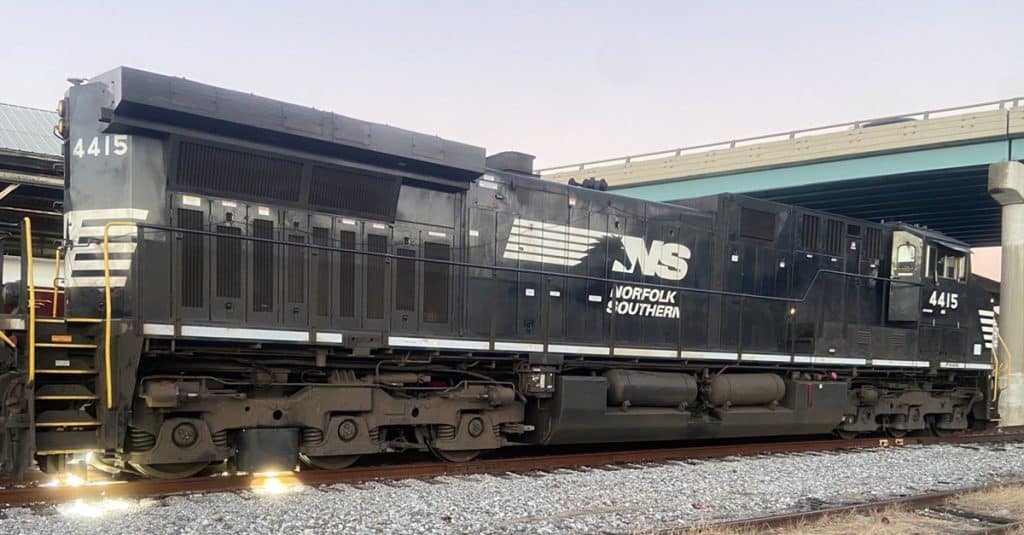
Norfolk Southern is using Automated Track Geometry Measurement Systems (ATGMS)—laser- and sensor-based technology mounted under locomotives that continuously monitor track conditions like alignment, gauge, and elevation. This technology allows early detection of defects such as broken rails or deteriorating ties before they’re visible to the human eye, enabling proactive maintenance and reducing service disruptions.
Automated inspections support skilled railroaders by handling routine measurements, freeing them to focus on complex tasks like inspecting switches and crossings. Combining sensors, analytics, and repeated data collection helps Norfolk Southern employees::
- Continuously scan track conditions across long distances.
- Detect and flag issues before they impact safety or service.
- Provide a clearer, more complete picture of track health.
BNSF: Wheel Health Monitoring
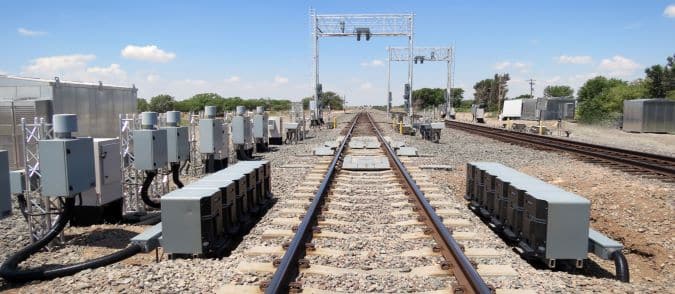
👆A BNSF WTID detector in the foreground
BNSF combines data, detection systems, and workforce expertise across its 32,500-mile network. With more than 1.5 million wheels in motion each day, BNSF relies on a layered system of smart tools to spot issues early and keep trains moving safely. Together, the tools outlined below generate real-time insights that support safe, proactive maintenance:
- Wheel Tread Inspection Detectors (WTID): AI and imaging scan wheel surfaces to detect flaws and predict wear—developed in-house and now used globally.
- Brake Health Effectiveness (BHE): Thermal sensors evaluate the brake performance by measuring wheel temperature to ensure they are within the expected range for a normal brake application.
- Wheel Impact Load Detectors (WILD): Sensors detect pounding wheels caused by flat spots to prevent damage to track and equipment.
Short Line Safety Institute: Making Safety Scalable
While Class I railroads lead large-scale tech deployments, the Short Line Safety Institute (SLSI) ensures that railroads of all sizes can advance safety. SLSI partners with small and regional railroads to deliver on-site, no-cost programs—including confidential safety culture assessments, hazmat response training, and leadership and emergency preparedness workshops. By equipping teams with practical tools and knowledge, SLSI helps extend rail innovation and safety excellence across the entire freight rail network.
Research
MxV Rail: Innovation Backed by Science
MxV Rail is the freight rail industry’s leading research and testing center. With more than 250 technical experts and decades of specialized experience, MxV leads AAR’s Strategic Research Initiatives (SRI) Program, which helps railroads solve real-world challenges through engineering, data science, and field testing. Recent areas of focus include:
- AI-powered inspection systems that identify defects before they cause delays
- Track deflection monitoring tools that detect subgrade issues early
- Updated vehicle-track interaction standards that reduce equipment stress
- Climate modeling to help infrastructure withstand wildfires, floods, and heat
These innovations are developed in collaboration with railroads, suppliers, emergency response partners, and government agencies—and are supported by the freight rail industry’s $23 billion in annual private investment.
Customer-focused Operations
Railinc: Connecting Railroads, Data, & Public Safety

Railinc, the freight rail industry’s trusted technology partner, delivers digital tools that keep rail operations connected, efficient, and safe. One of its most game changing innovations is the AskRail app, which provides real-time information about the contents of railcars carrying hazardous materials—helping emergency personnel act quickly and safely. AskRail connects critical information with those who need it most—delivering innovation where it matters: in the field. Key facts:
- Used by more than 2.3 million verified first responders.
- Integrated with dispatch centers, CHEMTREC, and CANUTEC.
- Enables faster, more informed emergency response.
- Expands access for volunteer fire departments and rural agencies.
- Ensures data continuity across emergency response platforms.
Sustainability
Canadian National: Renewable Diesel & Biodiesel Integration
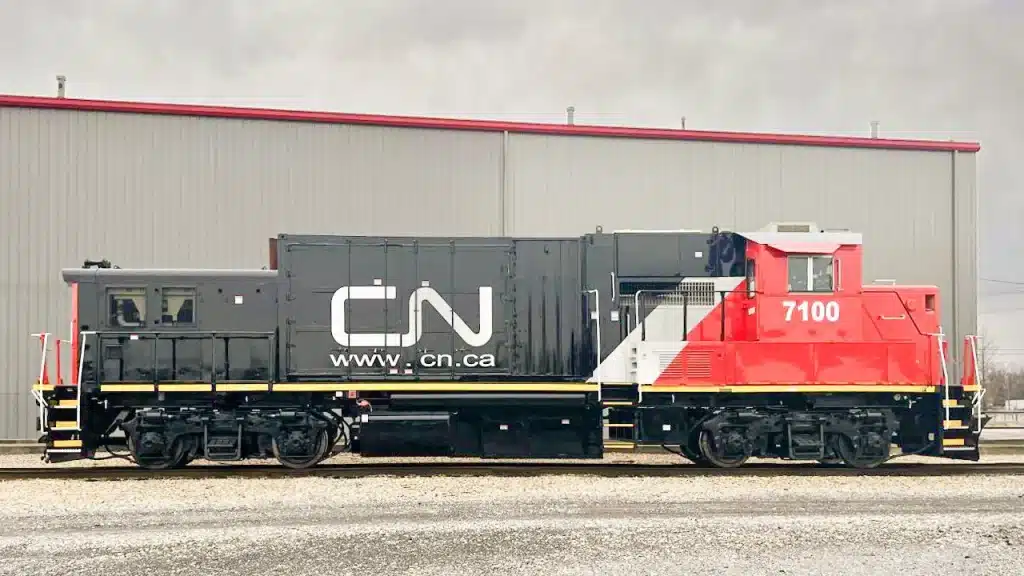
In collaboration with Progressive Rail and Renewable Energy Group (REG), CN is evaluating high-blend renewable diesel and biodiesel fuels, including up to 100% bio-based diesel, across its locomotive fleet. Renewable fuels are derived from feedstocks like used cooking oil, vegetable oils, and animal byproducts, providing significant lifecycle green house gasses (GHG) reductions.
- In 2024, CN achieved a milestone: close to 10% of all locomotive fuel consumed was renewable, a first for the company.
- Testing has demonstrated strong performance in cold-weather conditions, a critical requirement for year-round rail operations in North America.
- This work supports CN’s science-based target to reduce direct GHG emissions by over 50% by 2030.
Union Pacific: Hybrid battery-electric Locomotives
Union Pacific is piloting a first-of-its-kind hybrid battery-electric locomotive developed with ZTR, a rail technology provider. The locomotive operates in a mother-slug configuration—a setup where a traditional diesel-powered “mother” locomotive is paired with a battery-powered “slug” unit that lacks its own engine but draws power and control from the mother.
Union Pacific built the prototype at its North Little Rock, AR, facility, with additional hybrid units scheduled for testing. This initiative is part of the railroad’s broader approach to alternative energy—including biofuels, fuel efficiency technologies, and vendor collaborations—to meet a verified 50.4% emissions reduction target by 2030. Key facts:
- Designed to reduce fuel use by up to 80%, depending on operating conditions.
- Features both wayside and onboard charging capabilities.
- Provides enhanced tractive effort for switching and train assembly.
- Expected to reduce GHGs and criteria pollutants while lowering noise and maintenance costs.
CSX & CPKC: Hydrogen-Powered Locomotive Conversion
CSX, in partnership with CPKC, has completed development of a hydrogen-powered locomotive at its Huntington Locomotive Shop—the first of its kind for freight rail in North America. The project involves converting existing diesel locomotives using a hydrogen propulsion system designed by CPKC. This collaboration showcases how railroaders, engineers, and suppliers are working together to advance new energy systems without sacrificing operational performance or reliability. Key facts:
- The locomotives emit only water vapor, resulting in zero tailpipe emissions.
- Key components—including traction motors, frames, and cabs—are reused to extend asset life and reduce waste.
- CSX, through its partnership with CPKC, has completed three hydrogen conversions, with more planned for evaluation.
- The initiative reflects the potential of hydrogen to serve as a viable long-term fuel alternative in heavy-duty rail.
AAR Associates & Affiliates: Partnerships Power Progress
Rail innovation thrives on collaboration—and AAR’s Associate and Affiliate Programs bring together suppliers, manufacturers, railcar owners, short lines, international railroads, and Class I carriers to move the industry forward. Through technical committees and close work with Class I railroads, members help shape policy, guide regulations, and drive the testing and adoption of technologies that enhance safety, efficiency, and sustainability.
If you’re involved in the freight rail supply chain—as a short line railroad, manufacturer, or technology provider—joining AAR’s Associate and Affiliate Programs provides a direct route to impactful engagement and innovation.
Progress Rail with Argus

Progress Rail uses Argus to turn wayside sensor data into real-time fleet insights. By combining inputs from systems like hot bearing and dragging equipment detectors, Argus pinpoints faults down to the axle and alerts maintenance teams for faster, targeted responses. Its modular, reconfigurable design supports predictive maintenance, reduces unplanned downtime, and upholds safety.
Wabtec Trip Optimizer
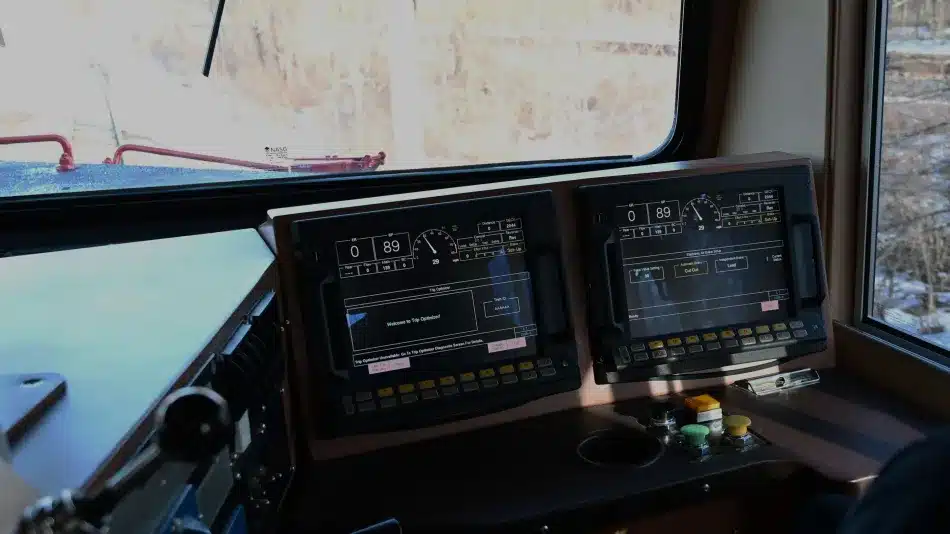
Wabtec’s Trip Optimizer is an energy management software system used on more than 12,000 locomotives worldwide. Acting as a smart co-pilot for trains, the software automatically adjust throttle and dynamic braking based on route conditions, terrain, and train configuration.
Trip Optimizer has helped save over 752 million gallons of fuel and reduce greenhouse gas emissions by more than 7.7 million tons. As an EPA-certified system, it enables railroads to meet sustainability goals while delivering operational cost savings and more predictability in day-to-day network operations.
GATX High-Strength Steel Gondola
GATX’s High-Strength Steel Gondola™ uses advanced, high-strength steel to reduce unloaded railcar weight by up to 15,000 pounds—boosting efficiency without compromising durability. Developed through a collaboration between U. S. Steel, Norfolk Southern, and Greenbrier, this award-winning design reimagines the classic gondola for today’s heavy-duty bulk freight needs.
Ideal for transporting loose material such as metal scrap and steel slabs, the car’s reinforced structure resists damage from repeated loading and unloading. By combining innovative materials with proven performance, the High-Strength Steel Gondola™ supports safer, more sustainable operations across the freight rail network.