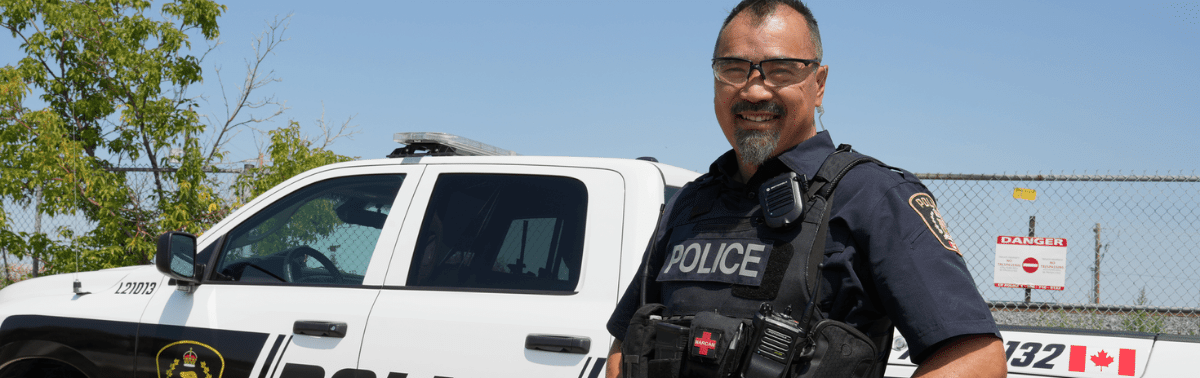
FREIGHT RAIL POLICE KEY FACTS
- Railroad police are certified officers with state authority.
- They use drones, K-9s, and surveillance to protect railroads and communities.
- They partner with federal agencies and lead public safety outreach.
The North American rail network is a vital economic engine, moving billions of dollars in goods each day. To protect this vast, privately owned system, each Class I railroad employs its own specialized police force. These officers are trained to navigate complex rail environments and address unique safety and security challenges.
Railroad police go beyond traditional law enforcement, safeguarding critical infrastructure, cargo, employees, and communities. They respond to threats ranging from everyday crimes to national security risks. Their expertise and reach make them essential to keeping freight moving safely. This helps to ensure America’s supply chains remain secure and fluid.
A Legacy of Protection
Railroad policing in the United States dates to the mid-1800s. As railroads rapidly expanded and transported valuable goods far and wide, they became frequent targets of theft and sabotage. To combat this, railroad companies began hiring private security agents — most famously the Pinkertons. These agents laid the foundation for today’s railroad police.
Over time, the role became formalized through state and federal statutes. In 1865, the Pennsylvania Railroad Police Act gave officers statewide law enforcement authority. This marked the first of many similar state laws to follow. Today, federal law under 49 U.S. Code § 28101 allows railroad police to operate across state lines. This is a necessity in a system that spans numerous traditional jurisdictional boundaries.
Modern Railroad Police: Training, Tools, and Jurisdiction
Today’s freight railroad police are certified law enforcement officers commissioned under state authority. They have full powers of arrest and investigation both on and off railroad property. Federal law extends their jurisdiction across multiple states. This allows them to follow investigations wherever the rail line leads.
Railroad police officers must not only meet the extensive training standards of their own organizations but also comply with the training and standards of the jurisdictions in which they operate. These officers receive training in rail safety, hazardous materials handling, emergency response, and accident investigation. Operating in rail yards, tunnels, bridges, urban centers, and rural areas requires them to have specialized knowledge and tactical flexibility.
Railroad police forces also leverage the latest technology, including surveillance cameras, drones, motion detectors, and cyber defenses. This fusion of boots-on-the-ground presence with tech-driven monitoring allows them to stay ahead of threats in real-time.
Addressing Crime & Security Threats
Railroad police are responsible for investigating a broad spectrum of criminal activity. This includes theft of cargo, vandalism of infrastructure, trespassing, and even crimes of violence. Because railroads often pass through isolated or industrial areas, they can attract criminal behavior that might go unnoticed by traditional law enforcement.
Security extends beyond day-to-day crime. Officers play a critical role in counterterrorism preparedness, especially in protecting high-value or sensitive shipments. They also conduct regular patrols, assess vulnerabilities, and coordinate response plans for potential emergencies.
Public Safety & Education
Railroad police don’t just respond to incidents — they work proactively to prevent them. One major area of focus is public outreach, particularly around trespassing and grade crossing safety. Trespassing on railroad property is the leading cause of rail-related deaths in the U.S., and educating the public is one of the most effective ways to reduce these incidents.
Programs like Operation Lifesaver enable railroad police to partner with schools, community groups, and local officials to teach people how to stay safe near tracks and crossings. During events like See Tracks? Think Train Week! officers often set up educational stations. They collaborate with local agencies to raise awareness and enforce safety laws.
Canine Units: Detection & Deterrence
A key component of many railroad police departments is the K-9 unit. These dogs are highly trained in detecting explosives, narcotics, and other contraband. This is crucial in an era of evolving threats to transportation infrastructure. K-9 units also serve as a visible deterrent to criminal activity. They can help locate trespassers or suspects hiding in expansive rail yards or wooded areas. Whether searching a train for threats or patrolling a station, the presence of a K-9 team enhances both safety and operational efficiency.
Collaboration Across Agencies
Railroad police don’t work in isolation. Given the complex nature of rail security, they routinely collaborate with local, state, and federal agencies. They share intelligence with the FBI and participate in training exercises with the Department of Homeland Security. They also coordinate investigations with TSA and regional law enforcement partners. This cooperation ensures that threats—from petty theft to large-scale terrorism—are met with a unified and effective response. Railroad police often take the lead on investigations involving rail incidents. They leverage their technical knowledge while looping in the necessary external resources.