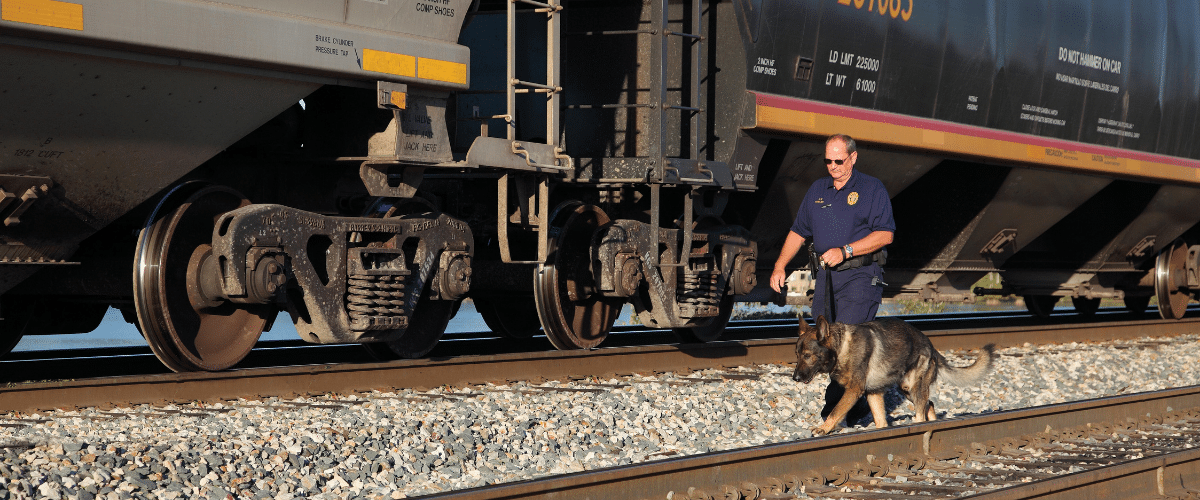
FREIGHT RAIL CARGO THEFT KEY FACTS
- Organized cargo theft cost major railroads over $100M in 2024.
- Many thefts are from repeat offenders.
- A coordinated federal response is critical to stopping cargo theft.
In recent years, organized criminal groups have increasingly targeted the nation’s railroads using sophisticated tactics and technology to commit cargo theft. While these attacks occur across every freight provider and in every region, collectively the result is rippling supply chain disruptions and costly delays. These delays impact American families.
In 2024, the nation’s largest railroads (Class Is) spent more than $100 million.
Beyond paying insurance claims for stolen goods, railroads must also repair or replace damaged infrastructure. They must manage operational delays that disrupt the network. Additionally, they invest in new anti-theft technologies and allocate additional resources to combat these crimes. All these factors contribute to rising operational costs and inflationary pressures for businesses and consumers. Industry estimates suggest that over 65,000 thefts occurred in 2024. This represents a roughly 40% increase over the prior year. Additionally, railroads are also reporting an escalation in tactics. The likelihood of violent apprehensions increase with armed suspects.
More effective apprehension and prosecution are necessary.
Railroads estimate that, at most, one in ten cargo theft attempts results in an arrest. The same offenders repeat many of these crimes. For example, one railroad apprehended the same individual five times in a single day. Another has reported arresting the same individual seventeen times for repeated cargo theft attempts. Railroads have invested millions in preventing these crimes across the 140,000-mile U.S. rail network. However, the industry cannot disrupt these highly organized – and often transnational – criminal groups alone.
Breaking this cycle will require sustained attention, dedicated federal resources, and increased penalties. Given the interstate and transnational nature of this issue, and the ties many criminals have to larger criminal organizations, a federal response is necessary. It will improve coordination of data collection and facilitate the apprehension, effective prosecution, and detention of those responsible. Railroads are working in coalition with other supply chain partners to:
- Advance the Combating Organized Retail Crime Act (S.1404 / H.R.2853) to create a coordinated federal response. The aim is to address sophisticated attacks against the nation’s supply chain and retailers. Among other things, CORCA would enhance law enforcement tools. It would also establish a data-sharing repository for industry. Furthermore, it would enhance coordination between the Department of Homeland Security, the FBI, and local law enforcement to address cargo theft.
- Increase state penalties for those who commit cargo theft.
- Secure funding for dedicated prosecutors to efficiently and effectively litigate cargo theft crimes.