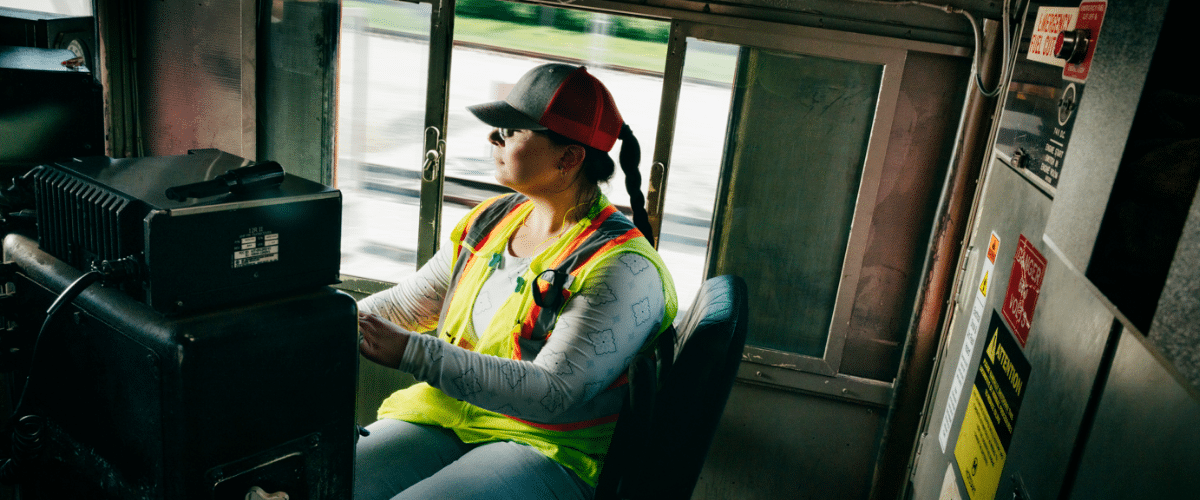
Freight rail is more than a transportation network—it’s a driving force behind America’s economy, workforce, and future. It moves goods, empowers careers, and keeps communities connected. Behind every train are people, purpose, and progress.
Opening Doors
For many railroaders, freight rail isn’t just a job—it’s a lifelong career built on stability and purpose. Some start young and stay for decades. Others join mid-career, drawn by the opportunity and reliability the industry offers.
From dispatchers to engineers, IT specialists to safety officers, railroads offer meaningful careers—no college degree required. These jobs come with pay and benefits 40% above the national average, plus strong union support, creating a clear path to financial security. Workers can support families, put kids through school, and build a future with confidence. With a 14-year median tenure, rail careers often span generations. Parents train their children. Veterans mentor new recruits. And the next generation sees what’s possible—stepping through the same open door.
Starting with Safety
Safety is where every shift begins—because freight rail puts people first, always. Trains undergo rigorous inspections. Crews receive continuous, hands-on training. And every move is made with care.
From locomotive simulators to real-world instruction, technology and human skill work together to keep employees safe and trains running smoothly. That’s why working in freight rail is safer than working in a grocery store and why it remains the safest way to move goods over land. Railroaders take this responsibility seriously. Safety isn’t just a protocol—it’s a promise. To their teammates, to their families, and to the communities they serve. It’s how America’s engine stays strong, steady, and built for future journeys.
From Finders to Fixers
Freight railroads are at the forefront of safety technology—using AI, predictive analytics, drones, remote-control locomotives, and advanced inspection systems to prevent accidents before they happen. From Positive Train Control to automated track scanners and wayside detectors, these tools work alongside skilled employees to keep rail operations safe, efficient, and sustainable. Railroads are also testing cleaner locomotives and zero-emission yard equipment, cutting emissions while keeping supply chains moving.
Moving America
Every day, freight railroads power the country—quietly and efficiently—moving 1.5 billion tons of goods across 135,000 miles of track each year. From food and clothing to cars, fuel, and building materials, rail touches nearly every part of daily life. Rail workers take pride in knowing they’re not just delivering freight—they’re driving the U.S. economy and global supply chains forward. As they keep goods moving today, freight railroads are already engineering the future.