
KEY FACTS
- Understanding the complexities of freight rail right-of-way access is essential for efficient transportation planning.
- Unauthorized or incomplete access to railroads risks derailments and endangers lives. Therefore, freight rail right-of-way access must be carefully managed.
- Most access applications are incomplete, requiring time-intensive, expert review to ensure proper freight rail right-of-way access.
- Broadband providers must fully compensate railroads and follow proper safety protocols for freight rail right-of-way access.
Railroads prioritize safety, making recent years among the safest on record. Companies accessing rail infrastructure must share this commitment. Unauthorized entry onto railroad property has caused preventable tragedies. Construction on or near rights-of-way requires careful planning and strict safety protocols.
Safety requires that railroads have sufficient time and information to process applications.
Applications to work near or under railroad tracks are complex. They require a professional engineering plan. Railroads need time to review and process each application to ensure it has all critical elements. Also, it ensures that the proposed work does not interfere with other work or previous installations. Without railroad approval, construction within active rail corridors creates safety risks to railroad employees. It also affects the persons performing the construction activities and communities near the track.
Cost recoupment and adequate compensation must be provided.
Railroads spend billions of dollars annually to maintain their infrastructure and pay millions of dollars in taxes on their land assets. Engineering reviews, generally conducted by experts certified in railroad procedures, that are required to proceed with projects are expensive. Broadband providers are sophisticated, financially strong private entities capable of negotiating fair terms for disrupting and using railroad property. Therefore, there is no basis to limit railroads’ ability to cover their costs and fees and receive fair compensation for using their property.
Lawmakers should oppose legislation that threatens public safety.
Lawmakers should oppose proposals that threaten safety by unreasonably enabling broadband or other companies to encroach on railroad operating corridors unlawfully. For decades, railroads and entities seeking permanent access to railroad property to install equipment under, over or parallel to railroad tracks have negotiated reasonable contracts to address the terms of such access. These contracts include specific terms related to freight rail right-of-way access.
Railroads support national policies to expand broadband access and stand ready to work with providers to achieve that goal quickly and safely. Both railroads and broadband providers can negotiate fair terms without congressional intervention—especially when proposed laws threaten safe operations. Railroads oppose legislation that bypasses safety reviews, interferes with private contracts, or grants broadband companies “super” taking authority, which denies railroads due process and fair compensation.
Only 30% of applications for railroad right-of-way access include the information needed for safe installation.
Most require significant follow-up. Once an application is complete, railroads review engineering and design with qualified on-site employees to ensure compliance with FRA track safety standards (49 CFR Part 213). Railroads are construction experts along their rights-of-way, safely completing projects for decades through rigorous engineering reviews and planning.
During construction, FRA requires flagmen and watchmen/lookouts to protect workers near tracks and communicate with train crews and dispatchers (49 CFR Part 214). These workers safeguard railroad employees, infrastructure, and contractors by directing train movements and alerting crews when trains approach work zones. Compliance with these regulations and ensuring well-engineered, safely executed projects is—and must remain—non-negotiable.
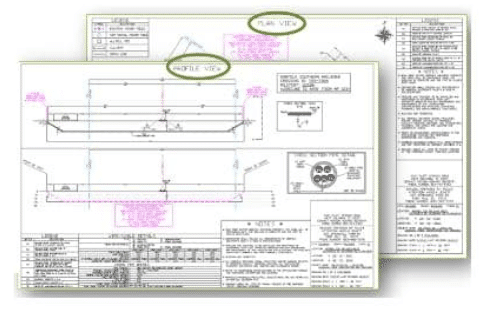
Railroads Ask For
- State, county, city, or town name
- Closest street name/grade crossing
- Geographical coordinates
- Railway and public road ROW width
- Adjacent structures’ locations
- Track, railway structures, facilities layout
- Horizontal and vertical clearances

They Usually Get
- No geographical location
- No engineering details
- No railway and roadway ROW
- No facility dimensions
- No bridge clearances
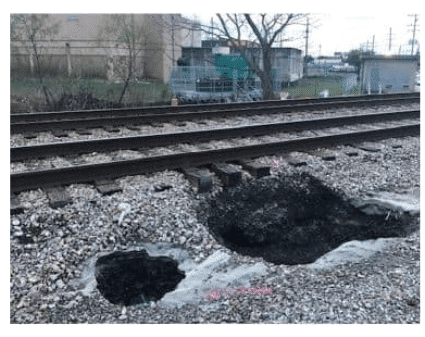
What Can Happen
Unauthorized utility access can cause a sinking or carving of the track substructure (known as subsidence).
Reasonable precaution is necessary and appropriate, given the nature of the risks of rail operations.
Without proper engineering review and construction oversight, installations in active rail corridors can endanger railroad employees, construction crews, nearby communities, and the public at grade crossings. Poorly planned installations can disrupt rail service by interfering with signals and communications—and in the worst cases, cause derailments. Freight rail right-of-way access must be carefully considered, as railroads have invested billions in technology-driven safety solutions to prevent these risks.
This includes Positive Train Control (PTC) — a wireless-based system to stop certain accidents caused by human error. It also includes train control signals and active grade crossing warning systems that safeguard employees and the general public. Any construction activity not coordinated with railroads could jeopardize these systems. These systems play a significant role in railroad safety.
THE BOTTOM LINE
Freight rail rights-of-way are privately owned corridors that are essential to safe and efficient operations, requiring strict coordination, thorough review, and proper safeguards for any third-party access. Careful management ensures that projects near rail lines do not compromise safety, disrupt service, or put workers and communities at risk while still enabling necessary infrastructure development.